Brown University School of Public Health, Health Services, Policy, and Practice, and Brown University Population Studies and Training Center, Providence, Rhode Island.
Obstet Gynecol. 2023 Jan 1;141(1):170-172. doi: 10.1097/AOG.0000000000005014. Epub 2022 Dec 5.
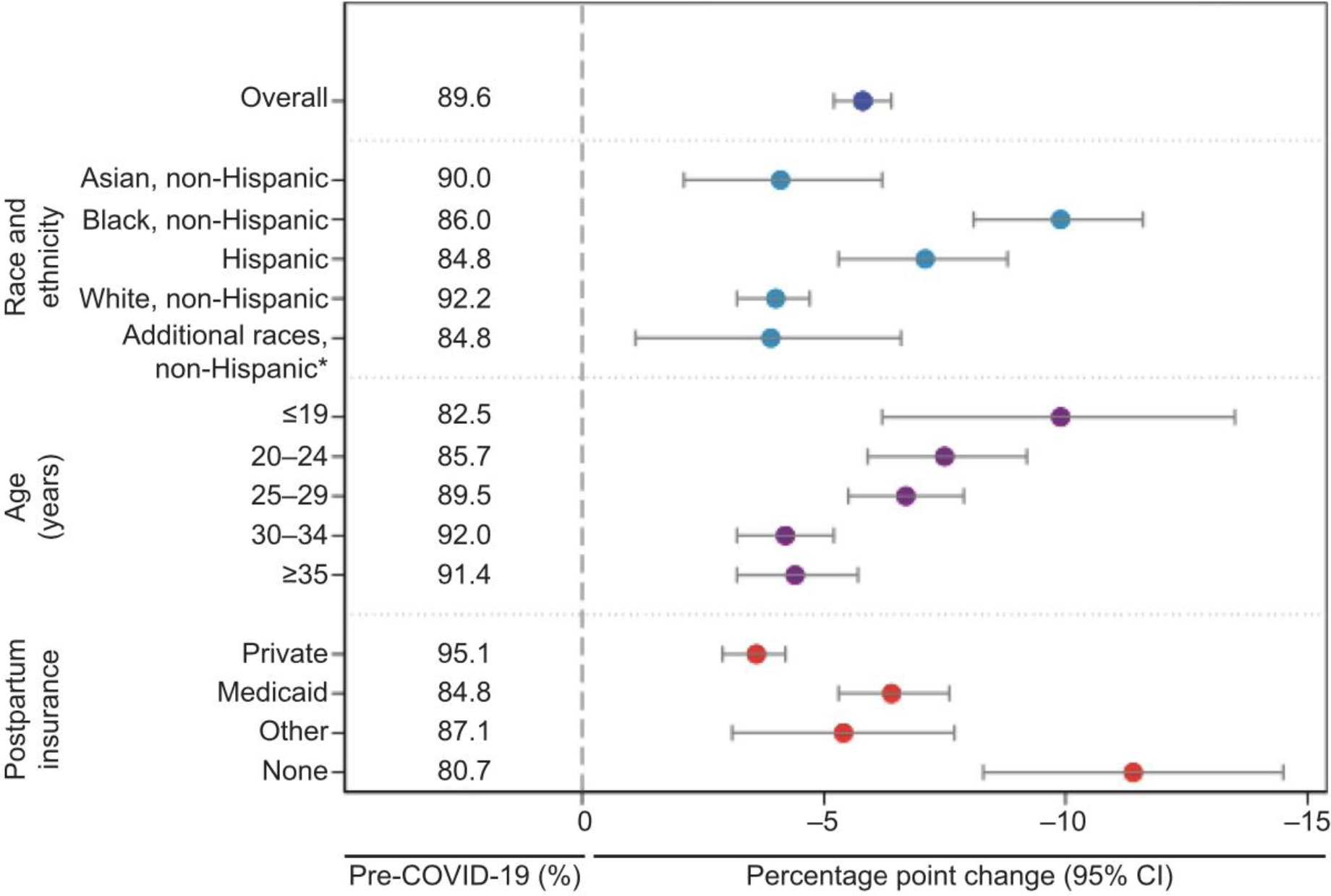
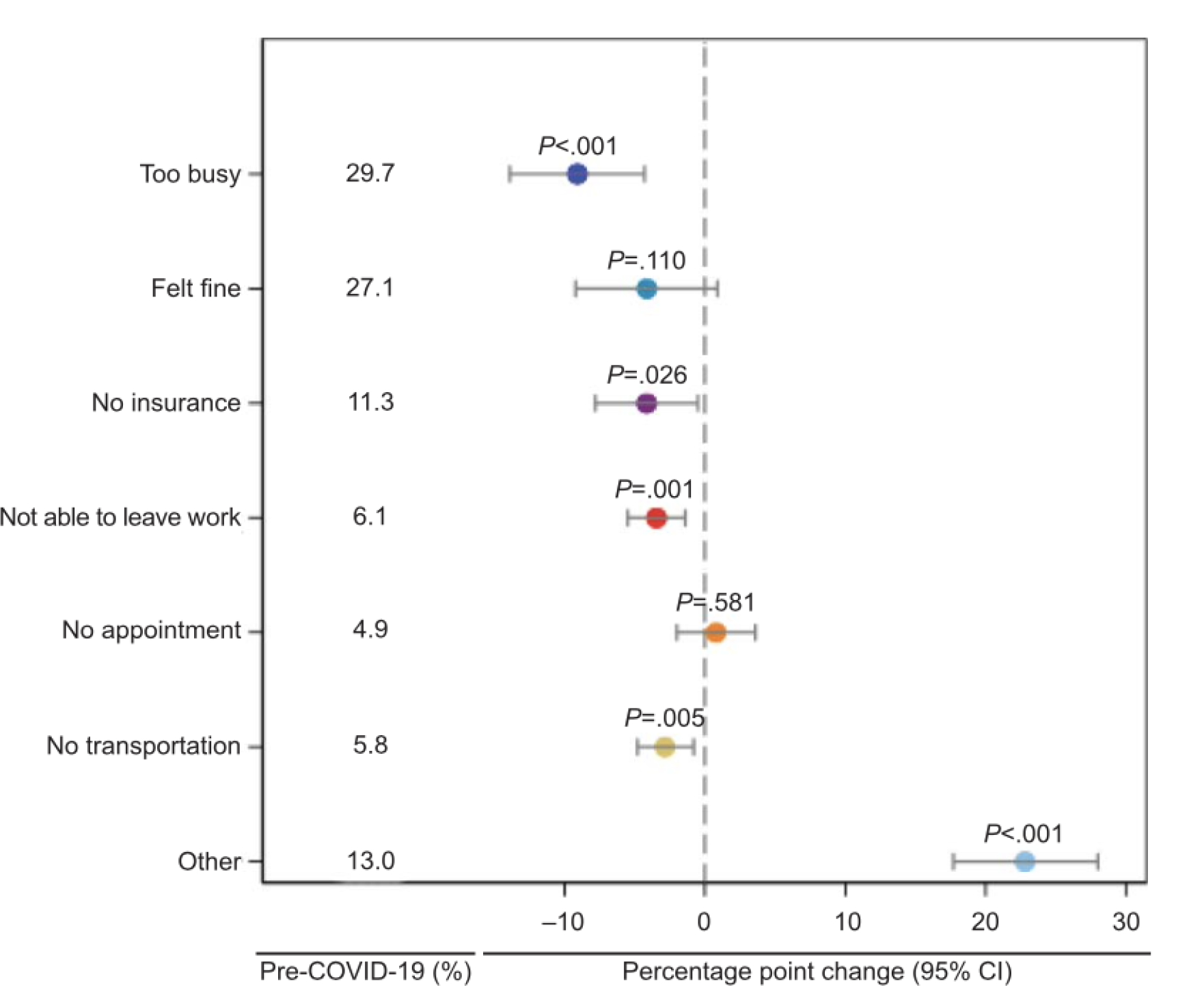
This study used data from PRAMS (Pregnancy Risk Assessment Monitoring System) between 2016 and 2020 and found that postpartum visit attendance declined by 5.8 (95% CI -6.4 to -5.2) percentage points in the first 9 months of the coronavirus disease 2019 (COVID-19) pandemic. The greatest declines occurred among non-Hispanic Black individuals (-9.9, 95% CI -11.6 to -8.1 percentage points), individuals aged 19 years or younger (-9.9, 95% CI -13.5 to -6.2 percentage points), and individuals without postpartum insurance (-11.4, 95% CI -14.5 to -8.3 percentage points). Although the pandemic was associated with a decrease in reporting common barriers to attendance, including lack of transportation and not being able to leave work, it introduced new barriers that potentially contributed to widened disparities in postpartum care. A combination of health policy and health system approaches are needed to increase postpartum visit attendance and reduce disparities in use.
这项研究使用了 2016 年至 2020 年期间 PRAMS(妊娠风险评估监测系统)的数据,发现新冠病毒疾病大流行的前 9 个月,产后访视出勤率下降了 5.8(95%CI-6.4 至-5.2)个百分点。非西班牙裔黑人(-9.9,95%CI-11.6 至-8.1 个百分点)、19 岁或以下的个体(-9.9,95%CI-13.5 至-6.2 个百分点)和没有产后保险的个体(-11.4,95%CI-14.5 至-8.3 个百分点)的降幅最大。尽管大流行与报道常见出席障碍(包括缺乏交通工具和无法离开工作)的减少有关,但它引入了新的障碍,可能导致产后护理差距进一步扩大。需要采取卫生政策和卫生系统相结合的方法,以增加产后访视出勤率并减少使用方面的差距。