Qiao Ou, Wang Xinyue, Wang Yuru, Li Ning, Gong Yanhua
Institute of Disaster and Emergency Medicine, Medical College, Tianjin University, No. 92 Weijin Road, Nankai District, Tianjin 300072, China; Tianjin Key Laboratory of Disaster Medicine Technology, Tianjin 300072, China.
Institute of Disaster and Emergency Medicine, Medical College, Tianjin University, No. 92 Weijin Road, Nankai District, Tianjin 300072, China; Tianjin Key Laboratory of Disaster Medicine Technology, Tianjin 300072, China.
J Adv Res. 2023 Dec;54:211-222. doi: 10.1016/j.jare.2023.01.016. Epub 2023 Jan 24.
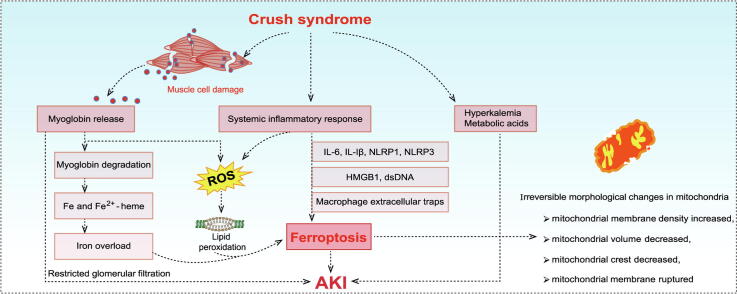
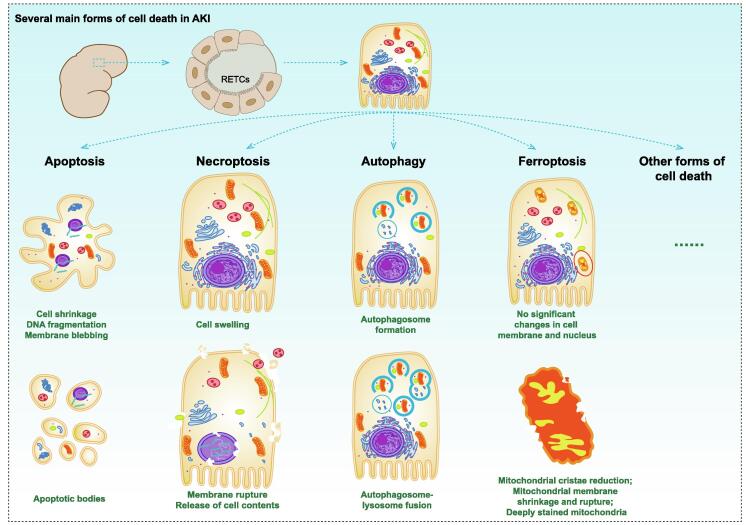
Crush syndrome (CS) is a kind of traumatic and ischemic injury that seriously threatens life after prolonged compression. It is characterized by systemic inflammatory reaction, myoglobinuria, hyperkalemia and acute kidney injury (AKI). Especially AKI, it is the leading cause of death from CS. There are various cell death forms in AKI, among which ferroptosis is a typical form of cell death. However, the role of ferroptosis has not been fully revealed in CS-AKI.
This review aimed to summarize the evidence of ferroptosis in CS-AKI and its related molecular mechanism, discuss the therapeutic significance of ferroptosis in CS-AKI, and open up new ideas for the treatment of CS-AKI.
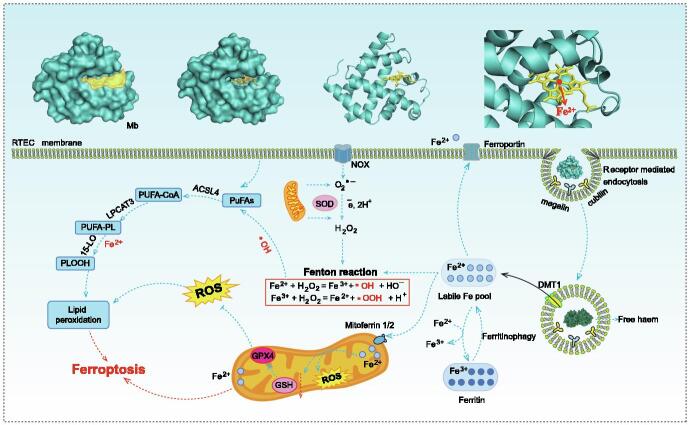
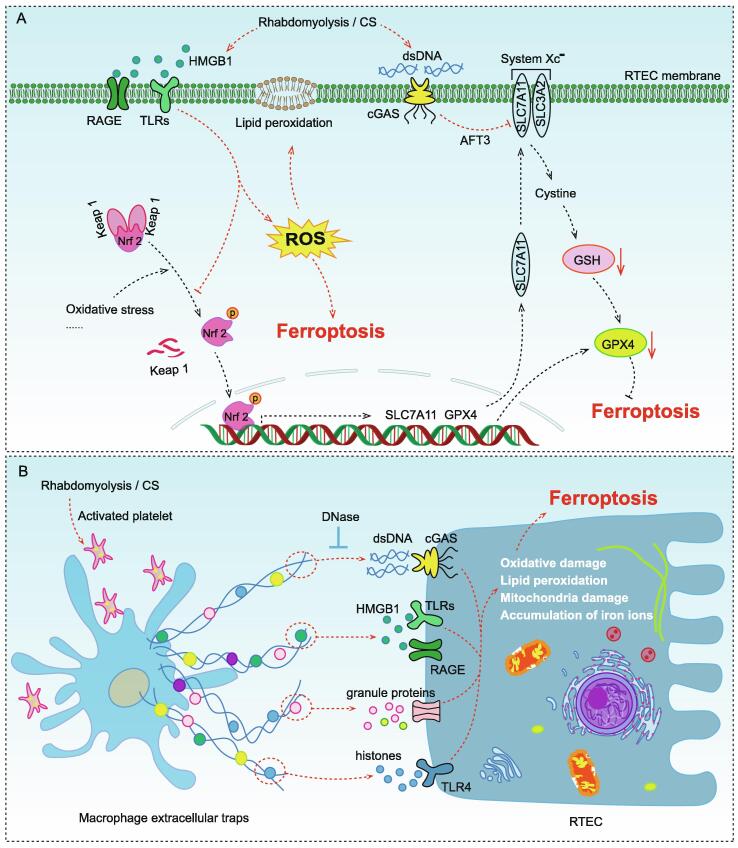
One of the main pathological manifestations of CS-AKI is renal tubular epithelial cell dysfunction and cell death, which has been attributed to massive deposition of myoglobin. Large amounts of myoglobin released from damaged muscle deposited in the renal tubules, impeding the normal renal tubules function and directly damaging the tubules with oxidative stress and elevated iron levels. Lipid peroxidation damage and iron overload are the distinguishing features of ferroptosis. Moreover, high levels of pro-inflammatory cytokines and damage-associated molecule pattern molecules (HMGB1, double-strand DNA, and macrophage extracellular trap) in renal tissue have been shown to promote ferroptosis. However, how ferroptosis occurs in CS-AKI and whether it can be a therapeutic target remains unclear. In our current work, we systematically reviewed the occurrence and underlying mechanism of ferroptosis in CS-AKI.
挤压综合征(CS)是一种创伤性缺血性损伤,在长时间受压后严重威胁生命。其特征为全身炎症反应、肌红蛋白尿、高钾血症和急性肾损伤(AKI)。尤其是AKI,它是CS致死的主要原因。AKI存在多种细胞死亡形式,其中铁死亡是一种典型的细胞死亡形式。然而,铁死亡在CS-AKI中的作用尚未完全揭示。
本综述旨在总结铁死亡在CS-AKI中的证据及其相关分子机制,探讨铁死亡在CS-AKI中的治疗意义,为CS-AKI的治疗开辟新思路。
CS-AKI的主要病理表现之一是肾小管上皮细胞功能障碍和细胞死亡,这归因于肌红蛋白的大量沉积。受损肌肉释放的大量肌红蛋白沉积在肾小管中,阻碍肾小管正常功能,并通过氧化应激和铁水平升高直接损伤肾小管。脂质过氧化损伤和铁过载是铁死亡的显著特征。此外,肾组织中高水平的促炎细胞因子和损伤相关分子模式分子(高迁移率族蛋白B1、双链DNA和巨噬细胞胞外陷阱)已被证明可促进铁死亡。然而,铁死亡在CS-AKI中如何发生以及它是否可以成为治疗靶点仍不清楚。在我们目前的工作中,我们系统地综述了CS-AKI中铁死亡的发生情况及其潜在机制。