Department of Periodontology, School and Hospital of Stomatology, China Medical University, Liaoning Provincial Key Laboratory of Oral Diseases, Shenyang, China.
Front Endocrinol (Lausanne). 2023 Jan 10;13:1051374. doi: 10.3389/fendo.2022.1051374. eCollection 2022.
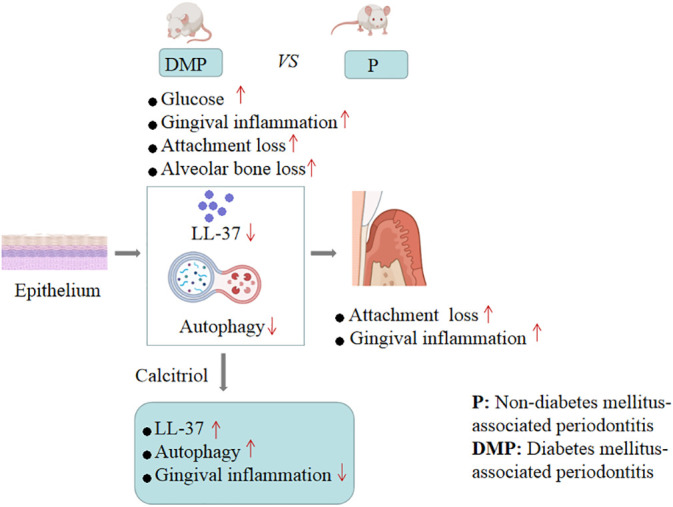
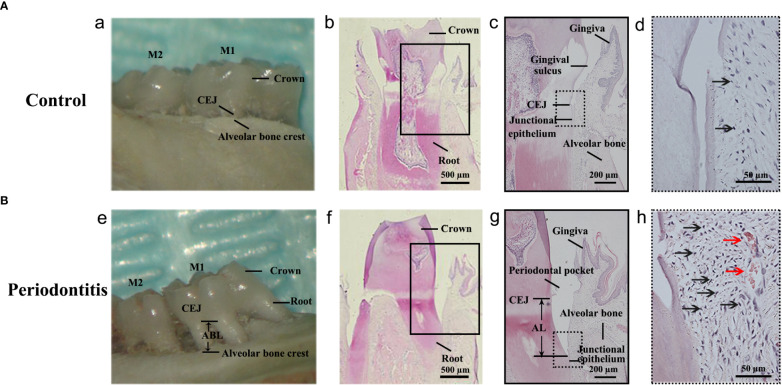
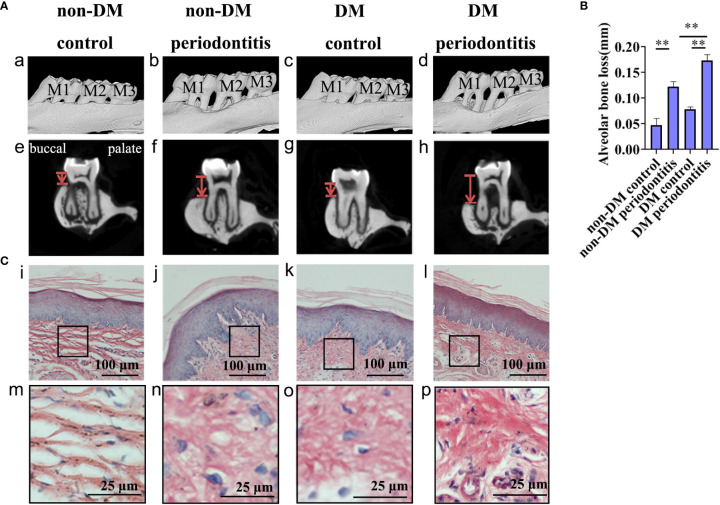
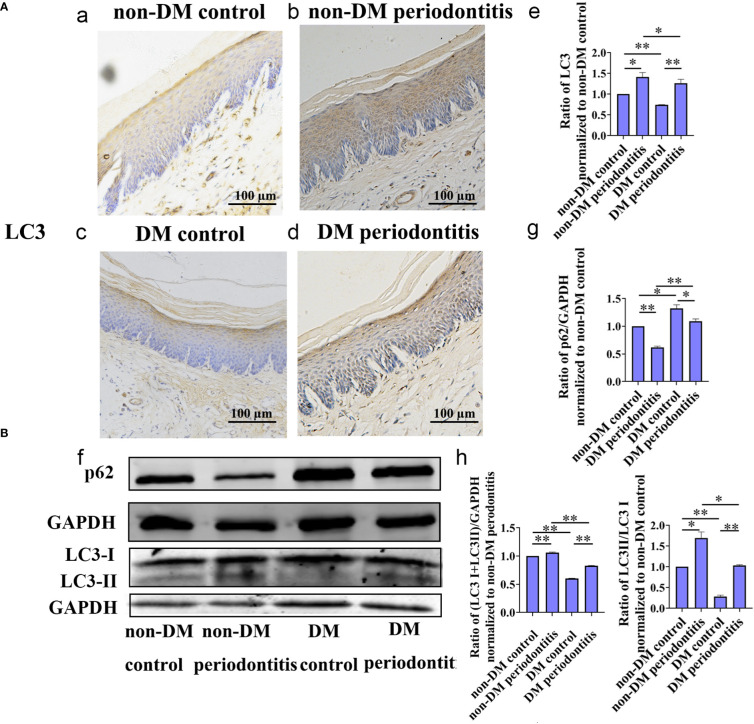
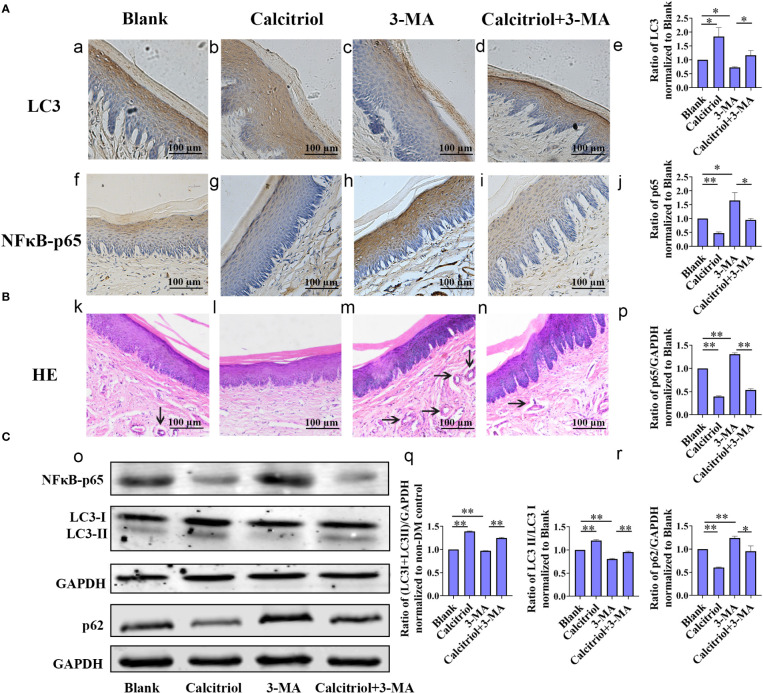
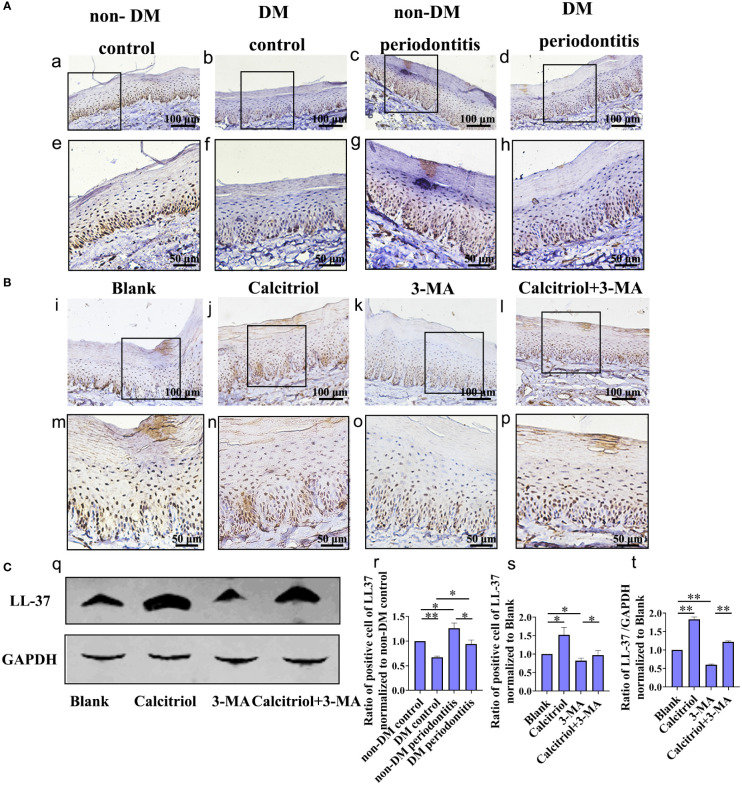
Type 2 diabetes mellitus (T2DM)-associated periodontitis is a common disease with high prevalence, associated with persistent infection and complicated manifestations. Calcitriol (1 alpha, 25-dihydroxyvitamin D3, 1,25D) is the active form of vitamin D that plays a protective role in immune regulation, bone metabolism, and inflammatory response. In this study, we constructed a T2DM model in rats by combining a high-fat diet with low-dose streptozotocin. The periodontitis model in rats was developed by ligation and (ATCC 33277) inoculation. Rats were randomly divided into five groups: non-diabetic blank, diabetic blank, diabetes with calcitriol treatment, diabetes with 3-methyladenine (3-MA) treatment, or diabetes with calcitriol and 3-MA treatment. The diabetic rats exhibited an intense inflammatory response and decreased autophagy compared with the non-diabetic rats. Intraperitoneal injection of calcitriol and autophagy inhibitor (3-MA) allowed us to explore the effect of calcitriol on inflammation in the gingival epithelium and the role of autophagy in this process. Treatment with calcitriol resulted in the decreased expression of NFκB-p65, p62/SQSTM1 and inflammatory response and increased expression of LC3-II/LC3-I. Application of 3-MA significantly suppressed autophagy, which was apparently retrieved by calcitriol. Antibacterial peptide (LL-37) is the only antimicrobial peptide in the cathelicidin family that is found in the human body, and it exhibits a broad spectrum of antibacterial activity and regulates the immune system. In the present study, our findings indicated that calcitriol-enhanced autophagy may attenuated periodontitis and the decrease of LL-37 was rescued by calcitriol treatment in the gingival epithelial cells of T2DM rats. Our study provides evidence for the application of calcitriol as an adjunctive treatment for T2DM-associated periodontitis.
2 型糖尿病相关牙周炎是一种常见疾病,具有高患病率,与持续感染和复杂表现相关。骨化三醇(1α,25-二羟维生素 D3,1,25D)是维生素 D 的活性形式,在免疫调节、骨代谢和炎症反应中发挥保护作用。在本研究中,我们通过结合高脂肪饮食和低剂量链脲佐菌素构建了大鼠 2 型糖尿病模型。通过结扎和(ATCC 33277)接种建立大鼠牙周炎模型。大鼠随机分为五组:非糖尿病空白组、糖尿病空白组、骨化三醇治疗糖尿病组、3-甲基腺嘌呤(3-MA)治疗糖尿病组和骨化三醇和 3-MA 联合治疗糖尿病组。与非糖尿病大鼠相比,糖尿病大鼠表现出强烈的炎症反应和自噬减少。腹腔注射骨化三醇和自噬抑制剂(3-MA),我们可以探讨骨化三醇对牙龈上皮炎症的影响以及自噬在这一过程中的作用。骨化三醇治疗导致 NFκB-p65、p62/SQSTM1 和炎症反应的表达减少,LC3-II/LC3-I 的表达增加。3-MA 的应用明显抑制了自噬,而骨化三醇则明显恢复了自噬。抗菌肽(LL-37)是人体中唯一的抗菌肽,属于抗菌肽家族,具有广谱的抗菌活性,并调节免疫系统。在本研究中,我们的研究结果表明,骨化三醇增强的自噬可能减轻 2 型糖尿病大鼠的牙周炎,并且骨化三醇治疗可挽救牙龈上皮细胞中 LL-37 的减少。我们的研究为骨化三醇作为 2 型糖尿病相关牙周炎的辅助治疗提供了依据。