Khodir Suzan A, Samaka Rehab M, Ameen Omnia
Physiology Department, Faculty of Medicine, Menoufia University, Shebeen El-Kom, Menoufia, Egypt.
Pathology Department, Faculty of Medicine, Menoufia University, Shebeen El-Kom, Menoufia, Egypt.
Int J Nephrol. 2020 May 13;2020:7941861. doi: 10.1155/2020/7941861. eCollection 2020.
Not only is diabetic nephropathy (DN) the most common cause of end-stage renal disease worldwide, but it also increases the risk of mortality up to fourteen times compared to normoalbuminuric diabetic patients.
The aim of the current study was the evaluation of the renoprotective effects of vitamin D in DN and the possible interplay between autophagy and mTOR pathways.
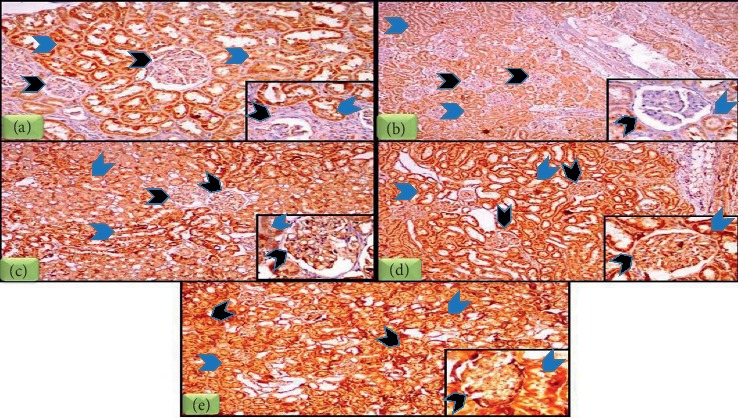
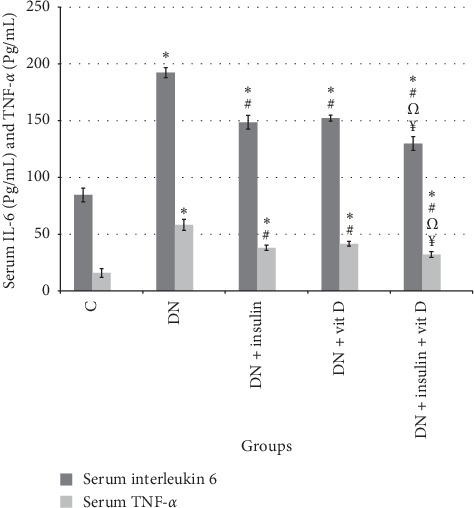
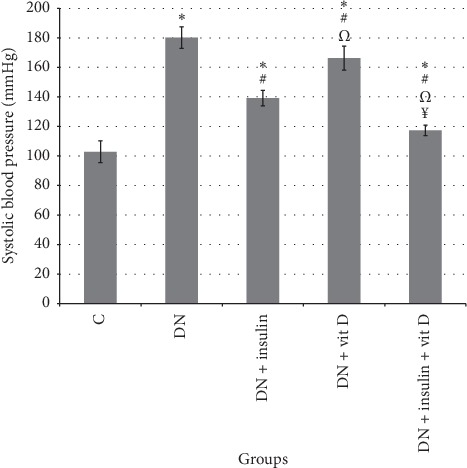
Fifty male Wistar albino rats were divided (10/group) into control, DN group, insulin-treated DN group, vitamin D-treated DN group, and combined insulin and vitamin D-treated DN group. Assessments of systolic blood pressure, albuminuria, creatinine clearance, serum glucose, insulin, urea, creatinine, inflammatory cytokines, oxidative stress markers, and rat kidney gene expression of mTOR were performed. Histopathological and immunohistochemical assessments of autophagy marker LC3 in rat kidneys were also performed.
DN was associated with significant increases in SBP, urinary albumin, serum glucose, urea, creatinine, inflammatory cytokines, MDA, and mTOR gene expression ( < 0.05). However, there was significant decrease in creatinine clearance, serum insulin, GSH, and H score value of LC3 when compared with control group ( < 0.05). The combination of insulin and vitamin D treatment significantly restored DN changes when compared with the other treated groups, except in oxidative stress markers where there was an insignificant difference between the combination-treated and insulin-treated groups ( > 0.05).
It has been concluded that vitamin D is a potent adjuvant therapy in treatment of DN via downregulation of mTOR gene expression, stimulation of autophagy, and antioxidant, anti-inflammatory, and hypotensive effects.
糖尿病肾病(DN)不仅是全球终末期肾病最常见的病因,而且与尿白蛋白正常的糖尿病患者相比,其死亡风险增加高达14倍。
本研究旨在评估维生素D对糖尿病肾病的肾脏保护作用以及自噬与mTOR信号通路之间可能的相互作用。
将50只雄性Wistar白化大鼠(每组10只)分为对照组、糖尿病肾病组、胰岛素治疗糖尿病肾病组、维生素D治疗糖尿病肾病组以及胰岛素联合维生素D治疗糖尿病肾病组。对收缩压、蛋白尿、肌酐清除率、血糖、胰岛素、尿素、肌酐、炎性细胞因子、氧化应激标志物以及大鼠肾脏中mTOR的基因表达进行评估。还对大鼠肾脏中自噬标志物LC3进行了组织病理学和免疫组织化学评估。
糖尿病肾病与收缩压、尿白蛋白、血糖、尿素、肌酐、炎性细胞因子、丙二醛和mTOR基因表达显著增加相关(P<0.05)。然而,与对照组相比,肌酐清除率、血清胰岛素、谷胱甘肽以及LC3的H评分值显著降低(P<0.05)。与其他治疗组相比,胰岛素和维生素D联合治疗显著恢复了糖尿病肾病的变化,但在氧化应激标志物方面,联合治疗组与胰岛素治疗组之间无显著差异(P>0.05)。
得出的结论是,维生素D通过下调mTOR基因表达、刺激自噬以及抗氧化、抗炎和降压作用,是治疗糖尿病肾病的有效辅助疗法。