Yadav Arun Kumar, Ahsan Amra, Kumar Vijay
Amity Institute of Behavioral and Allied Sciences (AIBAS), Amity University Jaipur, Rajasthan, India.
Department of Audiology & Speech-Language Pathology, Amity University Haryana, Gurgaon, India.
J Audiol Otol. 2023 Jan;27(1):10-15. doi: 10.7874/jao.2022.00290. Epub 2023 Jan 10.
Severe to profound hearing loss impacts the capacity for verbal communication as well as the social, emotional, and overall quality of life; however, the association between socio-emotional rehabilitation and post-hearing aid use is not widely explored. This study aimed to investigate the socio-emotional change in post-hearing aid fitted individuals with severe to profound hearing loss. Materials and.
A total of 60 individuals comprised of 15 females and 45 males with severe to profound hearing loss within the age range of 40-60 years (mean age and standard deviation of 53.4±6.1), participated in this study. Participants were divided into two categories with a 10-year age interval i.e., 40-50 and 51-60 years. These participants were equally divided into hearing aid user (HAU) and non-hearing aid user (NHAU) groups. The hearing handicapped inventory for the adults-short version (HHIA-S) adapted from Weinstein & Ventry (1983) was used in this study.
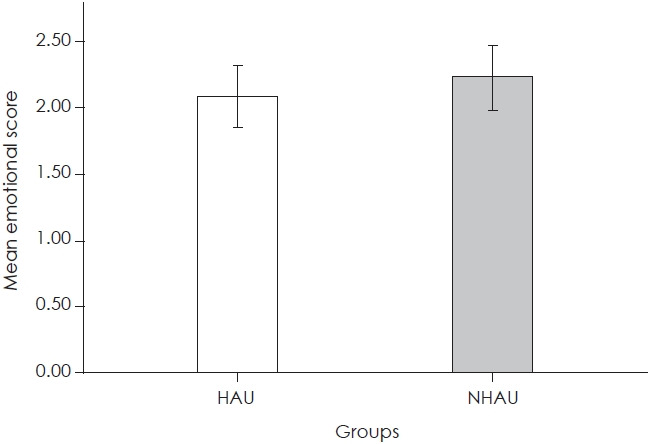
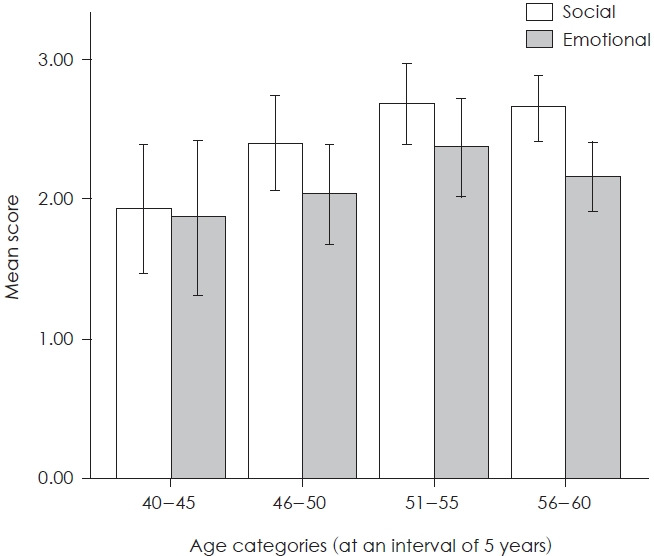
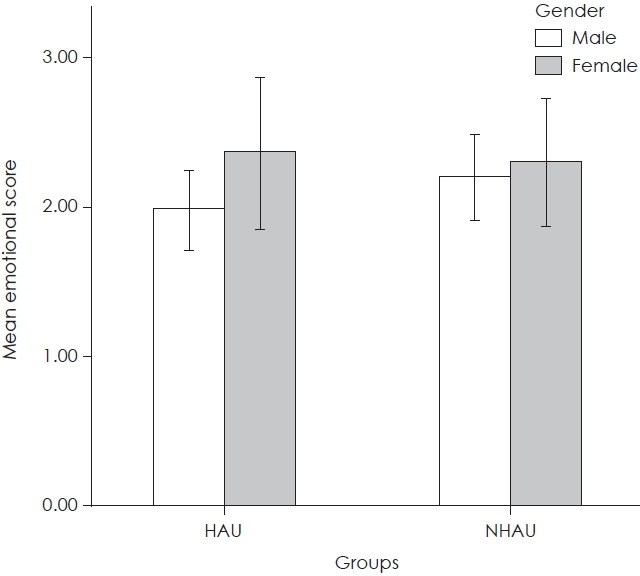
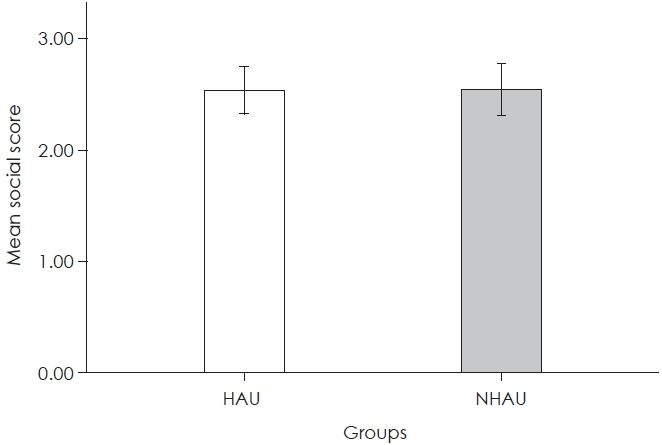
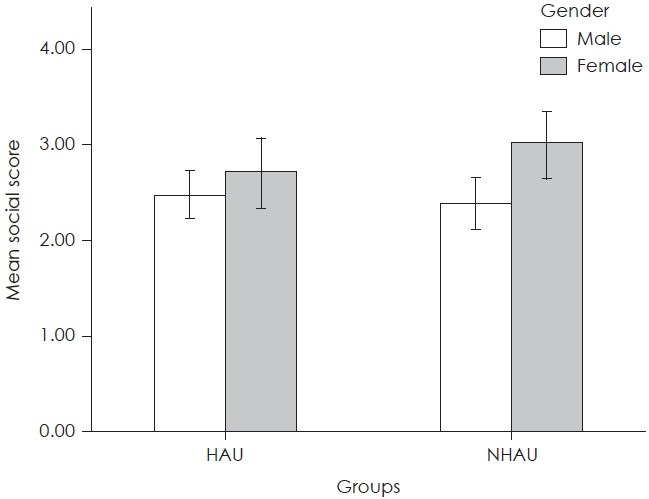
The mean social score of all the participants was significantly higher than the mean emotional score. However, no such advantage was observed between the HAU and NHAU groups. The mean social score of females in the HAU category was significantly higher than males. The mean social and emotional scores were also compared across two age categories in the age range of 40-50 and 51-60 years and revealed no significant difference between mean social and emotional score across the age categories (p=0.026).
In individuals with severe to profound hearing loss, social rehabilitation occurs quicker than emotional. In the HAU group, socialization occurred faster in females than males. These findings suggest that a customized counselling should be developed for the social and emotional wellbeing as these two parameters improve distinctly.
重度至极重度听力损失会影响言语交流能力以及社交、情感和整体生活质量;然而,社会情感康复与使用助听器后的关联尚未得到广泛研究。本研究旨在调查重度至极重度听力损失患者佩戴助听器后社会情感的变化。材料与方法:共有60名年龄在40 - 60岁(平均年龄53.4±6.1)的重度至极重度听力损失患者参与了本研究,其中包括15名女性和45名男性。参与者按年龄间隔10岁分为两类,即40 - 50岁和51 - 60岁。这些参与者被平均分为助听器使用者(HAU)组和非助听器使用者(NHAU)组。本研究使用了改编自温斯坦和文特里(1983年)的成人听力障碍简易量表(HHIA - S)。结果:所有参与者的平均社交得分显著高于平均情感得分。然而,HAU组和NHAU组之间未观察到这种优势。HAU类别中女性的平均社交得分显著高于男性。还对40 - 50岁和51 - 60岁两个年龄组的平均社交和情感得分进行了比较,结果显示不同年龄组之间的平均社交和情感得分无显著差异(p = 0.026)。结论:在重度至极重度听力损失患者中,社会康复比情感康复发生得更快。在HAU组中,女性的社交化比男性更快。这些发现表明,应针对社会和情感健康制定个性化咨询,因为这两个参数的改善情况明显不同。