Wei Jingkai, Li Kun, Kim Youngran, Ghosal Rahul, Zhang Donglan, Merchant Anwar T, Crump Casey
Department of Family and Community Medicine, McGovern Medical School, University of Texas Health Science Center at Houston, Houston, TX, USA.
Duke-Margolis Institute for Health Policy, Duke University, Washington, DC, USA.
J Geriatr Psychiatry Neurol. 2025 May;38(3):172-179. doi: 10.1177/08919887241302107. Epub 2024 Nov 21.
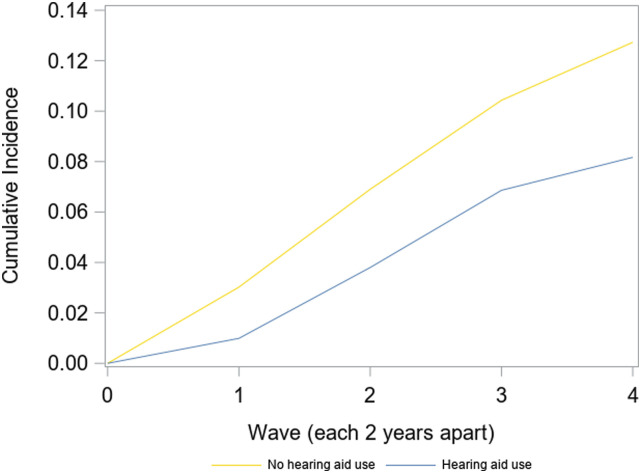
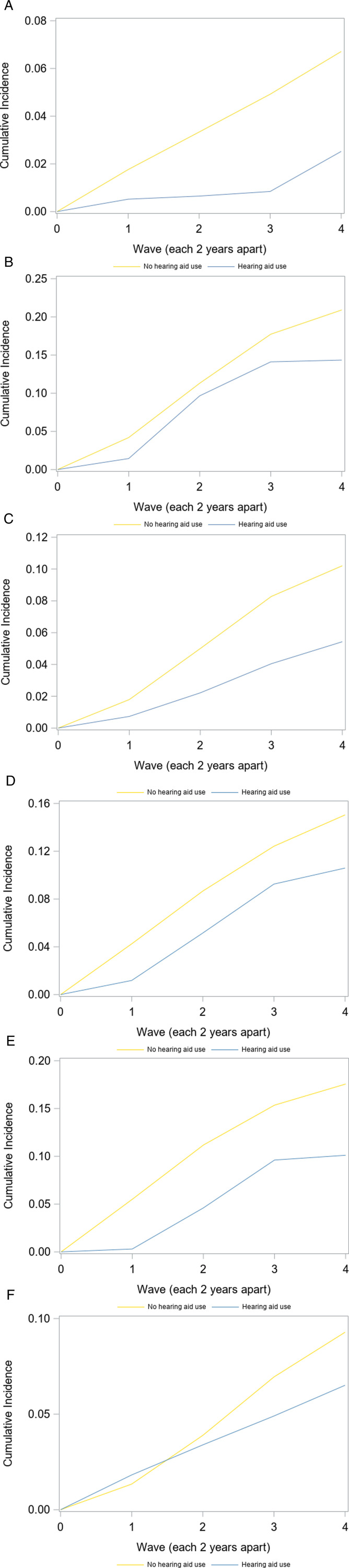
Background and ObjectivesHearing aids may reduce the risk of dementia among individuals with hearing loss. However, no evidence is available from randomized controlled trials (RCTs) on the effectiveness of hearing aids use in reducing incident dementia. Using target trial emulation, we leveraged an existing longitudinal cohort study to estimate the association between hearing aids initiation and risk of dementia.Research Design and MethodsThe Health and Retirement Study was used to emulate target trials among non-institutionalized participants aged ≥50 years with self-reported hearing loss, without dementia at baseline, and without use of hearing aids in the previous 2 years. Intention-to-treat analysis was conducted to estimate the risk of dementia associated with hearing aids initiation vs controls who did not initiate hearing aids. Pooled logistic regression models with inverse-probability of treatment and censoring weights were applied to estimate risk ratios, and 95% confidence intervals were calculated using 1000 sets of bootstrapping.ResultsAmong 2314 participants (328 in the intervention group and 1986 in the control group; average age: 72.3 ± 9.7 years, 49% women, and 81% White), after 8 years of follow-up, risk of dementia was significantly lower among individuals who initiated hearing aids (risk difference (RD): -0.05, 95% confidence interval (CI): -0.08, -0.01). A lower risk was observed particularly among adults aged 50-74 years, men, and individuals with cardiovascular disease.Discussion and ImplicationsHearing aids use was associated with a significant reduction of incident dementia. Future interventional studies are needed to further assess the effectiveness of hearing aids in preventing dementia.
背景与目的
助听器可能会降低听力损失个体患痴呆症的风险。然而,尚无随机对照试验(RCT)提供的证据表明使用助听器在降低痴呆症发病率方面的有效性。我们采用目标试验模拟方法,利用一项现有的纵向队列研究来估计开始使用助听器与痴呆症风险之间的关联。
研究设计与方法
健康与退休研究用于在年龄≥50岁、自我报告有听力损失、基线时无痴呆症且在过去2年未使用助听器的非机构化参与者中模拟目标试验。进行意向性分析以估计与开始使用助听器的参与者相比未开始使用助听器的对照组患痴呆症的风险。应用带有治疗逆概率和删失权重的合并逻辑回归模型来估计风险比,并使用1000组自抽样计算95%置信区间。
结果
在2314名参与者中(干预组328名,对照组1986名;平均年龄:72.3±9.7岁,49%为女性,81%为白人),经过8年随访,开始使用助听器的个体患痴呆症的风险显著更低(风险差(RD):-0.05,95%置信区间(CI):-0.08,-0.01)。尤其在50 - 74岁的成年人、男性以及患有心血管疾病的个体中观察到较低风险。
讨论与启示
使用助听器与显著降低痴呆症发病率相关。未来需要进行进一步的干预性研究以评估助听器在预防痴呆症方面的有效性。