Maraqah Haitham H, Abu-Asab Mones S, Lee Han Sung, Aboud Orwa
An-Najah National University.
National Eye Institute, National Institutes of Health.
Res Sq. 2023 Jan 17:rs.3.rs-2456733. doi: 10.21203/rs.3.rs-2456733/v1.
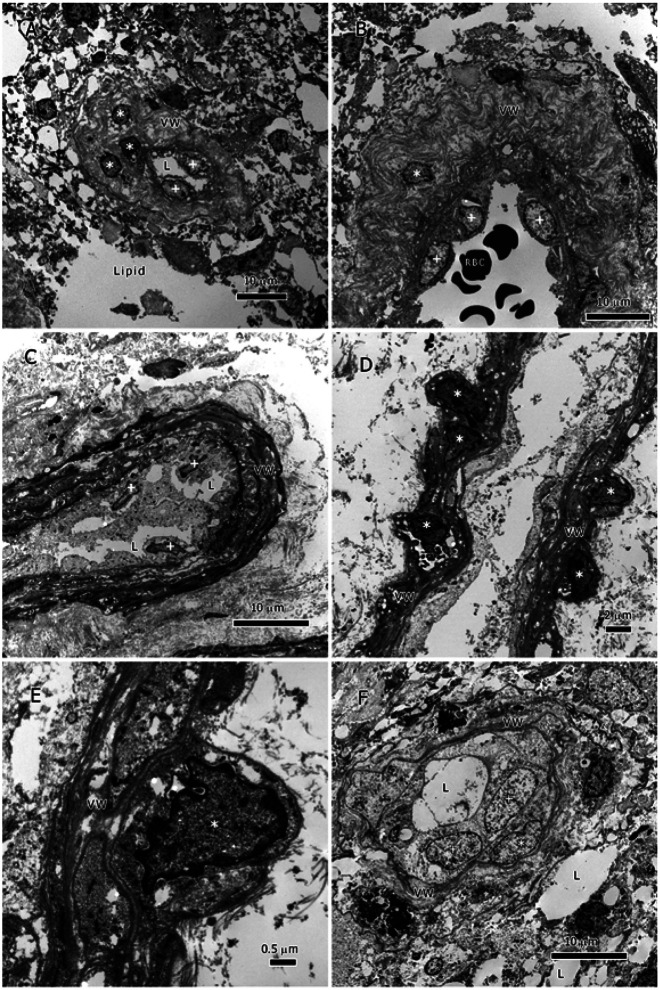
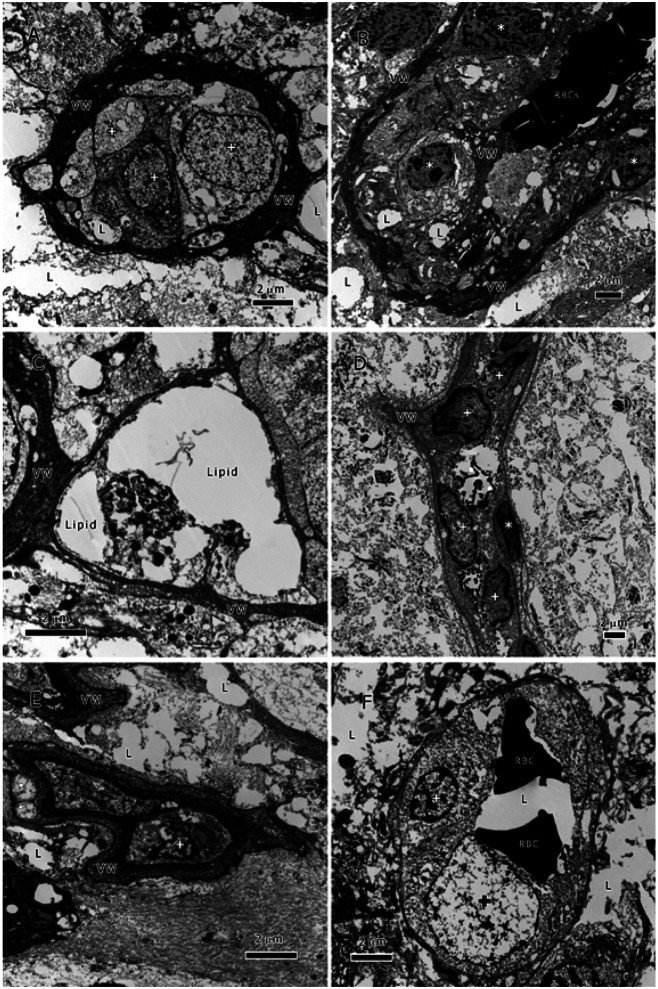
Gliomas are the most prevalent type of malignant brain tumors with a very dismal prognosis. Angiogenesis in glioma has recently gotten more attention and its molecular aspects have been published; however, these were not complemented with ultrastructural evidence. Our ultrastructural examination of glioma vessels reveals several unique and critical features related to their mechanisms of progression and metastasis strategy. The detailed ultrastructural survey of 18 -wildtype glioblastomas (GBM) and 12 -mutant High-grade gliomas indicated that tumor vessels of both types had undergone deformities such as the thickening of the vessel wall (VW) and proliferation of the basement membrane, contour distortions, abnormal and discontinuous basal lamina, tumor cells' invasion and colonization of VW, disappearance of endothelial cells (ECs), pericytes, and smooth muscle cells, as well as the formation of a continuous ring of tumor cells attached to the luminal side of VW in numerous cases. The latter feature is a clear sign of vascular mimicry (VM) that was previously suggested in gliomas but never shown by TEM. Additionally, the vascular invasion was carried out by a large number of tumor cells and was accompanied by the accumulation of tumor lipids in the vessels' lumina and VWs; these two features are distinct for gliomas and may alter the course of the clinical presentation and overall prognosis. This raises the issue of how to specifically target tumor cells involved in vascular invasion in order to optimize prognosis and overcome these mechanisms employed by the tumor cells.
神经胶质瘤是最常见的恶性脑肿瘤类型,预后非常差。神经胶质瘤中的血管生成最近受到了更多关注,其分子层面的研究也已发表;然而,这些研究缺乏超微结构证据的补充。我们对神经胶质瘤血管的超微结构检查揭示了一些与其进展机制和转移策略相关的独特且关键的特征。对18例野生型胶质母细胞瘤(GBM)和12例突变型高级别神经胶质瘤进行的详细超微结构调查表明,这两种类型的肿瘤血管都出现了畸形,如血管壁增厚、基底膜增殖、轮廓扭曲、基底膜异常和不连续、肿瘤细胞侵入并定植于血管壁、内皮细胞、周细胞和平滑肌细胞消失,以及在许多情况下在血管壁管腔侧形成连续的肿瘤细胞环。后一特征是血管生成拟态(VM)的明显迹象,此前在神经胶质瘤中曾有过推测,但从未通过透射电子显微镜(TEM)证实。此外,大量肿瘤细胞进行血管侵袭,并伴有肿瘤脂质在血管腔和血管壁中的积聚;这两个特征在神经胶质瘤中是独特的,可能会改变临床表现和总体预后的进程。这就提出了一个问题,即如何特异性地靶向参与血管侵袭的肿瘤细胞,以优化预后并克服肿瘤细胞所采用的这些机制。