Wang Jun, An Meilin, Haubner Bernhard Johannes, Penninger Josef M
Department of Medical Genetics, Life Sciences Institute, The University of British Columbia, Vancouver, BC, Canada.
Department of Internal Medicine III (Cardiology and Angiology), Innsbruck Medical University, Innsbruck, Austria.
Front Cardiovasc Med. 2023 Jan 12;9:981982. doi: 10.3389/fcvm.2022.981982. eCollection 2022.
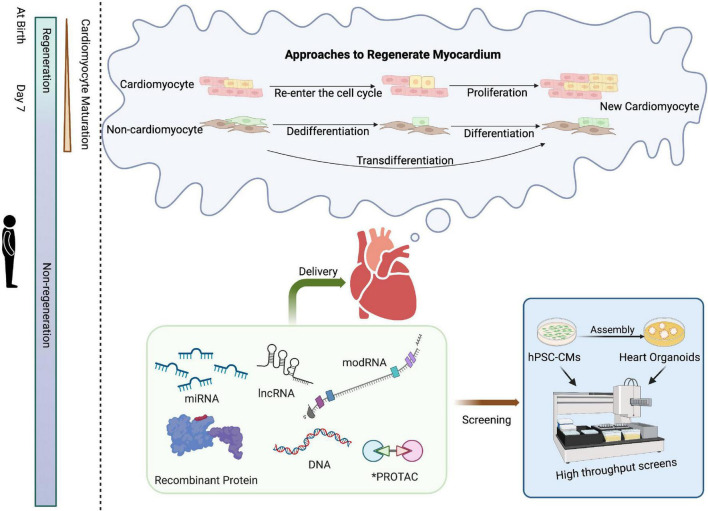
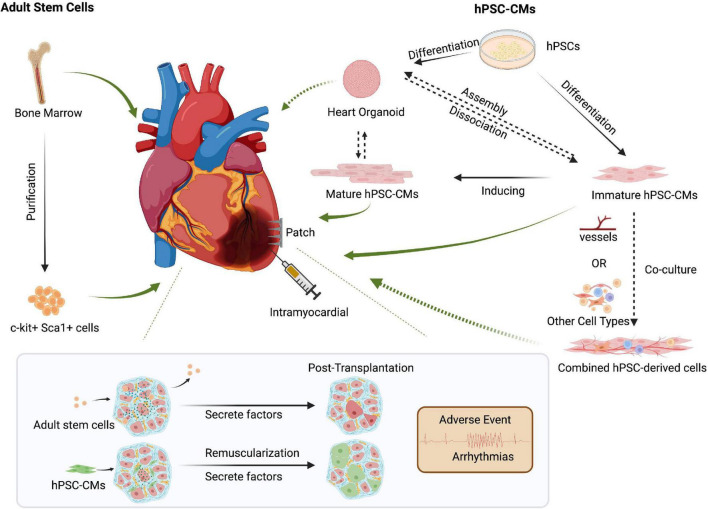
Cardiac regeneration is one of the grand challenges in repairing injured human hearts. Numerous studies of signaling pathways and metabolism on cardiac development and disease pave the way for endogenous cardiomyocyte regeneration. New drug delivery approaches, high-throughput screening, as well as novel therapeutic compounds combined with gene editing will facilitate the development of potential cell-free therapeutics. In parallel, progress has been made in the field of cell-based therapies. Transplantation of human pluripotent stem cell (hPSC)-derived cardiomyocytes (hPSC-CMs) can partially rescue the myocardial defects caused by cardiomyocyte loss in large animals. In this review, we summarize current cell-based and cell-free regenerative therapies, discuss the importance of cardiomyocyte maturation in cardiac regenerative medicine, and envision new ways of regeneration for the injured heart.
心脏再生是修复受损人类心脏的重大挑战之一。众多关于心脏发育和疾病中信号通路及代谢的研究为内源性心肌细胞再生铺平了道路。新的药物递送方法、高通量筛选以及与基因编辑相结合的新型治疗化合物将推动潜在的无细胞疗法的发展。与此同时,基于细胞的疗法领域也取得了进展。人多能干细胞(hPSC)衍生的心肌细胞(hPSC-CMs)移植可部分挽救大型动物因心肌细胞丢失而导致的心肌缺陷。在本综述中,我们总结了当前基于细胞和无细胞的再生疗法,讨论了心肌细胞成熟在心脏再生医学中的重要性,并展望了受损心脏再生的新途径。