Hunting Ellard R, England Sam J, Koh Kuang, Lawson Dave A, Brun Nadja R, Robert Daniel
School of Biological Sciences, University of Bristol, Bristol BS8 1TQ, UK.
Biology Department, Woods Hole Oceanographic Institution, 86 Water St, Falmouth, MA 02543, USA.
PNAS Nexus. 2022 Nov 9;1(5):pgac230. doi: 10.1093/pnasnexus/pgac230. eCollection 2022 Nov.
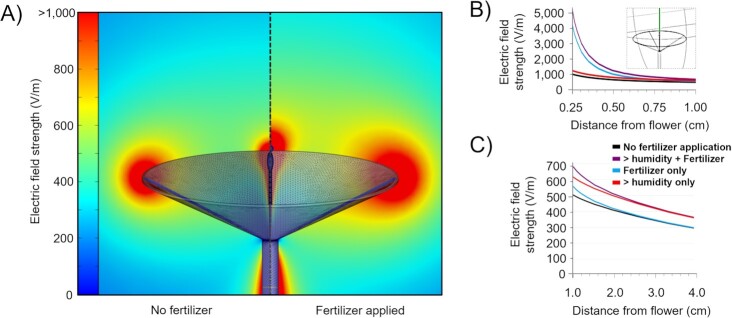
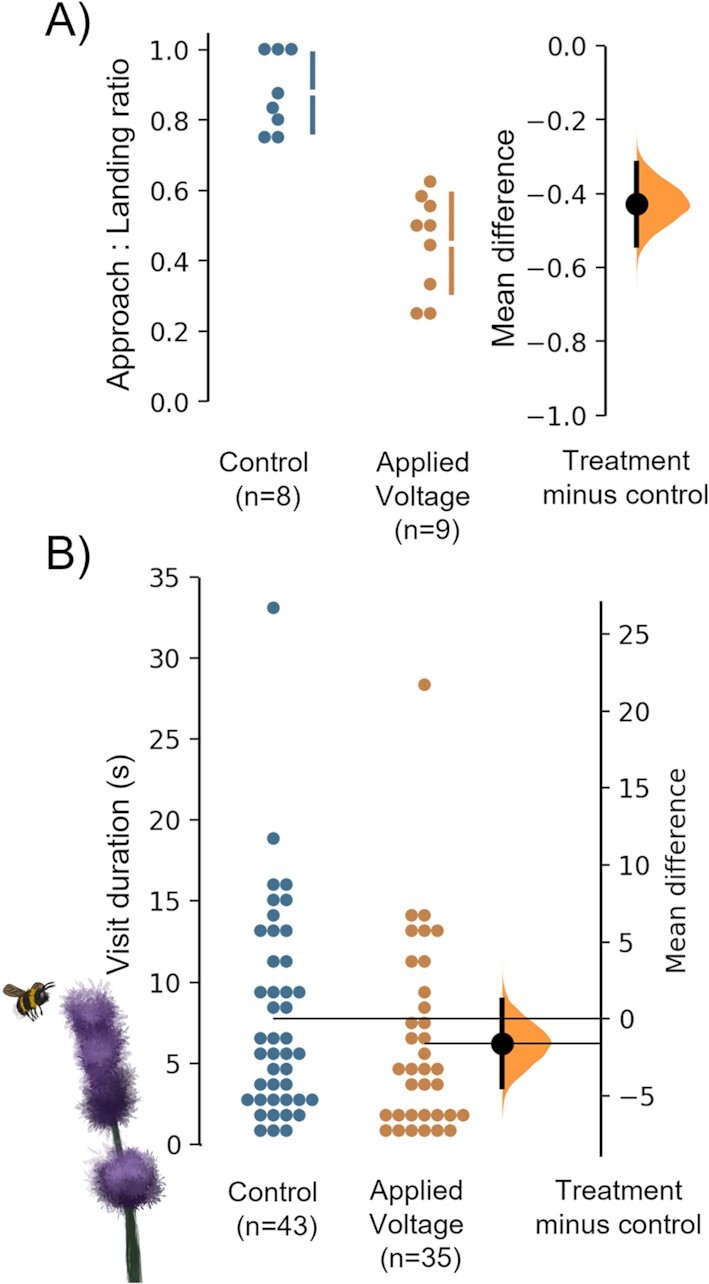
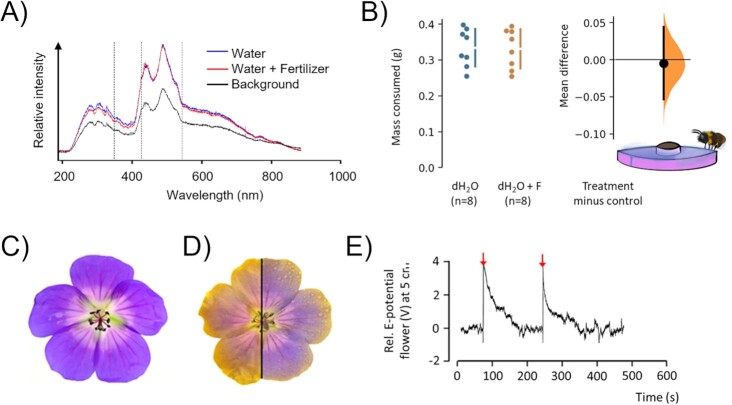
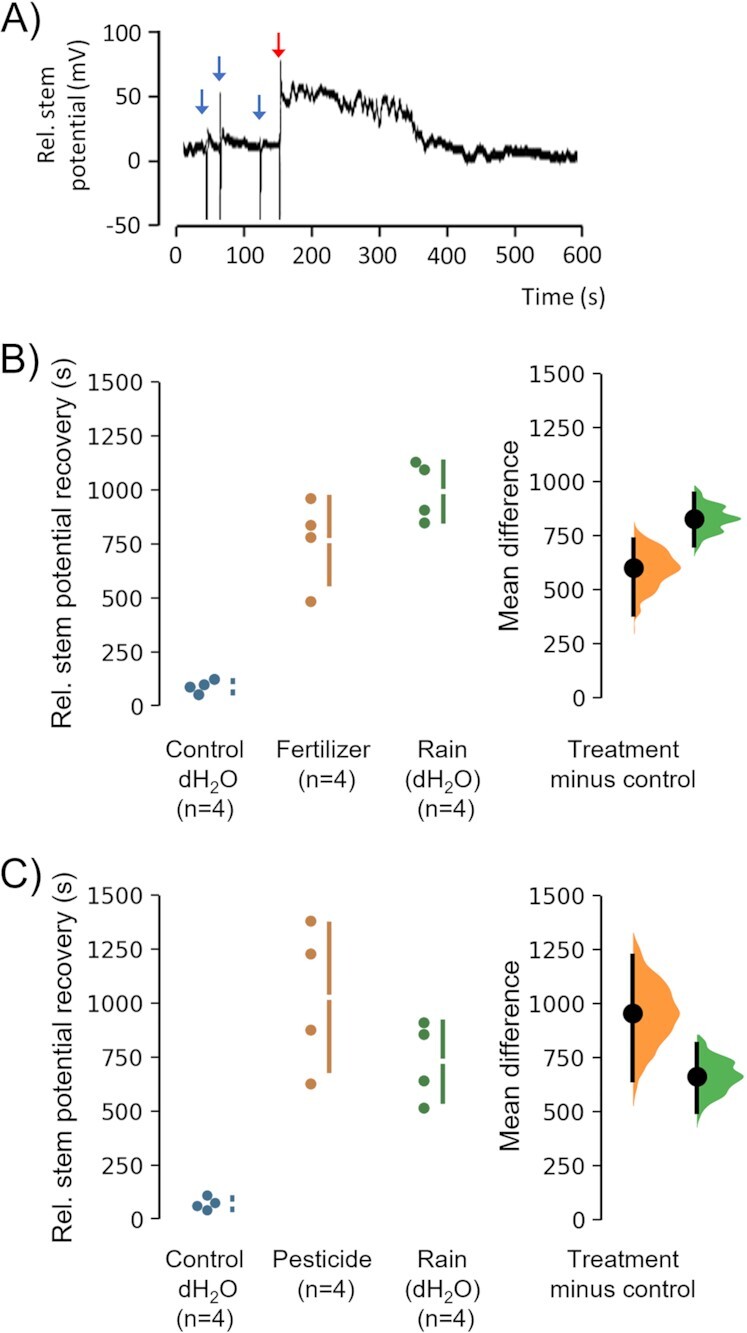
The use of agrochemicals is increasingly recognized as interfering with pollination services due to its detrimental effects on pollinators. Compared to the relatively well-studied chemical toxicity of agrochemicals, little is known on how they influence various biophysical floral cues that are used by pollinating insects to identify floral rewards. Here, we show that widely used horticultural and agricultural synthetic fertilizers affect bumblebee foraging behavior by altering a complex set of interlinked biophysical properties of the flower. We provide empirical and model-based evidence that synthetic fertilizers recurrently alter the magnitude and dynamics of floral electrical cues, and that similar responses can be observed with the neonicotinoid pesticide imidacloprid. We show that biophysical responses interact in modifying floral electric fields and that such changes reduce bumblebee foraging, reflecting a perturbation in the sensory events experienced by bees during flower visitation. This unveils a previously unappreciated anthropogenic interference elicited by agrochemicals within the electric landscape that is likely relevant for a wide range of chemicals and organisms that rely on naturally occurring electric fields.
由于农用化学品对传粉者有不利影响,其使用越来越被认为会干扰授粉服务。与农用化学品相对已得到充分研究的化学毒性相比,人们对它们如何影响传粉昆虫用于识别花蜜奖励的各种生物物理花部信号知之甚少。在这里,我们表明广泛使用的园艺和农业合成肥料通过改变花朵复杂的相互关联的生物物理特性来影响大黄蜂的觅食行为。我们提供了基于实证和模型的证据,证明合成肥料会反复改变花部电信号的强度和动态,并且使用新烟碱类杀虫剂吡虫啉也能观察到类似的反应。我们表明生物物理反应在改变花部电场方面相互作用,并且这种变化会减少大黄蜂的觅食行为,这反映了蜜蜂在访花过程中所经历的感官事件受到了干扰。这揭示了农用化学品在电环境中引发的一种以前未被认识到的人为干扰,这种干扰可能与广泛的依赖自然电场的化学物质和生物有关。