Olze Heidi, Ketterer Manuel Christoph, Péus Dominik, Häußler Sophia Marie, Hildebrandt Lynn, Gräbel Stefan, Szczepek Agnieszka J
Department of Otorhinolaryngology, Head and Neck Surgery, Charité - Universitätsmedizin Berlin, Corporate Member of Freie Universität Berlin and Humboldt Universität zu Berlin, Berlin, Germany.
Department of Otorhinolaryngology-Head and Neck Surgery, Faculty of Medicine, Medical Center, University of Freiburg, Freiburg, Germany.
Front Neurol. 2023 Jan 12;13:1089610. doi: 10.3389/fneur.2022.1089610. eCollection 2022.
Auditory rehabilitation with a cochlear implant (CI), in many cases, positively impacts tinnitus. However, it is unclear if the tinnitus-related benefit of CI is equal for patients with various indications for CI. Therefore, this study aimed to determine differences in tinnitus prevalence and distress, health-related quality of life, subjective hearing, perceived stress, and psychological comorbidities between patients diagnosed with asymmetric hearing loss (AHL), single-sided (unilateral) deafness (SSD), and double-sided (bilateral) deafness (DSD) before and six months after cochlear implantation.
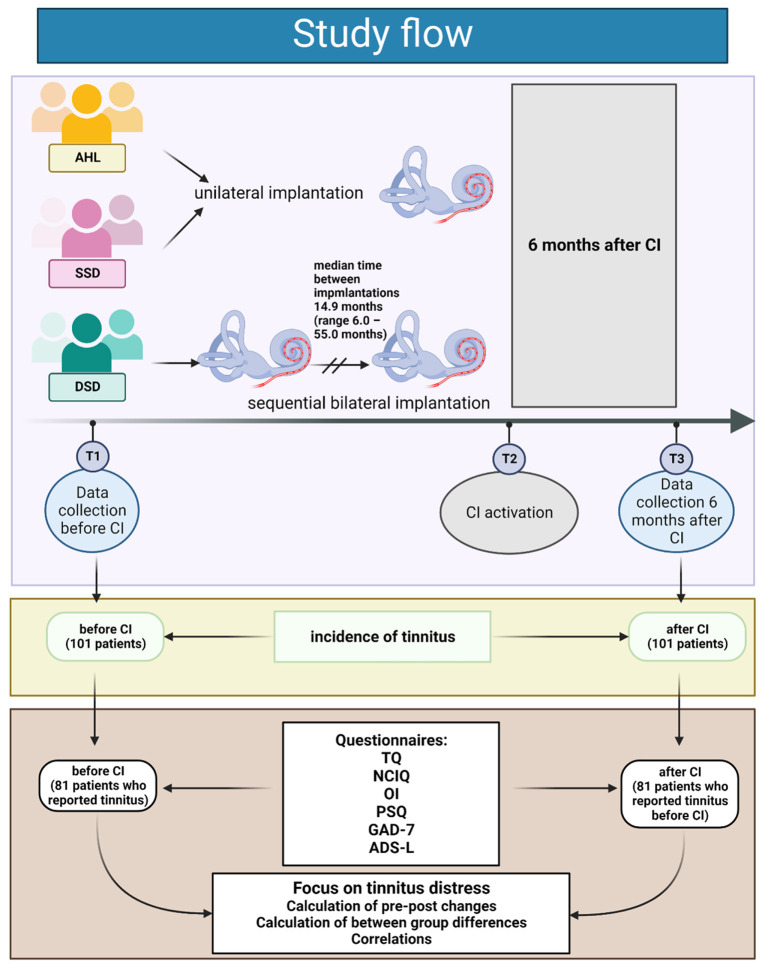
One hundred-one CI candidates were included in this prospective study (39 AHL patients, 23 DSD patients, and 39 SSD patients). The patients completed questionnaires measuring tinnitus distress, health-related quality of life, subjective hearing, perceived stress, and psychological comorbidities before and 6 months after CI.
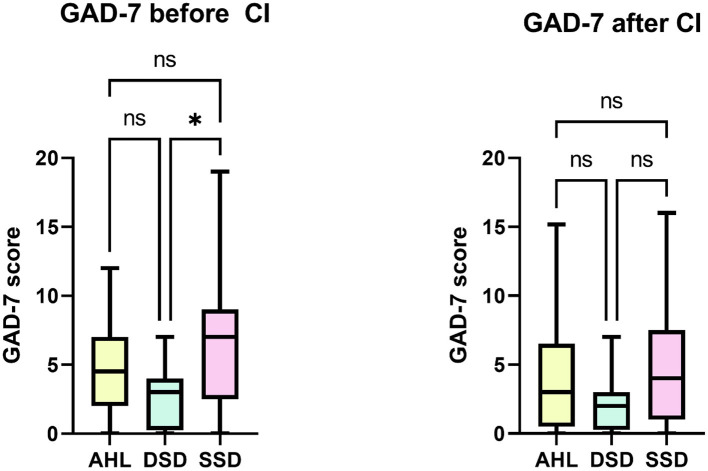
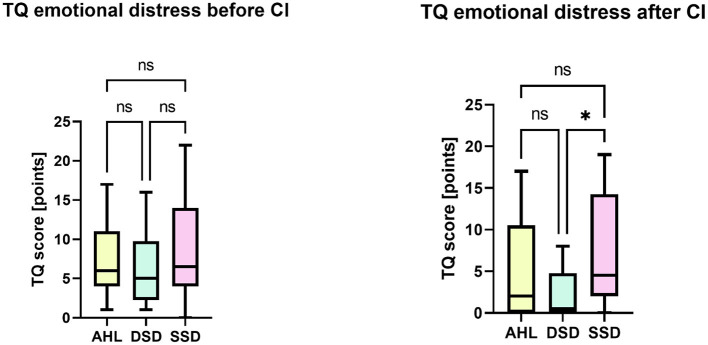
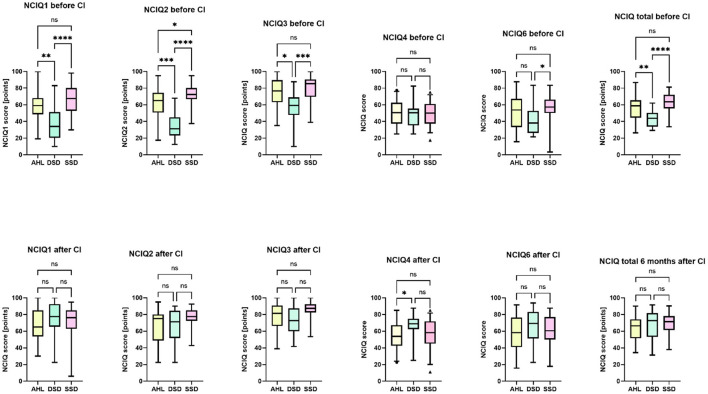
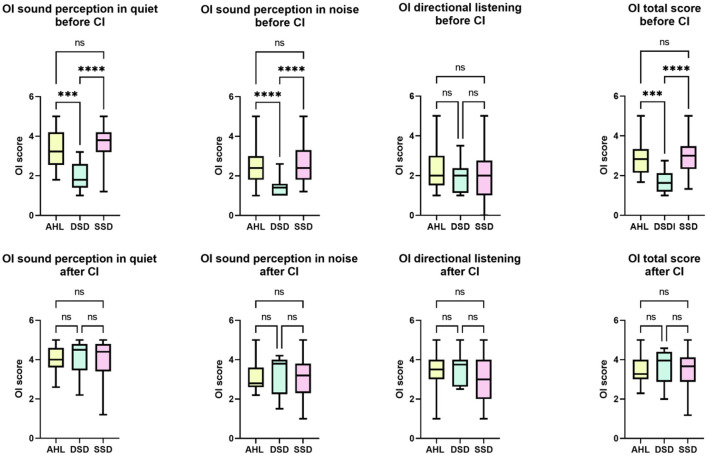
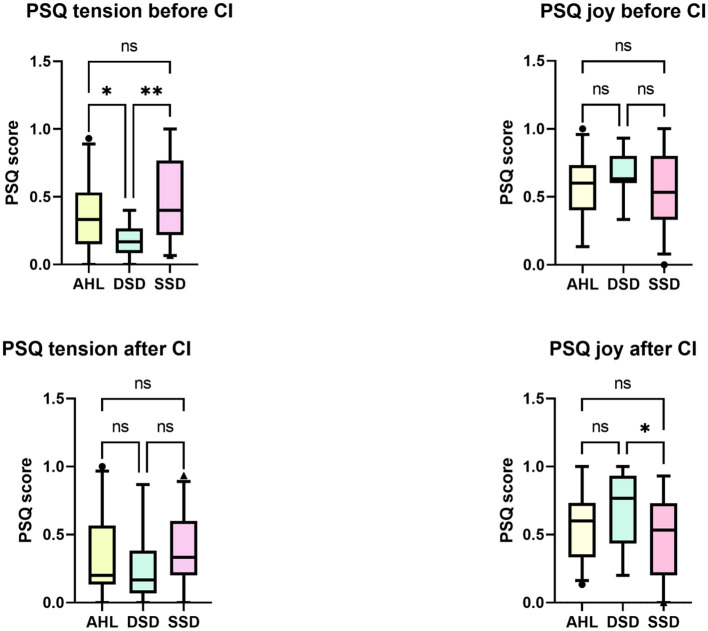
The prevalence of tinnitus in the entire cohort (80.2% before CI) decreased 6 months after CI to 71.3%. The DSD group had the lowest tinnitus prevalence at both time points. The degree of tinnitus-induced distress decreased significantly in all three groups after CI. Differences in quality of life, subjective hearing, and psychological comorbidities between the groups at the study onset disappeared after CI. Significant correlations existed between anxiety, depression, and tinnitus distress in AHL and SSD but not in DSD patients before and after CI.
Our results demonstrate significant differences between the three groups of CI candidates, which might affect the implantation outcome. These differences suggest a need for personalized psychological counseling during the auditory rehabilitation process, focusing on anxiety and depressive symptoms for SSD and AHL patients.
在许多情况下,人工耳蜗植入(CI)进行听觉康复对耳鸣有积极影响。然而,对于各种人工耳蜗植入适应症的患者,人工耳蜗植入与耳鸣相关的益处是否相同尚不清楚。因此,本研究旨在确定被诊断为不对称听力损失(AHL)、单侧耳聋(SSD)和双侧耳聋(DSD)的患者在人工耳蜗植入前和植入后六个月之间耳鸣患病率和痛苦程度、健康相关生活质量、主观听力、感知压力和心理合并症的差异。
101名人工耳蜗植入候选者纳入了这项前瞻性研究(39名AHL患者、23名DSD患者和39名SSD患者)。患者在人工耳蜗植入前和植入后6个月完成了测量耳鸣痛苦程度、健康相关生活质量、主观听力、感知压力和心理合并症的问卷调查。
整个队列中耳鸣的患病率(人工耳蜗植入前为80.2%)在人工耳蜗植入后6个月降至71.3%。DSD组在两个时间点的耳鸣患病率最低。人工耳蜗植入后,所有三组中耳鸣引起 的痛苦程度均显著降低。研究开始时各组之间在生活质量、主观听力和心理合并症方面的差异在人工耳蜗植入后消失。在人工耳蜗植入前后,AHL和SSD患者的焦虑、抑郁与耳鸣痛苦程度之间存在显著相关性,但DSD患者不存在。
我们的结果表明三组人工耳蜗植入候选者之间存在显著差异,这可能会影响植入结果。这些差异表明在听觉康复过程中需要进行个性化心理咨询,重点关注SSD和AHL患者的焦虑和抑郁症状。