Han Fei, Wang Hong-Zhi, Chang Min-Jing, Hu Yu-Ting, Liang Li-Zhong, Li Shuai, Liu Feng, He Pei-Feng, Yang Xiao-Tang, Li Feng
Department of Head and Neck Surgery, Shanxi Province Tumor Hospital, Shanxi Hospital Affiliated to Cancer Hospital, Chinese Academy of Medical Sciences, Affiliated Tumor Hospital of Shanxi Medical University, Taiyuan, China.
Department of Anesthesiology, Shanxi Province Tumor Hospital, Shanxi Hospital Affiliated to Cancer Hospital, Chinese Academy of Medical Sciences, Affiliated Tumor Hospital of Shanxi Medical University, Taiyuan, China.
Front Oncol. 2023 Jan 12;12:972215. doi: 10.3389/fonc.2022.972215. eCollection 2022.
Head and neck squamous cell carcinoma (HNSCC) is among the most lethal and most prevalent malignant tumors. Glycolysis affects tumor growth, invasion, chemotherapy resistance, and the tumor microenvironment. Therefore, we aimed at identifying a glycolysis-related prognostic model for HNSCC and to analyze its relationship with tumor immune cell infiltrations.
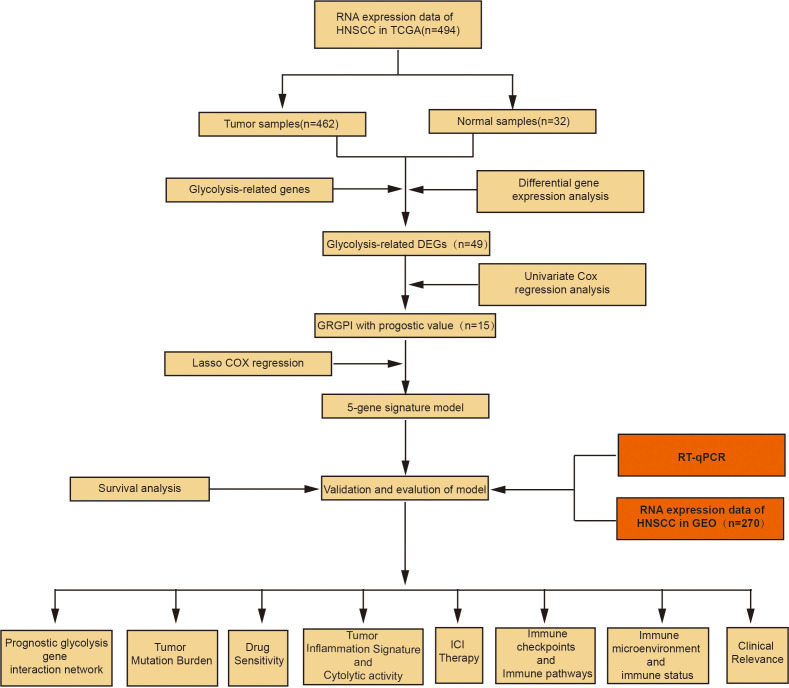
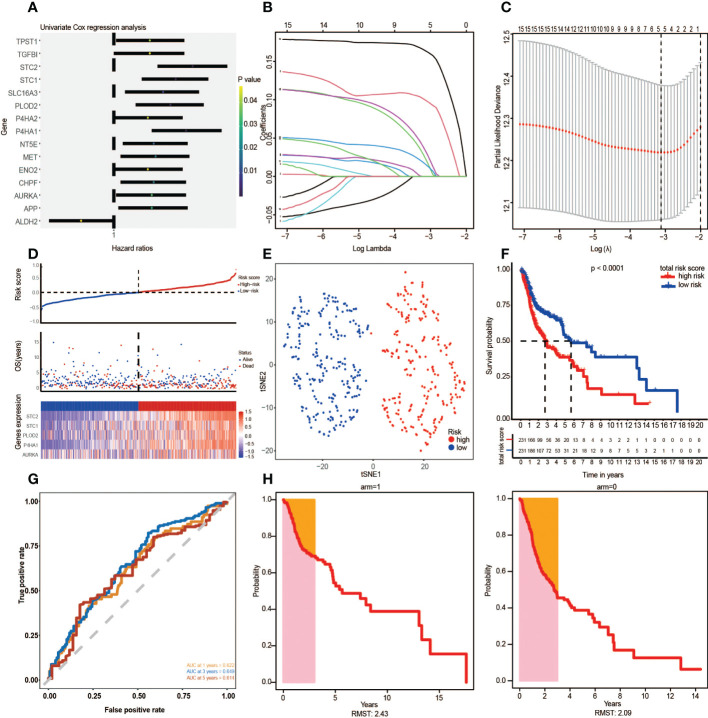
The mRNA and clinical data were obtained from The Cancer Genome Atlas (TCGA), while glycolysis-related genes were obtained from the Molecular Signature Database (MSigDB). Bioinformatics analysis included Univariate cox and least absolute shrinkage and selection operator (LASSO) analyses to select optimal prognosis-related genes for constructing glycolysis-related gene prognostic index(GRGPI), as well as a nomogram for overall survival (OS) evaluation. GRGPI was validated using the Gene Expression Omnibus (GEO) database. A predictive nomogram was established based on the stepwise multivariate regression model. The immune status of GRGPI-defined subgroups was analyzed, and high and low immune groups were characterized. Prognostic effects of immune checkpoint inhibitor (ICI) treatment and chemotherapy were investigated by Tumor Immune Dysfunction and Exclusion (TIDE) scores and half inhibitory concentration (IC50) value. Reverse transcription-quantitative PCR (RT-qPCR) was utilized to validate the model by analyzing the mRNA expression levels of the prognostic glycolysis-related genes in HNSCC tissues and adjacent non-tumorous tissues.
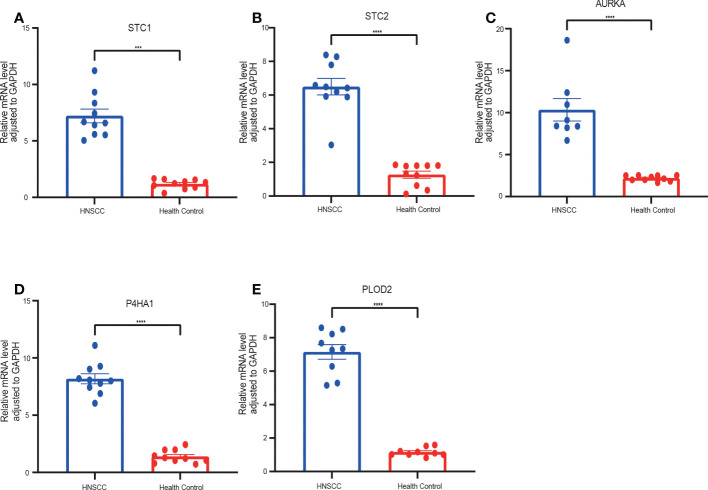
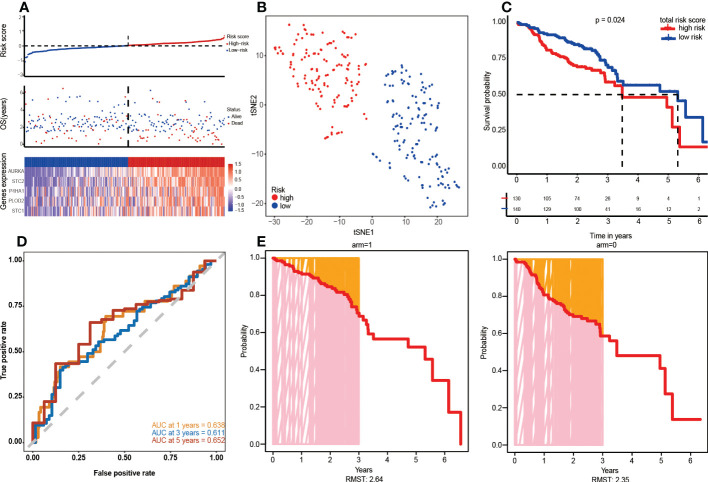
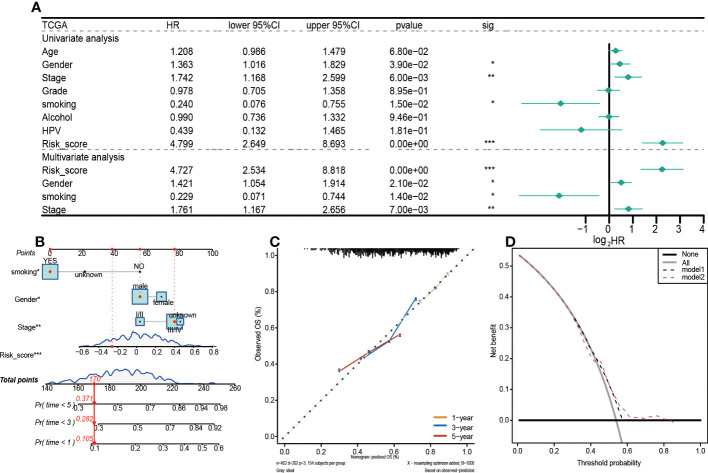
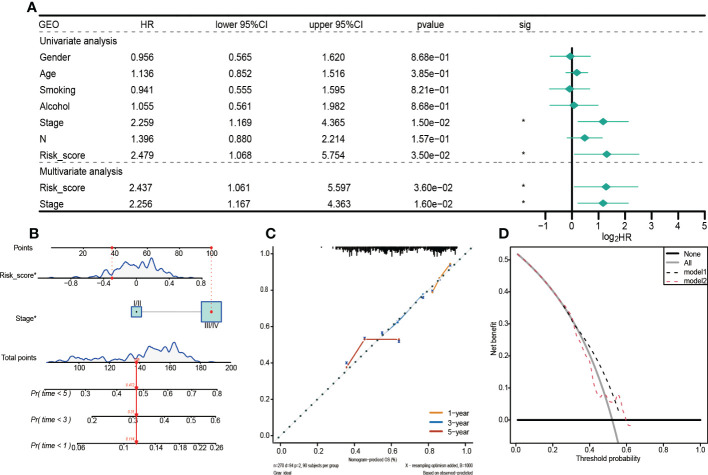
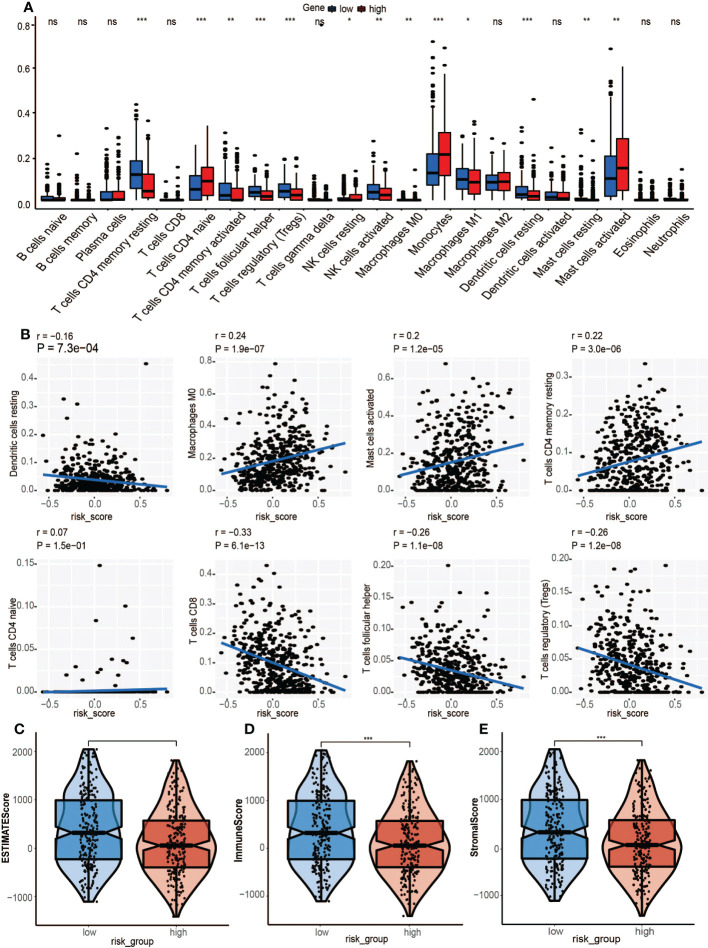
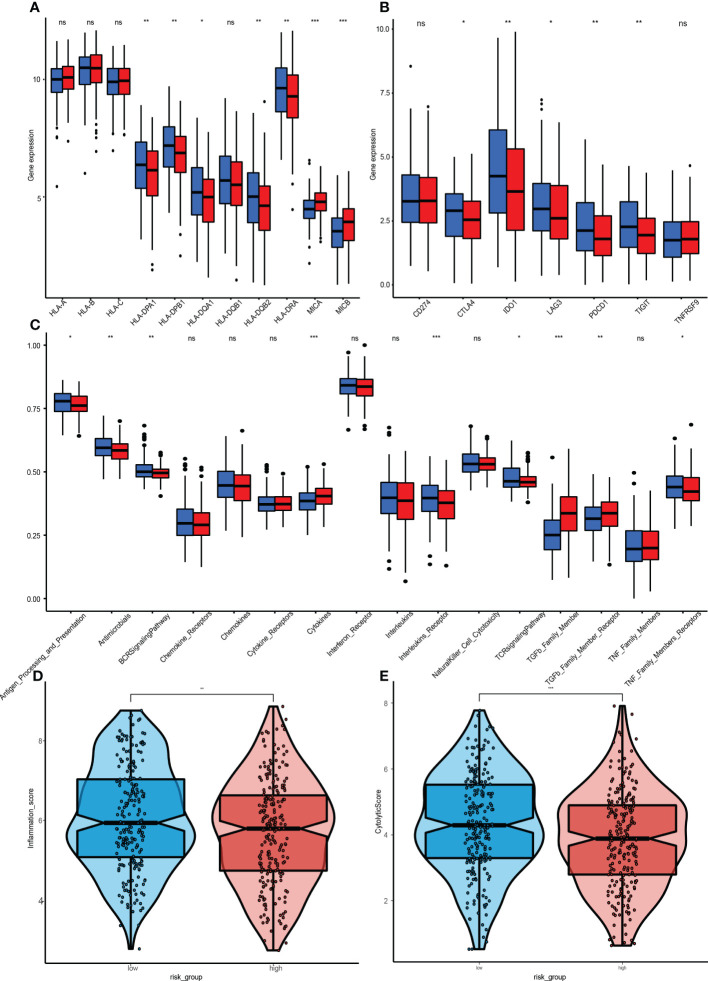
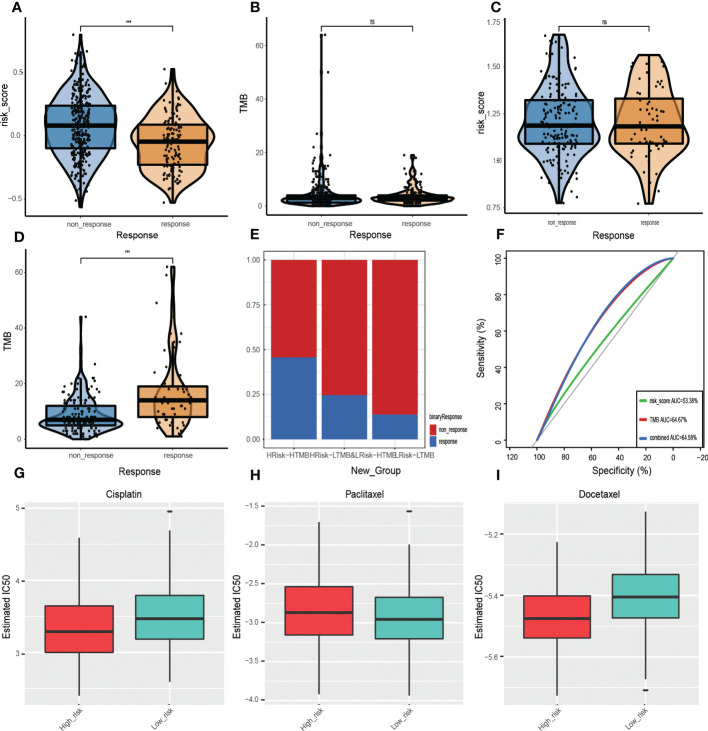
Five glycolysis-related genes were used to construct GRGPI. The GRGPI and the nomogram model exhibited robust validity in prognostic prediction. Clinical correlation analysis revealed positive correlations between the risk score used to construct the GRGPI model and the clinical stage. Immune checkpoint analysis revealed that the risk model was associated with immune checkpoint-related biomarkers. Immune microenvironment and immune status analysis exhibited a strong correlation between risk score and infiltrating immune cells. Gene set enrichment analysis (GSEA) pathway enrichment analysis showed typical immune pathways. Furthermore, the GRGPIdel showed excellent predictive performance in ICI treatment and drug sensitivity analysis. RT-qPCR showed that compared with adjacent non-tumorous tissues, the expressions of five genes were significantly up-regulated in HNSCC tissues.
The model we constructed can not only be used as an important indicator for predicting the prognosis of patients but also had an important guiding role for clinical treatment.
头颈部鳞状细胞癌(HNSCC)是最致命且最常见的恶性肿瘤之一。糖酵解影响肿瘤生长、侵袭、化疗耐药性以及肿瘤微环境。因此,我们旨在确定一种用于HNSCC的糖酵解相关预后模型,并分析其与肿瘤免疫细胞浸润的关系。
从癌症基因组图谱(TCGA)获取mRNA和临床数据,从分子特征数据库(MSigDB)获取糖酵解相关基因。生物信息学分析包括单变量cox分析和最小绝对收缩和选择算子(LASSO)分析,以选择用于构建糖酵解相关基因预后指数(GRGPI)的最佳预后相关基因,以及用于总生存期(OS)评估的列线图。使用基因表达综合数据库(GEO)对GRGPI进行验证。基于逐步多元回归模型建立预测列线图。分析GRGPI定义的亚组的免疫状态,并对高免疫组和低免疫组进行特征描述。通过肿瘤免疫功能障碍和排除(TIDE)评分和半数抑制浓度(IC50)值研究免疫检查点抑制剂(ICI)治疗和化疗的预后效果。利用逆转录定量PCR(RT-qPCR)通过分析HNSCC组织和相邻非肿瘤组织中预后糖酵解相关基因的mRNA表达水平来验证该模型。
使用五个糖酵解相关基因构建GRGPI。GRGPI和列线图模型在预后预测中表现出强大的有效性。临床相关性分析显示,用于构建GRGPI模型的风险评分与临床分期之间呈正相关。免疫检查点分析显示,风险模型与免疫检查点相关生物标志物有关。免疫微环境和免疫状态分析显示风险评分与浸润免疫细胞之间存在强烈相关性。基因集富集分析(GSEA)通路富集分析显示出典型的免疫通路。此外,GRGPIdel在ICI治疗和药物敏感性分析中表现出优异的预测性能。RT-qPCR显示,与相邻非肿瘤组织相比,五个基因在HNSCC组织中的表达显著上调。
我们构建的模型不仅可作为预测患者预后的重要指标,而且对临床治疗具有重要指导作用。