Otolaryngology & Head and Neck Surgery, The Affiliated Hospital of Guilin Medical University, Guilin, Guangxi Zhuang Autonomous Region, China.
The Guilin Medical University, Guilin, Guangxi Zhuang Autonomous Region, China.
Biomed Res Int. 2021 Feb 10;2021:8824195. doi: 10.1155/2021/8824195. eCollection 2021.
Head and neck squamous cell carcinoma (HNSCC) is one of the worst-prognosis malignant tumors. This study used bioinformatic analysis of the transcriptome sequencing data of HNSCC and the patients' survival and clinical data to construct a prediction signature of glycolysis-related genes as the prognostic risk markers.
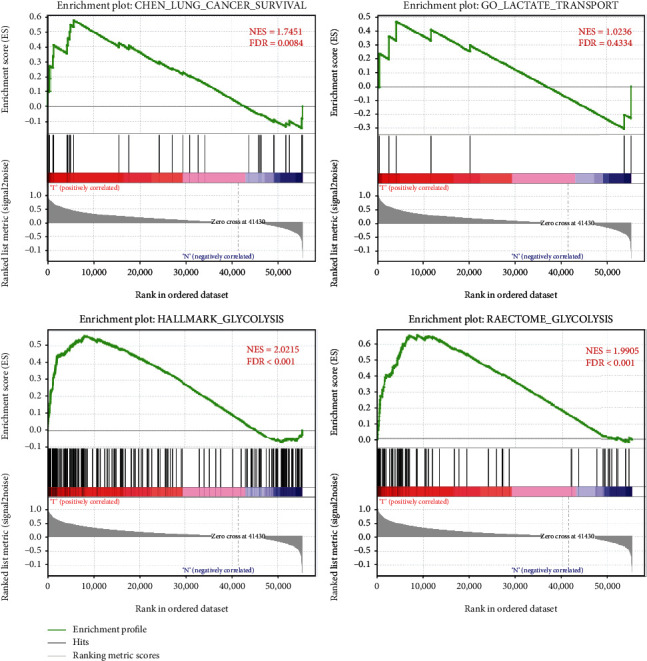
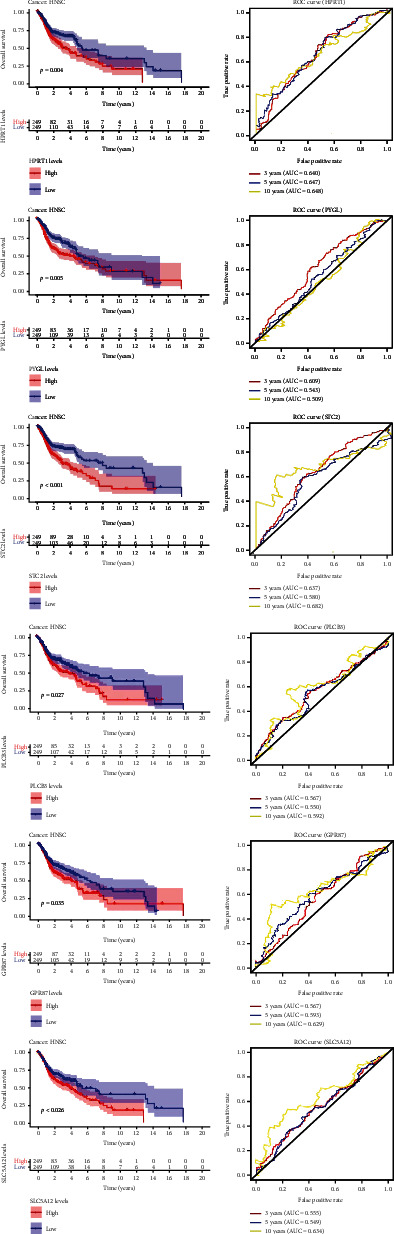
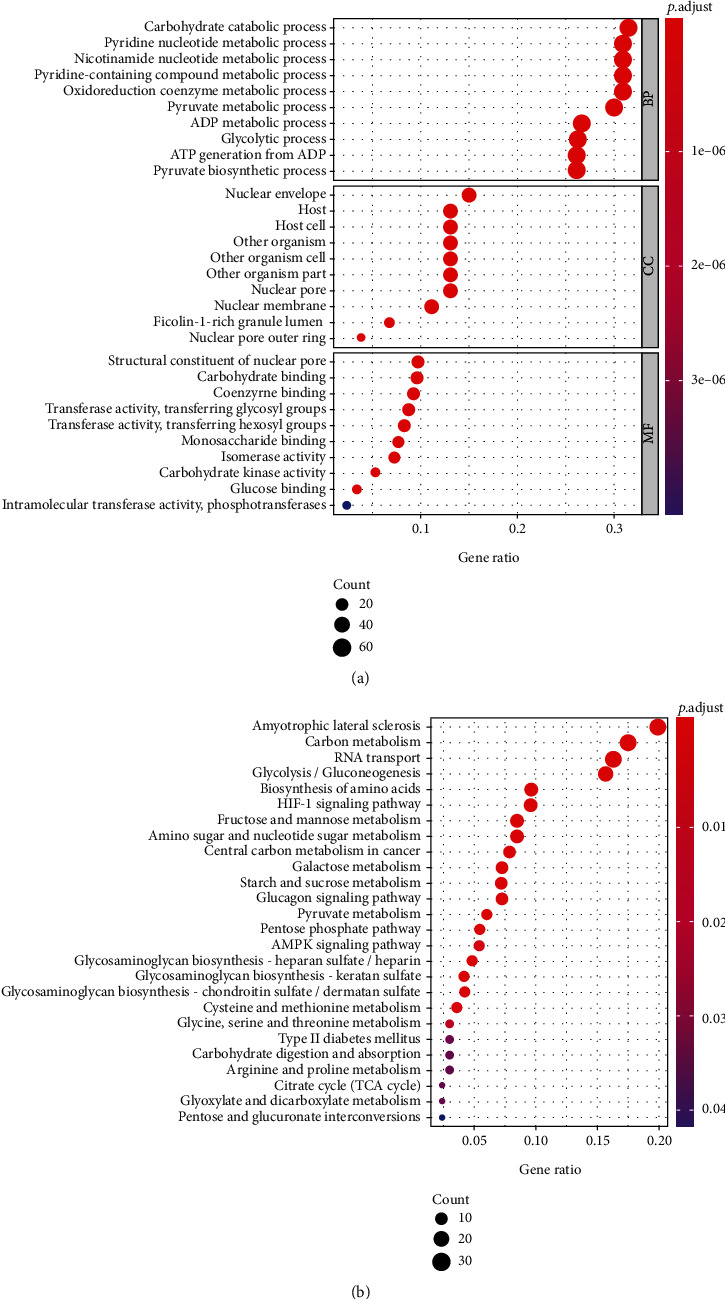
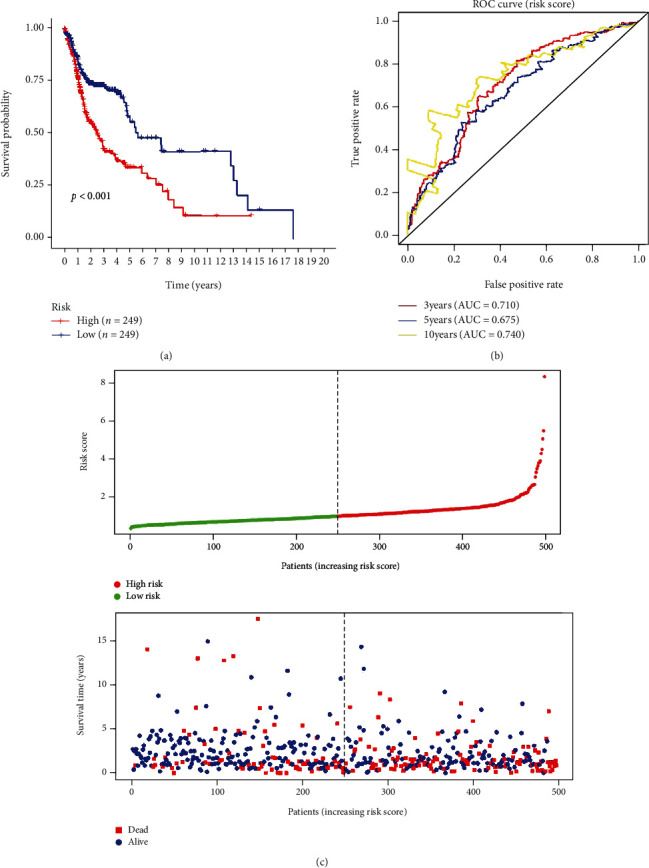
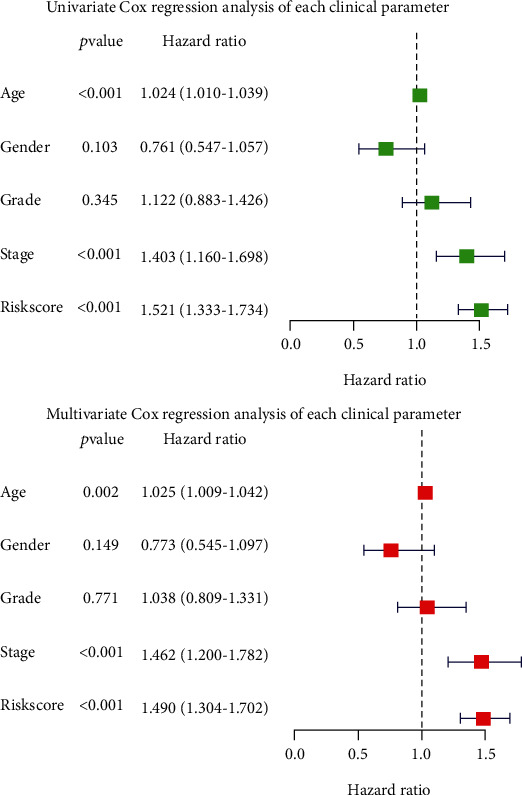
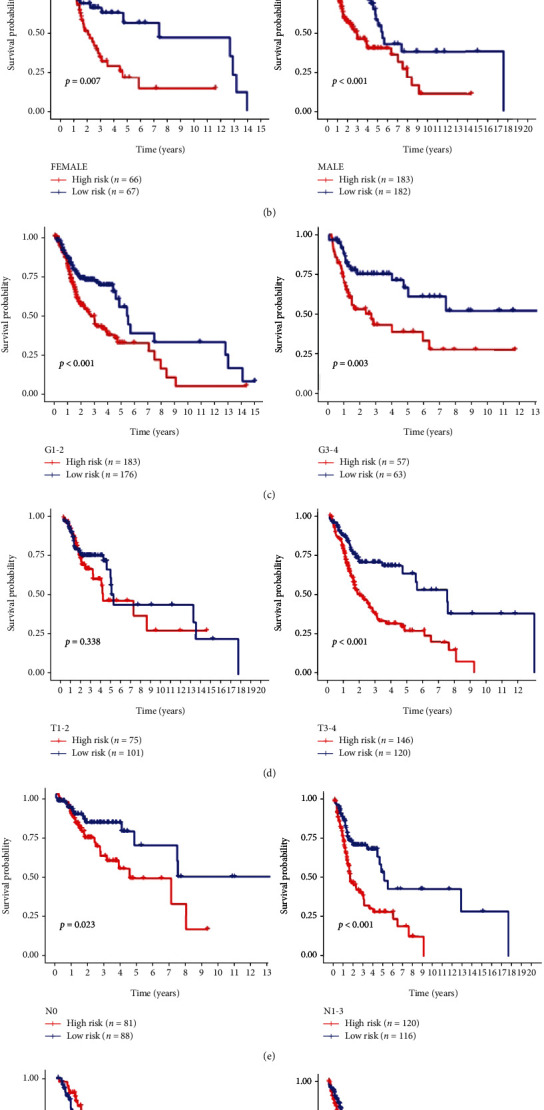
Gene expression profile data about HNSCC tissues ( = 498) and normal tissues in the head and neck ( = 44) were got from The Cancer Genome Atlas (TCGA), as well as patients' survival and clinical data. Then, we obtained core genes; their expression in head and neck squamous cell carcinoma tissues is significantly different from that in normal head and neck tissues. The predicted glycolysis-related genes are screened through univariate Cox regression analysis, and then, the prognostic risk markers were constructed through further correction of multivariate Cox regression analysis. The Kaplan-Meier curve and receiver operating characteristic curve are used to analyze the potential value of these risk markers in diagnosis and prognosis. We also evaluated that the glycolysis-related prognostic risk markers composed of 6 oncogenes are correlated with clinical features, such as age, gender, grade, and clinical stage of the tumor, by univariate and multivariate Cox regression analyses.
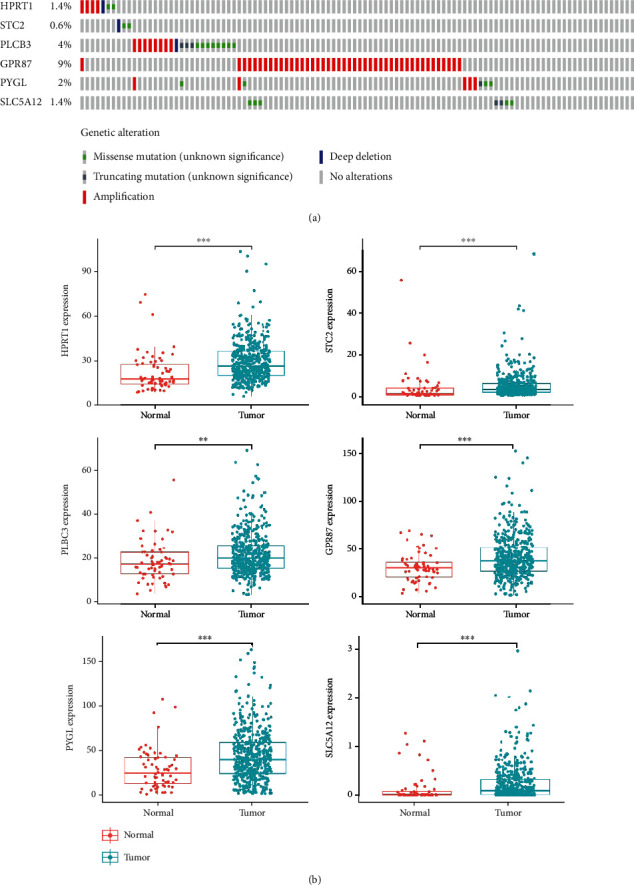
Differentially expressed glycolytic genes in HNSCC tissues and normal head and neck tissues were screened from TCGA databases using the bioinformatic method. We confirmed a set of six glycolytic genes that were significantly associated with OS in the test series. According to our analysis, the prognostic risk markers composed of HPRT1, STC2, PLCB3, GPR87, PYGL, and SLC5A12 may be an independent risk factor for the prognosis of HNSCC.
Through this analysis, we constructed new prognostic risk markers related to glycolysis as a prognostic risk marker for patients with HNSCC and provided new ideas and molecular targets for the research and individualized treatment of HNSCC.
头颈部鳞状细胞癌(HNSCC)是预后最差的恶性肿瘤之一。本研究通过对 HNSCC 转录组测序数据和患者生存及临床数据的生物信息学分析,构建了糖酵解相关基因预测的预后风险标志物。
从癌症基因组图谱(TCGA)获取 HNSCC 组织的基因表达谱数据(n=498)和正常头颈部组织(n=44),以及患者的生存和临床数据。然后,我们获得核心基因;这些基因在头颈部鳞状细胞癌组织中的表达与正常头颈部组织显著不同。通过单变量 Cox 回归分析筛选预测的糖酵解相关基因,然后通过进一步的多变量 Cox 回归分析构建预后风险标志物。使用 Kaplan-Meier 曲线和受试者工作特征曲线分析这些风险标志物在诊断和预后中的潜在价值。我们还通过单变量和多变量 Cox 回归分析评估了由 6 个癌基因组成的糖酵解相关预后风险标志物与年龄、性别、肿瘤分级和临床分期等临床特征的相关性。
使用生物信息学方法从 TCGA 数据库中筛选出 HNSCC 组织和正常头颈部组织中差异表达的糖酵解基因。我们在验证集中确认了一组与 OS 显著相关的 6 个糖酵解基因。根据我们的分析,由 HPRT1、STC2、PLCB3、GPR87、PYGL 和 SLC5A12 组成的预后风险标志物可能是 HNSCC 预后的独立危险因素。
通过这项分析,我们构建了新的与糖酵解相关的预后风险标志物作为 HNSCC 患者的预后风险标志物,为 HNSCC 的研究和个体化治疗提供了新的思路和分子靶点。