Entenberg G A, Dosovitsky G, Aghakhani S, Mostovoy K, Carre N, Marshall Z, Benfica D, Mizrahi S, Testerman A, Rousseau A, Lin G, Bunge E L
Research Department, Fundación ETCI, Buenos Aires, Argentina.
Children and Adolescents Psychotherapy and Technology Lab (CAPT), Palo Alto University, Palo Alto, CA, United States.
Front Digit Health. 2023 Jan 11;4:989022. doi: 10.3389/fdgth.2022.989022. eCollection 2022.
The use of chatbots to address mental health conditions have become increasingly popular in recent years. However, few studies aimed to teach parenting skills through chatbots, and there are no reports on parental user experience. Aim: This study aimed to assess the user experience of a parenting chatbot micro intervention to teach how to praise children in a Spanish-speaking country.
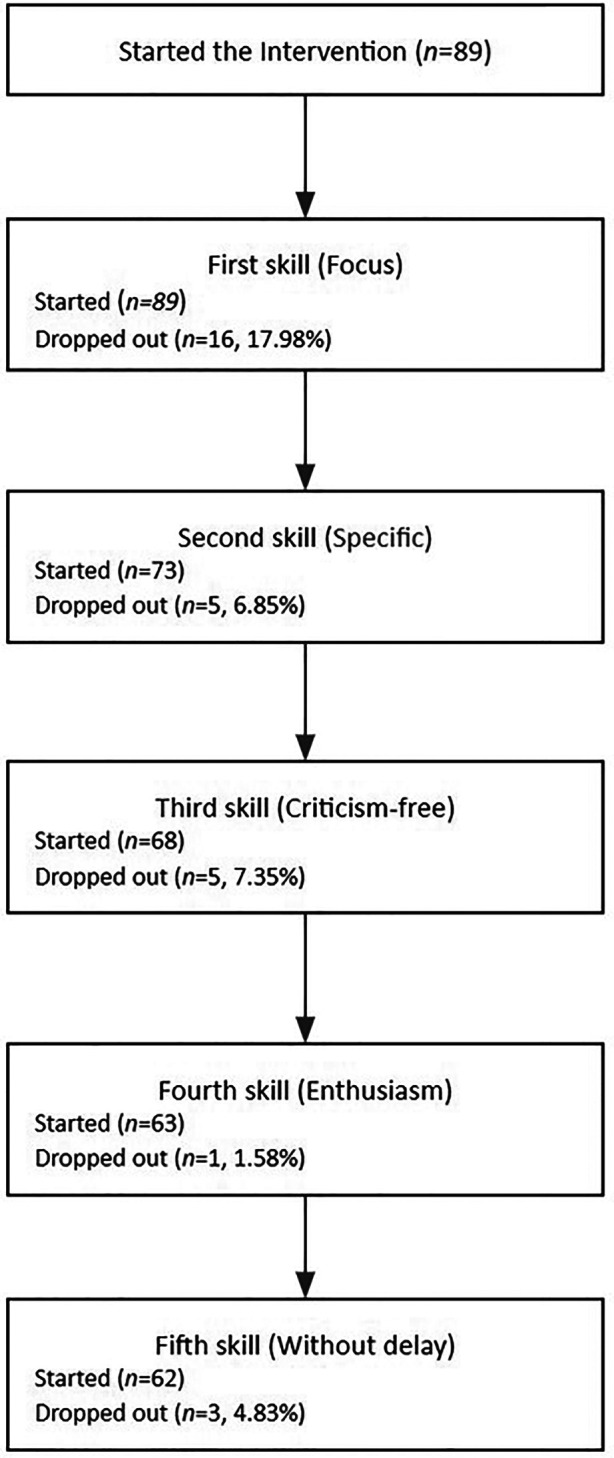
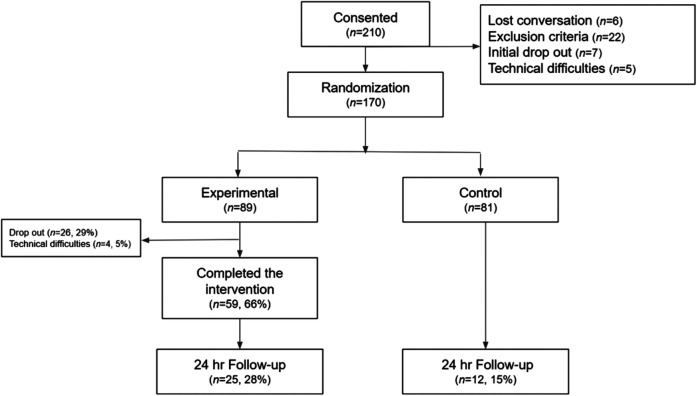
A sample of 89 parents were assigned to the chatbot micro intervention as part of a randomized controlled trial study. Completion rates, engagement, satisfaction, net promoter score, and acceptability were analyzed.
66.3% of the participants completed the intervention. Participants exchanged an average of 49.8 messages (SD = 1.53), provided an average satisfaction score of 4.19 (SD = .79), and reported that they would recommend the chatbot to other parents (net promoter score = 4.63/5; SD = .66). Acceptability level was high (ease of use = 4.66 [SD = .73]; comfortability = 4.76 [SD = .46]; lack of technical problems = 4.69 [SD = .59]; interactivity = 4.51 [SD = .77]; usefulness for everyday life = 4.75 [SD = .54]).
Overall, users completed the intervention at a high rate, engaged with the chatbot, were satisfied, would recommend it to others, and reported a high level of acceptability. Chatbots have the potential to teach parenting skills however research on the efficacy of parenting chatbot interventions is needed.
近年来,使用聊天机器人来解决心理健康问题越来越普遍。然而,很少有研究旨在通过聊天机器人教授育儿技巧,也没有关于家长用户体验的报告。目的:本研究旨在评估一款育儿聊天机器人微干预措施在一个讲西班牙语的国家教授如何表扬孩子的用户体验。
作为一项随机对照试验研究的一部分,89名家长被分配到聊天机器人微干预组。分析了完成率、参与度、满意度、净推荐值和可接受性。
66.3%的参与者完成了干预。参与者平均交流了49.8条信息(标准差=1.53),平均满意度评分为4.19(标准差=0.79),并表示他们会向其他家长推荐该聊天机器人(净推荐值=4.63/5;标准差=0.66)。可接受程度较高(易用性=4.66[标准差=0.73];舒适度=4.76[标准差=0.46];无技术问题=4.69[标准差=0.59];交互性=4.51[标准差=0.77];对日常生活的有用性=4.75[标准差=0.54])。
总体而言,用户完成干预的比例很高,与聊天机器人有互动,感到满意,会向他人推荐,并报告了较高的可接受程度。聊天机器人有教授育儿技巧的潜力,然而需要对育儿聊天机器人干预措施的效果进行研究。