Tesoro Imaging S.L., 46022 Valencia, Spain.
Institute for Molecular Imaging and Instrumentation, Spanish National Research Council, 46022 Valencia, Spain.
Sci Rep. 2023 Jan 30;13(1):1662. doi: 10.1038/s41598-023-28640-x.
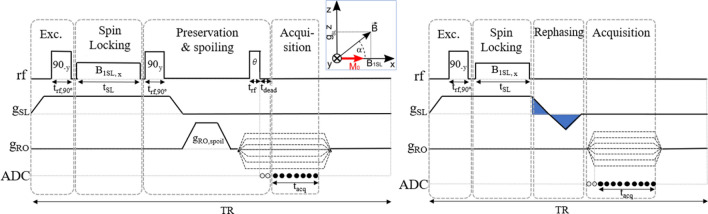
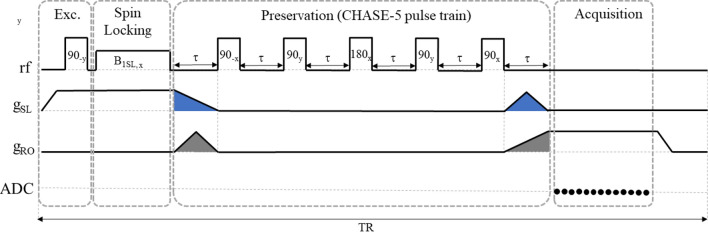
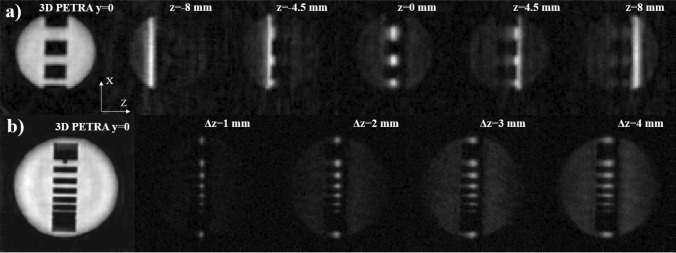
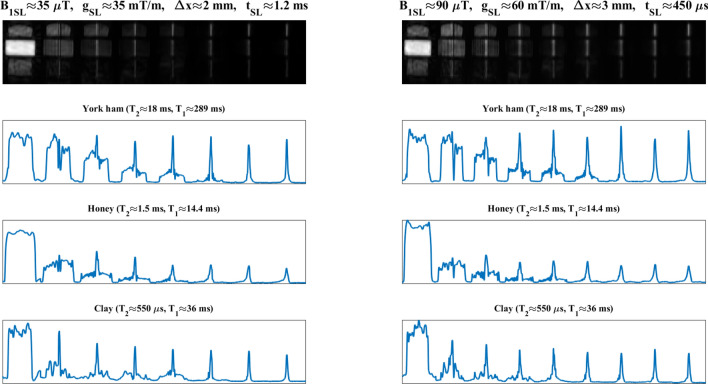
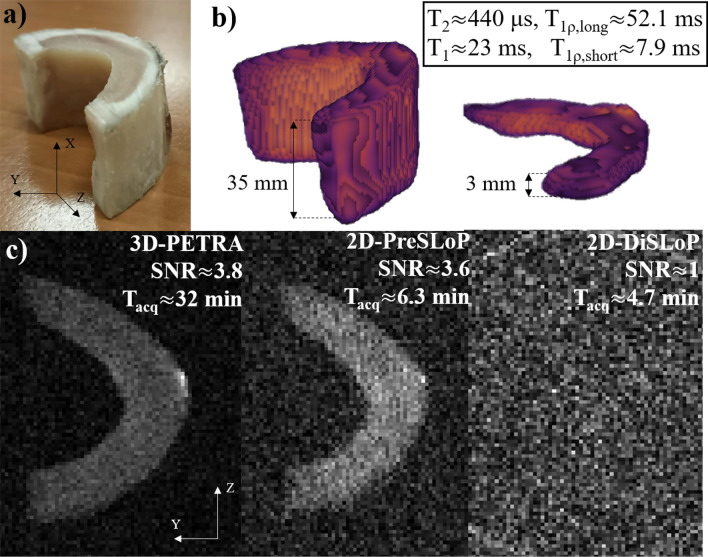
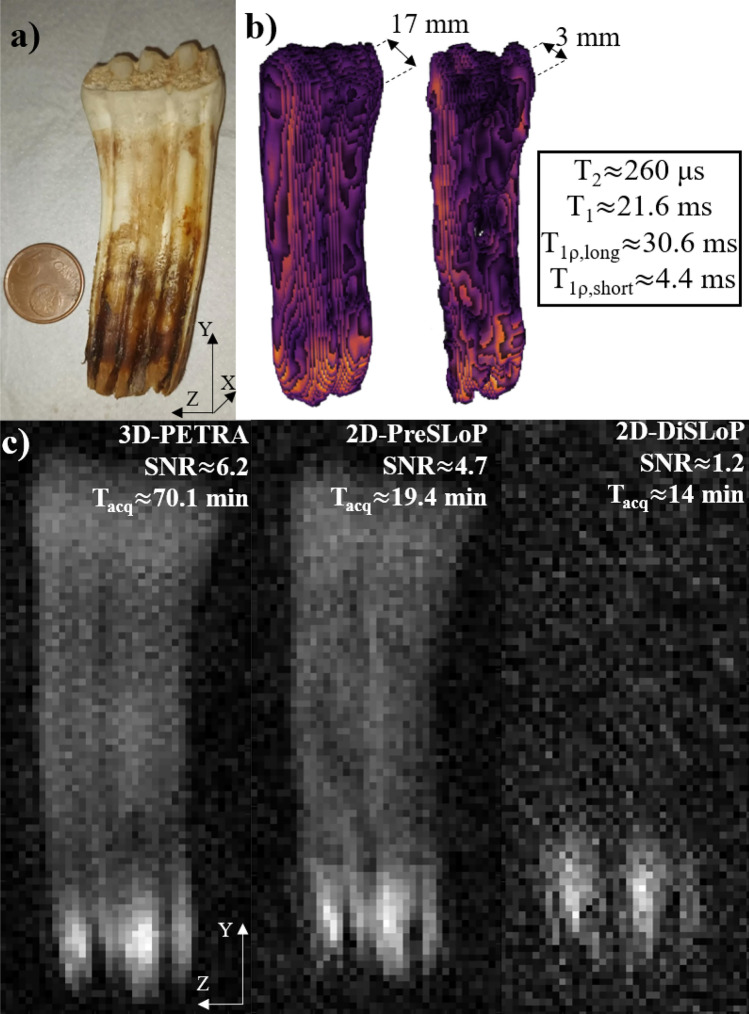
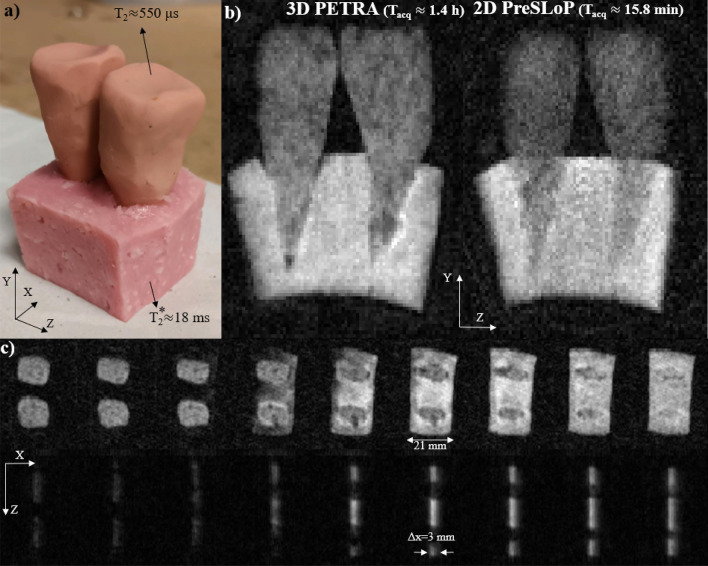
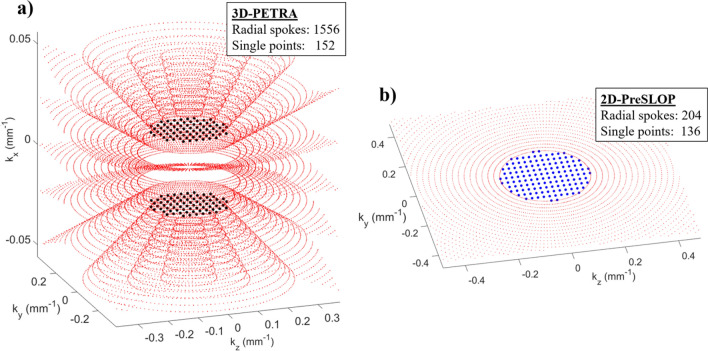
Magnetic Resonance Imaging of hard biological tissues is very challenging due to small proton abundance and ultra-short [Formula: see text] decay times, especially at low magnetic fields, where sample magnetization is weak. While several pulse sequences, such as Ultra-short Echo Time (UTE), Zero Echo Time (ZTE) and SWeep Imaging with Fourier Transformation (SWIFT), have been developed to cope with ultra-short lived MR signals, only the latter two hold promise of imaging tissues with sub-millisecond [Formula: see text] times at low fields. All these sequences are intrinsically volumetric, thus 3D, because standard slice selection using a long soft radio-frequency pulse is incompatible with ultra-short lived signals. The exception is UTE, where double half pulses can perform slice selection, although at the cost of doubling the acquisition time. Here we demonstrate that spin-locking is a versatile and robust method for slice selection for ultra-short lived signals, and present three ways of combining this pulse sequence with ZTE imaging of the selected slice. With these tools, we demonstrate slice-selected 2D ex vivo imaging of the hardest tissues in the body at low field (260 mT) within clinically acceptable times.
硬生物组织的磁共振成像是非常具有挑战性的,因为质子丰度小,[Formula: see text]弛豫时间超短,尤其是在磁场较弱的情况下,样品磁化强度较弱。虽然已经开发了几种脉冲序列,如超短回波时间(UTE)、零回波时间(ZTE)和傅里叶变换扫频成像(SWIFT),以应对超短寿命的 MR 信号,但只有后两种有望在低磁场下对亚毫秒级[Formula: see text]时间的组织进行成像。所有这些序列本质上都是体积的,因此是 3D 的,因为使用长软射频脉冲进行标准切片选择与超短寿命信号不兼容。UTE 是个例外,其中双半脉冲可以进行切片选择,尽管这会使采集时间增加一倍。在这里,我们证明了自旋锁定是一种用于超短寿命信号的切片选择的通用且强大的方法,并提出了三种将这种脉冲序列与所选切片的 ZTE 成像相结合的方法。有了这些工具,我们在临床可接受的时间内,在低磁场(260 mT)下展示了对身体中最硬组织的切片选择二维离体成像。