Wang Yina, Wang Keyi, Rivera Amariliz, Xue Chaoyang
Public Health Research Institute, New Jersey Medical School, Rutgers University, Newark, New Jersey, USA.
Graduate School of Biomedical Sciences, New Jersey Medical School, Rutgers University, Newark, New Jersey, USA.
Microbiol Spectr. 2023 Jan 31;11(2):e0495522. doi: 10.1128/spectrum.04955-22.
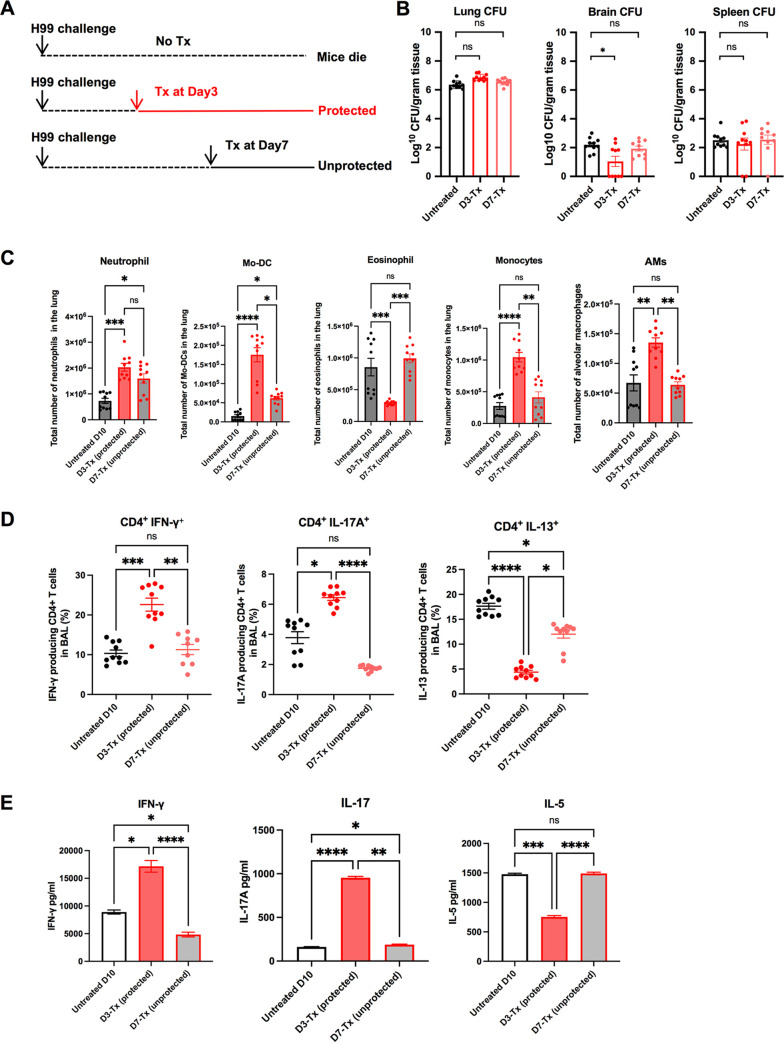
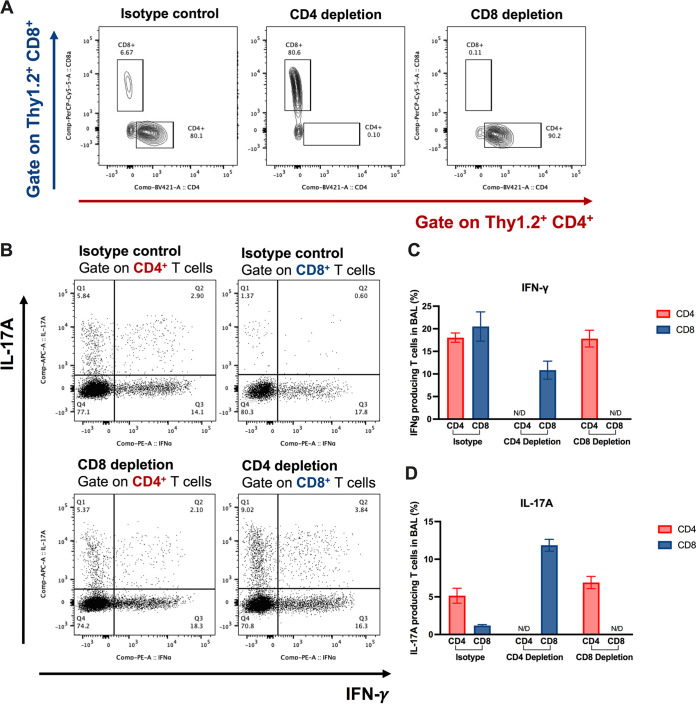
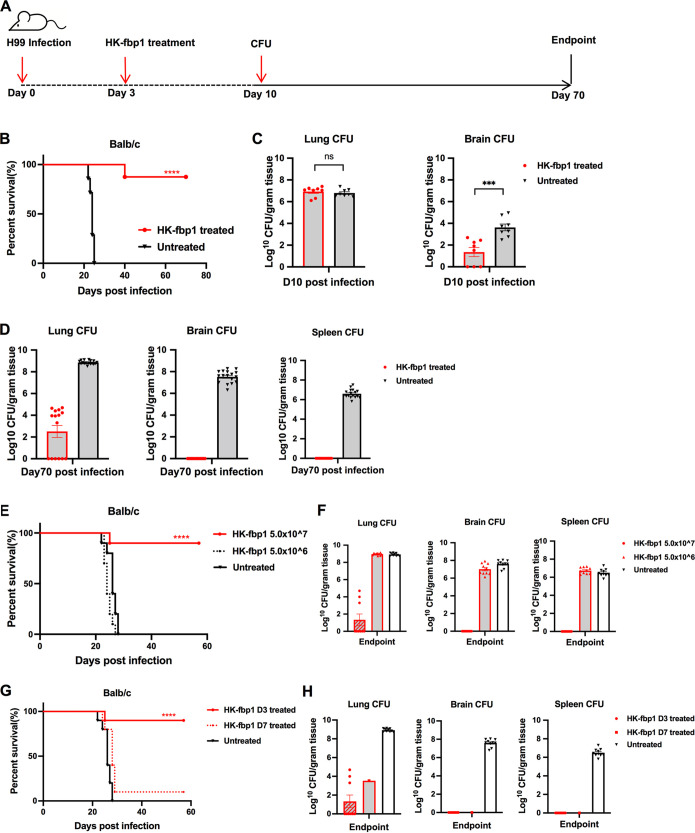
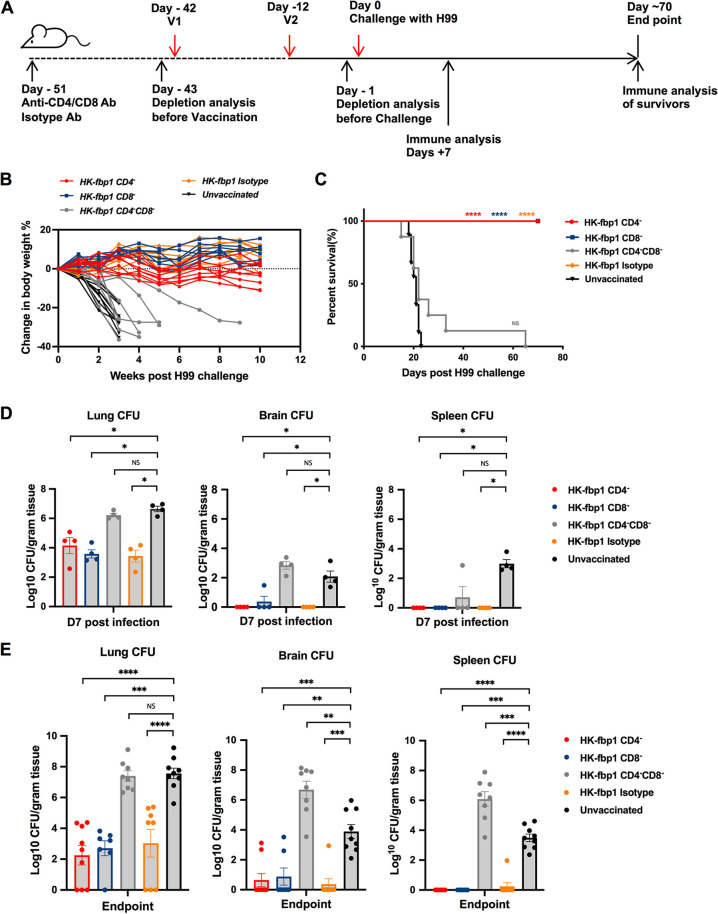
In previous studies, we determined that the F-box protein Fbp1, a subunit of the SCF(Fbp1) E3 ligase in Cryptococcus neoformans, is essential for fungal pathogenesis. Heat-killed cells (HK-fbp1) can confer vaccine-induced immunity against lethal challenge with clinically important invasive fungal pathogens, e.g., C. neoformans, C. gattii, and Aspergillus fumigatus. In this study, we found that either CD4 T cells or CD8 T cells were sufficient to confer protection against lethal challenge by C. neoformans in HK-fbp1-induced immunity. Given the potent effect of HK-fbp1 as a preventative vaccine, we further tested the potential efficacy of administering HK-fbp1 cells as a therapeutic agent for treating animals after infection. Remarkably, administration of HK-fbp1 provided robust host protection against preexisting C. neoformans infection. The mice infected with wild-type H99 cells and then treated with HK-fbp1 showed significant reduction of fungal burden in the infected lung and no dissemination of fungal cells to the brain and spleen. We find that early treatment is critical for the effective use of HK-fbp1 as a therapeutic agent. Immune analysis revealed that early treatment with HK-fbp1 cells elicited Th1-biased protective immune responses that help block fungal dissemination and promote better host protection. Our data thus suggest that HK-fbp1 is both an effective prophylactic vaccine candidate against C. neoformans infection in both immunocompetent and immunocompromised populations and a potential novel therapeutic strategy to treat early-stage cryptococcosis. Invasive fungal infections, e.g., cryptococcosis, are often life threatening and difficult to treat with very limited therapeutic options. There is no vaccine available in clinical use to prevent or treat fungal infections. Our previous studies demonstrated that heat-killed Δ cells (HK-fbp1) in Cryptococcus neoformans can be harnessed to confer protection against a challenge by the virulent parental strain, even in immunocompromised animals, such as ones lacking CD4 T cells. In this study, we further determined that T cells are required for vaccine-induced protection against homologous challenge and that either CD4 or CD8 cells are sufficient. This finding is particularly important for the potential utility of this vaccine candidate in the context of HIV/AIDS-induced immune deficiency, the main risk factor for cryptococcosis in humans. Furthermore, in addition to the utility of HK-fbp1 as a prophylactic vaccine, we found that HK-fbp1 administration can inhibit disease dissemination when animals are treated at an early stage during Cryptococcus infection. Our findings could significantly expand the utility of HK-fbp1 not only as a prophylactic vaccine but also as a novel therapy against cryptococcosis. In all, our studies showed that the HK-fbp1 strain can be used both preventively and therapeutically to elicit robust host protection against cryptococcosis.
在先前的研究中,我们确定新型隐球菌中SCF(Fbp1) E3连接酶的一个亚基——F-box蛋白Fbp1,对真菌致病性至关重要。热灭活细胞(HK-fbp1)可诱导疫苗免疫,抵抗临床上重要的侵袭性真菌病原体(如新型隐球菌、格特隐球菌和烟曲霉)的致死性攻击。在本研究中,我们发现,在HK-fbp1诱导的免疫中,CD4 T细胞或CD8 T细胞足以提供保护,抵抗新型隐球菌的致死性攻击。鉴于HK-fbp1作为预防性疫苗的强大效果,我们进一步测试了将HK-fbp1细胞作为治疗剂在动物感染后进行治疗的潜在疗效。值得注意的是,给予HK-fbp1可提供强大的宿主保护,抵抗已存在的新型隐球菌感染。感染野生型H99细胞后用HK-fbp1治疗的小鼠,其感染肺部的真菌负荷显著降低,且真菌细胞未扩散至脑和脾脏。我们发现早期治疗对于有效使用HK-fbp1作为治疗剂至关重要。免疫分析显示,早期用HK-fbp1细胞治疗可引发Th1偏向的保护性免疫反应,有助于阻止真菌扩散并促进更好的宿主保护。因此,我们的数据表明,HK-fbp1既是针对免疫功能正常和免疫功能低下人群预防新型隐球菌感染的有效候选疫苗,也是治疗早期隐球菌病的潜在新策略。侵袭性真菌感染,如隐球菌病,往往危及生命且治疗困难,治疗选择非常有限。目前临床上没有可用于预防或治疗真菌感染的疫苗。我们先前的研究表明,新型隐球菌中的热灭活Δ细胞(HK-fbp1)可用于提供保护,抵抗强毒株亲本菌株的攻击,即使在免疫功能低下的动物(如缺乏CD4 T细胞的动物)中也是如此。在本研究中,我们进一步确定T细胞是疫苗诱导的抵抗同源攻击保护所必需的,且CD4或CD8细胞中的任何一种都足够。这一发现对于该候选疫苗在HIV/AIDS诱导的免疫缺陷(人类隐球菌病的主要危险因素)背景下的潜在应用尤为重要。此外,除了HK-fbp1作为预防性疫苗的效用外,我们发现当在隐球菌感染早期对动物进行治疗时,给予HK-fbp1可抑制疾病扩散。我们的发现可显著扩展HK-fbp1的效用,不仅作为预防性疫苗,而且作为对抗隐球菌病的新疗法。总之,我们的研究表明,HK-fbp1菌株可用于预防和治疗,以引发强大的宿主保护,抵抗隐球菌病。