Division of Diabetes, Endocrinology, and Metabolism, Vanderbilt University Medical Center, Nashville, TN.
Department of Pediatrics, Section of Adult and Pediatric Endocrinology, Diabetes and Metabolism, The University of Chicago, Chicago, IL.
Diabetes Care. 2023 Apr 1;46(4):773-776. doi: 10.2337/dc22-2082.
To determine the mechanism of reduced pancreas size in type 1 diabetes and the significance of islet-derived insulin in pancreatic growth.
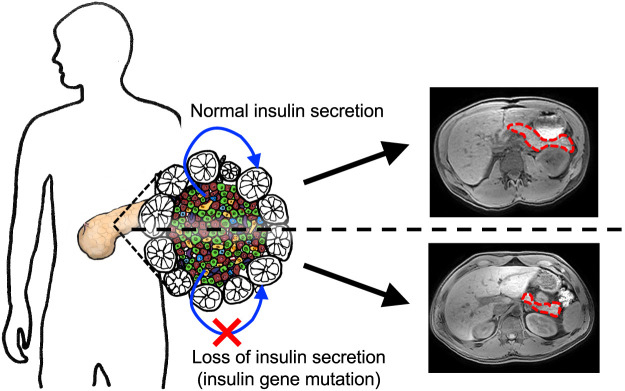
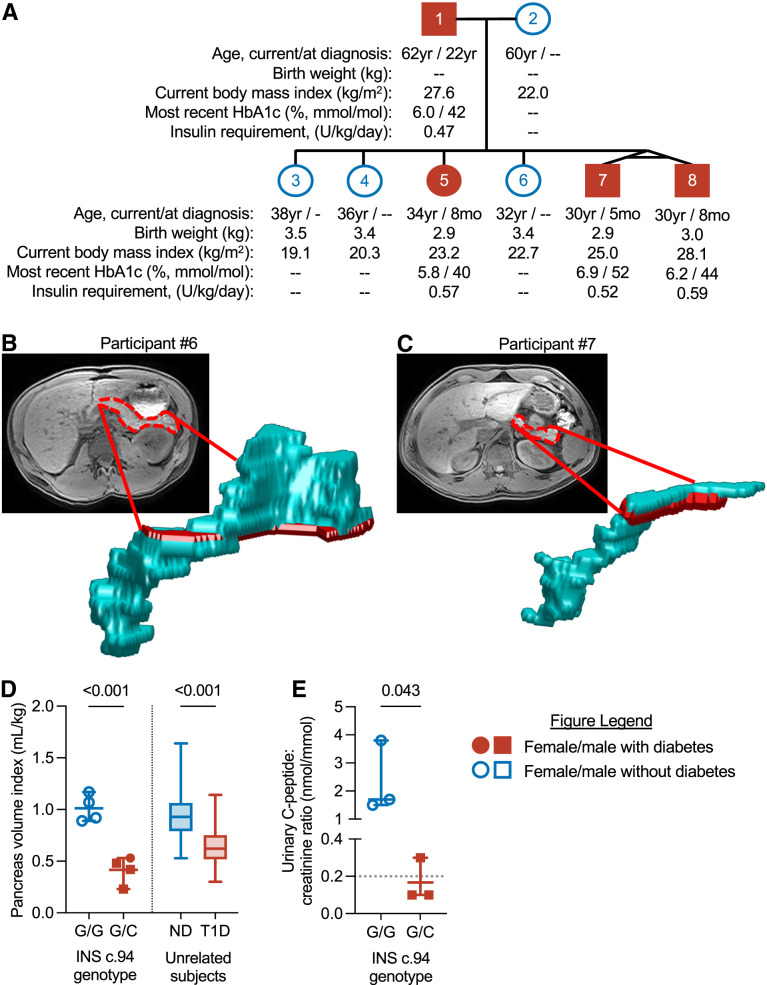
Using a validated and standardized MRI protocol, we measured pancreas volume and shape in a family with an autosomal-dominant insulin gene mutation that results in insulin deficiency similar in severity to that of type 1 diabetes but without autoimmunity. DNA sequencing confirmed the mutation in all four affected individuals and none of the four control family members. Insulin secretory capacity was determined by measuring postprandial urinary C-peptide.
Family members with this form of monogenic diabetes had a markedly smaller pancreas and a severely impaired postprandial C-peptide level than family members without diabetes.
These results suggest that severe insulin deficiency, rather than islet-directed autoimmunity, leads to reduced pancreas size in type 1 diabetes and that insulin is a major trophic factor for the exocrine pancreas.
确定 1 型糖尿病中胰腺体积缩小的机制,以及胰岛源性胰岛素在胰腺生长中的意义。
我们使用经过验证和标准化的 MRI 方案,对一个常染色体显性胰岛素基因突变家族进行了胰腺体积和形状的测量,该基因突变导致的胰岛素缺乏与 1 型糖尿病相似,但无自身免疫。DNA 测序证实了所有 4 名受影响个体和 4 名对照家族成员均存在该突变。通过测量餐后尿 C 肽来确定胰岛素分泌能力。
患有这种单基因糖尿病的家族成员的胰腺明显较小,并且餐后 C 肽水平严重受损,低于无糖尿病的家族成员。
这些结果表明,严重的胰岛素缺乏而非胰岛靶向自身免疫导致 1 型糖尿病中胰腺体积缩小,而胰岛素是外分泌胰腺的主要营养因子。