Lledín María D, Parrón-Pajares Manuel, Morais Ana, Hernández-Oliveros Francisco, Botella-Carretero Jose I, Hierro Loreto
Department of Pediatric Hepatology & Liver Transplant, Hospital Universitario La Paz & IdiPAZ, Madrid, Spain.
Department of Pediatric Radiology, Hospital Universitario La Paz, Madrid, Spain.
Front Pediatr. 2023 Jan 16;10:1093880. doi: 10.3389/fped.2022.1093880. eCollection 2022.
Sarcopenia in adult cirrhotic patients is associated with increased morbidity and mortality whereas in children it is still being studied. Anthropometric variables in cirrhotic children are not reliable for assessing muscle mass as they may be altered by ascites, edema, and organomegaly. Measuring the area of the psoas showed good correlation with muscle mass in adults. We aimed to study in cirrhotic infants undergoing liver transplantation the association of the psoas area with liver transplant prognosis as well as with several analytical and anthropometric parameters used to evaluate nutritional status.
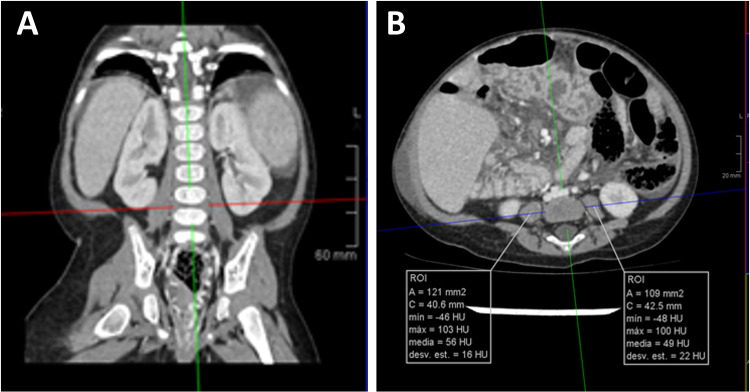
Retrospective cohort of 29 infants with cirrhosis due to biliary atresia who underwent abdominal CT scan as a pre-transplant study. We measured the psoas muscle index (PMI) at L4-L5 since it best correlates with muscle mass in pediatric patients. As there are no validated cut-off points to define sarcopenia in children under one year of age, PMI was recorded as a continuous variable and correlated with different prognostic, clinical, and analytical variables. The SPSS 17.0 package was used for statistical analysis and a < 0.05 was considered significant.
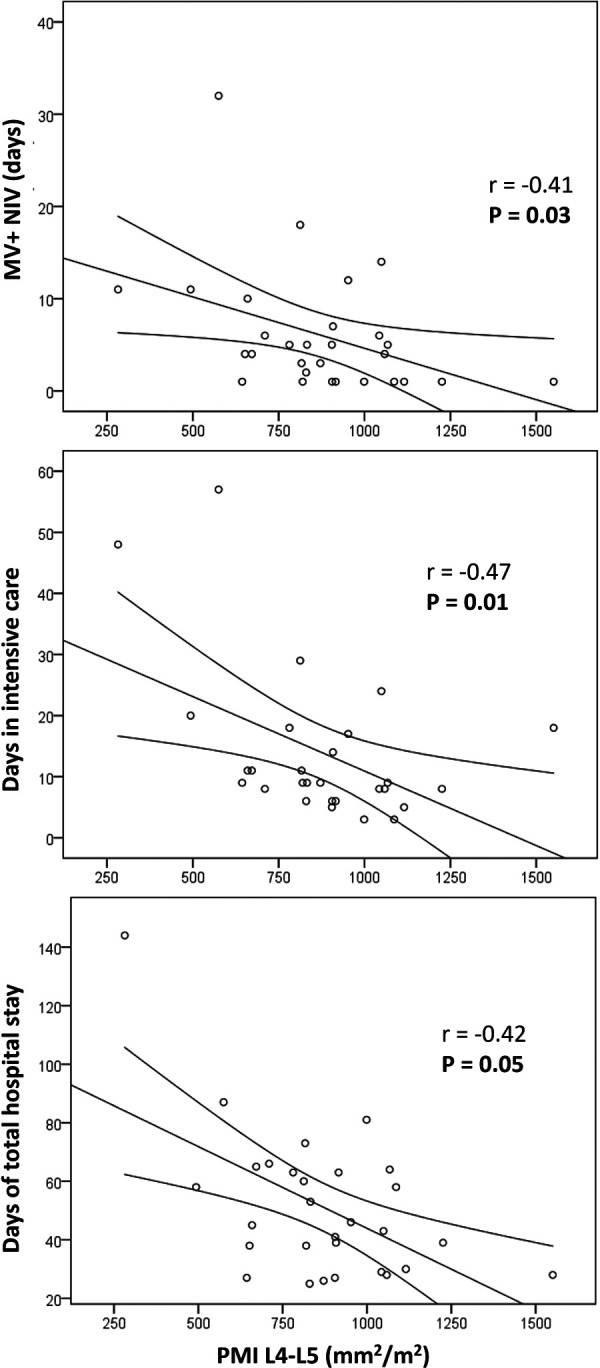
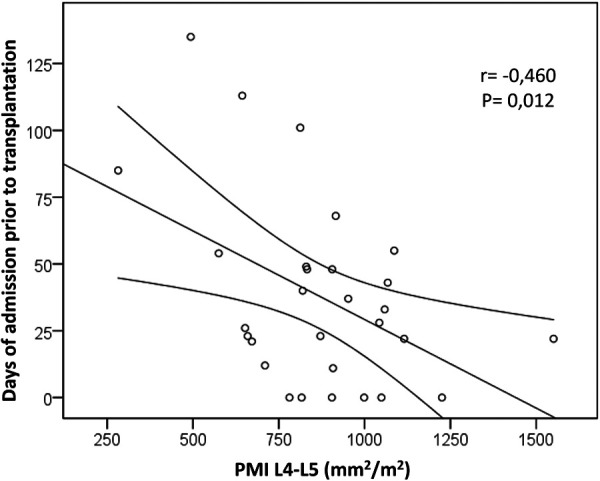
29 infants (10 boys, 19 girls) were studied. 62% were Caucasian and the rest were South American. The mean age at CT scan was 8.5 months (range 3-15 months). There was a negative correlation between PMI and days of admission prior to liver transplant, previous infections, and bone fractures. Among the analytical parameters, cholinesterase, albumin, and prealbumin correlated positively with PMI ( < 0.05). No relationship was observed with anthropometric parameters: weight, height, BMI, brachial perimeter, or bioimpedance. During surgery, patients with lower PMI had a greater need for plasma transfusion, and in the immediate postoperative period, there was a longer stay in intensive care, more days of mechanical ventilation, and more days of hospital admission ( < 0.05). On the contrary, no relationship was found with other complications: bleeding, re-interventions, biliary leaks, rejection, thrombosis, re-transplantation, or infections.
The decrease in muscle mass is associated with increased morbidity in infants with biliary atresia undergoing liver transplantation. Muscle mass in these patients cannot be adequately assessed with anthropometric measurements commonly used in the clinic.
成人肝硬化患者的肌肉减少症与发病率和死亡率增加相关,而儿童肌肉减少症仍在研究中。肝硬化儿童的人体测量变量对于评估肌肉量不可靠,因为它们可能因腹水、水肿和器官肿大而改变。测量腰大肌面积在成人中与肌肉量显示出良好的相关性。我们旨在研究接受肝移植的肝硬化婴儿中腰大肌面积与肝移植预后以及与用于评估营养状况的几个分析和人体测量参数之间的关联。
对29例因胆道闭锁导致肝硬化的婴儿进行回顾性队列研究,这些婴儿在移植前接受了腹部CT扫描。我们在L4-L5测量腰大肌指数(PMI),因为它与儿科患者的肌肉量相关性最好。由于没有经过验证的切点来定义一岁以下儿童的肌肉减少症,PMI被记录为连续变量,并与不同的预后、临床和分析变量相关。使用SPSS 17.软件包进行统计分析,P<0.05被认为具有统计学意义。
研究了29例婴儿(10例男孩,19例女孩)。62%为白种人,其余为南美洲人。CT扫描时的平均年龄为8.5个月(范围3-15个月)。PMI与肝移植前的入院天数、既往感染和骨折之间存在负相关。在分析参数中,胆碱酯酶、白蛋白和前白蛋白与PMI呈正相关(P<0.05)。未观察到与人体测量参数(体重、身高、BMI、臂围或生物电阻抗)的关系。手术期间,PMI较低的患者对血浆输血的需求更大,在术后即刻,在重症监护病房的停留时间更长,机械通气天数更多以及住院天数更多(P<0.05)。相反,未发现与其他并发症(出血、再次干预、胆漏、排斥反应、血栓形成、再次移植或感染)的关系。
肌肉量减少与接受肝移植的胆道闭锁婴儿的发病率增加相关。这些患者的肌肉量不能通过临床常用的人体测量方法进行充分评估。