Molecular Allergology, Paul-Ehrlich-Institut (PEI), Federal Institute for Vaccines and Biomedicines, Langen, Germany.
Institute of Pathology and Neuropathology, Comprehensive Cancer Center, University Hospital Tübingen, Eberhard Karls University of Tübingen, Tübingen, Germany.
Sci Rep. 2023 Feb 2;13(1):1892. doi: 10.1038/s41598-023-28933-1.
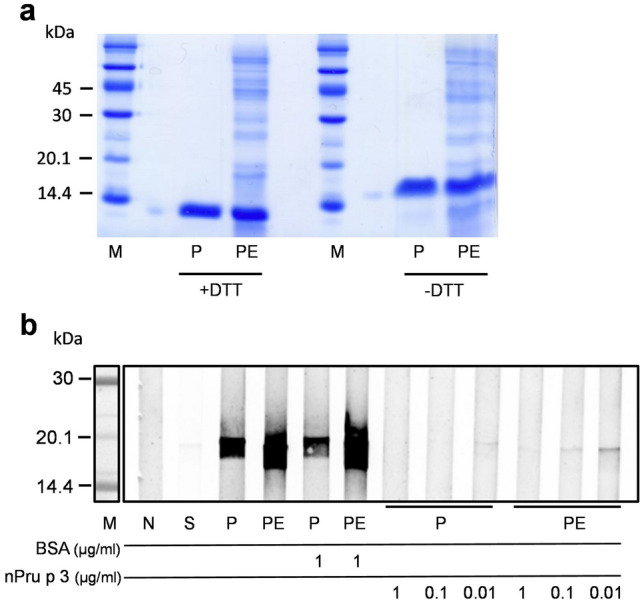
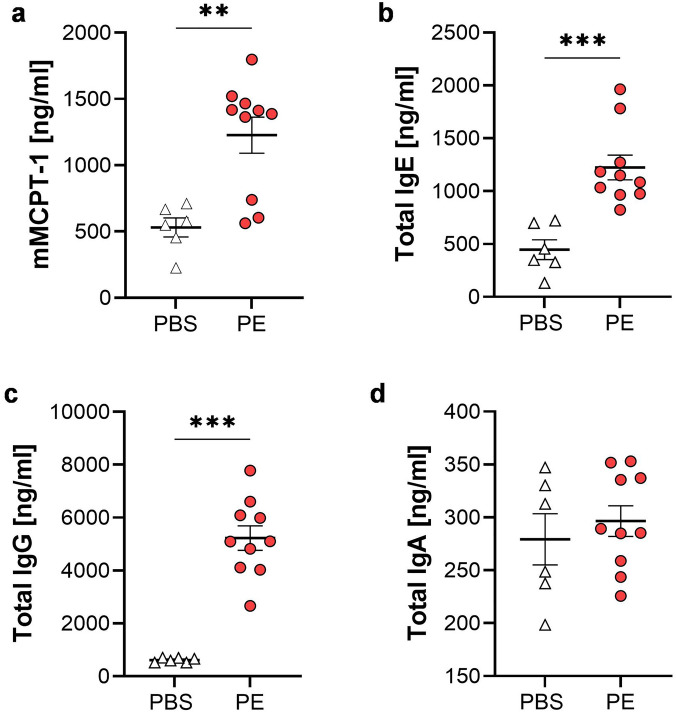
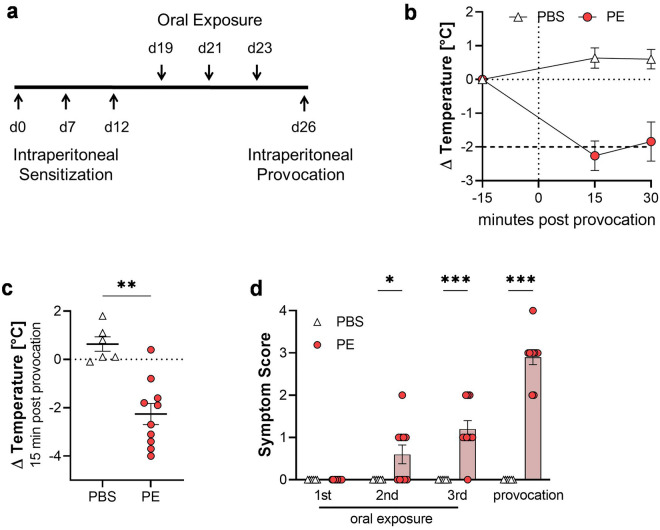
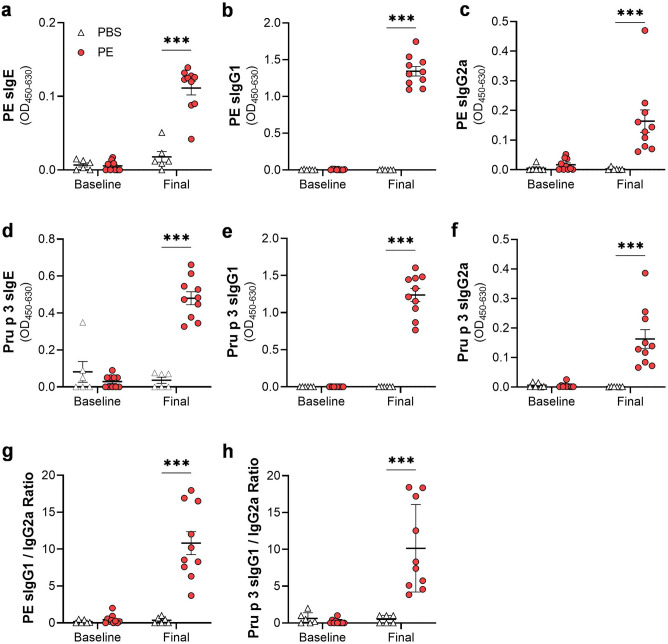
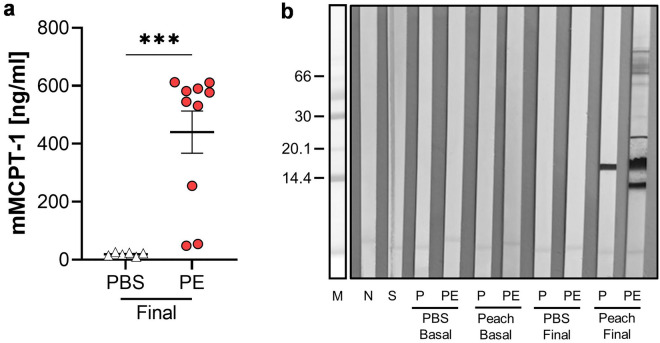
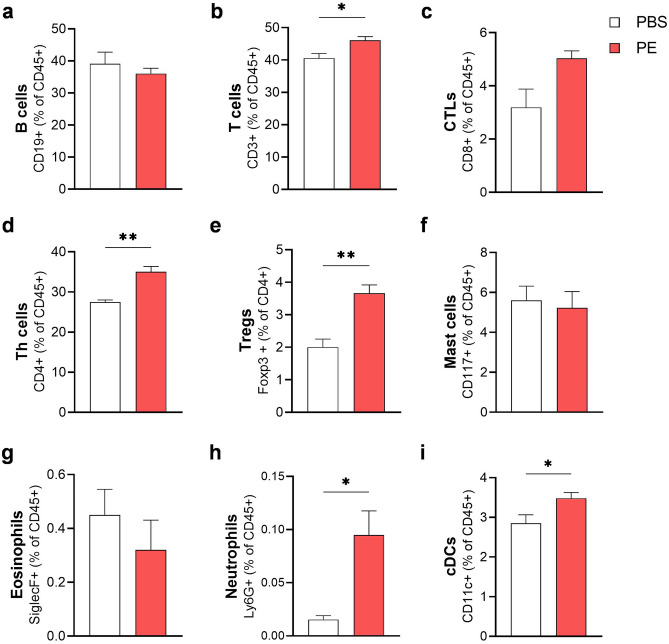
Peach allergy is among the most frequent food allergies in the Mediterranean area, often eliciting severe anaphylactic reactions in patients. Due to the risk of severe symptoms, studies in humans are limited, leading to a lack of therapeutic options. This study aimed to develop a peach allergy mouse model as a tool to better understand the pathomechanism and to allow preclinical investigations on the development of optimized strategies for immunotherapy. CBA/J mice were sensitized intraperitoneally with peach extract or PBS, using alum as adjuvant. Afterwards, extract was administered intragastrically to involve the intestinal tract. Allergen provocation was performed via intraperitoneal injection of extract, measuring drop of body temperature as main read out of anaphylaxis. The model induced allergy-related symptoms in mice, including decrease of body temperature. Antibody levels in serum and intestinal homogenates revealed a Th2 response with increased levels of mMCPT-1, peach- and Pru p 3-specific IgE, IgG1 and IgG2a as well as increased levels of IL-4 and IL-13. FACS analysis of small intestine lamina propria revealed increased amounts of T cells, neutrophils and DCs in peach allergic mice. These data suggest the successful establishment of a peach allergy mouse model, inducing systemic as well as local gastrointestinal reactions.
桃过敏是地中海地区最常见的食物过敏之一,常导致患者发生严重的过敏反应。由于发生严重症状的风险,人体研究受到限制,导致治疗选择有限。本研究旨在建立桃过敏小鼠模型,作为更好地了解发病机制的工具,并允许对免疫疗法的优化策略进行临床前研究。CBA/J 小鼠用桃提取物或 PBS 经腹腔内致敏,并用明矾作为佐剂。之后,通过胃内给予提取物来涉及肠道。通过腹腔内注射提取物进行过敏原激发,以体温下降作为过敏的主要检测指标。该模型在小鼠中诱导了与过敏相关的症状,包括体温下降。血清和肠匀浆中的抗体水平显示出 Th2 反应,增加了 mMCPT-1、桃和 Pru p 3 特异性 IgE、IgG1 和 IgG2a 以及增加了 IL-4 和 IL-13 的水平。小肠固有层的 FACS 分析显示,桃过敏小鼠中 T 细胞、中性粒细胞和 DC 的数量增加。这些数据表明成功建立了桃过敏小鼠模型,诱导了全身和局部胃肠道反应。