Megido Iris, Sela Yael, Grinberg Keren
Operating Division, Maccabi Healthcare Services, Tel Aviv, Israel.
Department of Nursing Sciences, Faculty of Social and Community Science, Ruppin Academic Center, Emek- Hefer, Israel.
Cost Eff Resour Alloc. 2023 Feb 2;21(1):13. doi: 10.1186/s12962-023-00424-0.
Increased utilization of health services due to population growth affects the allocation of national resources and budgets. Hence, it is important for national policy. Home hospitalization is one of the solutions for dealing with the growing demand for hospital beds and reducing the duration of hospitalization and its costs. It is gradually becoming part of the regular care in many health systems, yet, studies on the economic aspects of Community-Based Home Hospitalization (CBHH) implementation in Israel are few. The aim of this study is to examine costs of CBHH in comparison to costs of inpatient hospital care in the Israeli public health system.
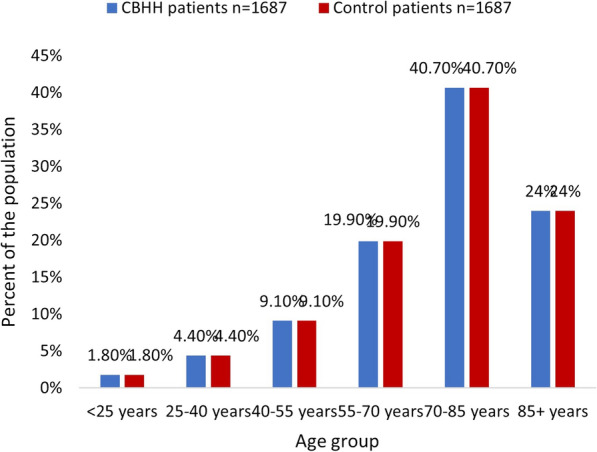
Retrospective data was collected using document research in databases. A review of the costs of patients in CBHH at Maccabi Healthcare Services (MHS) was conducted. A total of 3374 patients were included in this study: 1687 patients who were in CBHH, and 1687 age- and sex-matched patients who were hospitalized in an internal department (the control group). The study population included the patients admitted to CBHH from January 2018 to July 2020, and patients admitted to internal medicine departments during the same period.
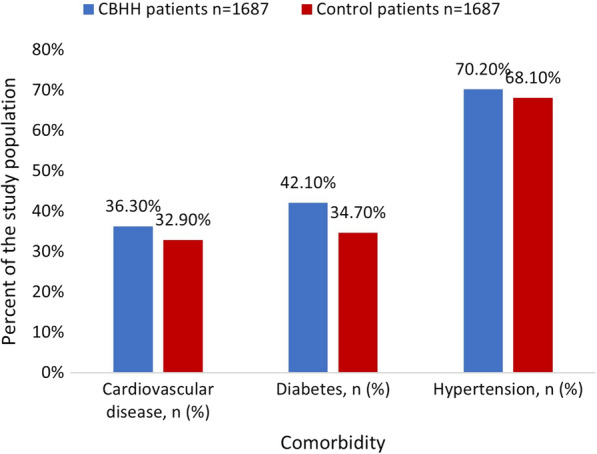
The number of hospitalizations during the follow up period were statistically significantly lower in the CBHH group compared with the control group (M = 1.18, SD = 0.56 vs. M = 1.61, SD = 1.29, p < 0.001). In addition, the mean number of hospitalization days was also statistically significantly lower for 4.3 (SD = 4.5) for CBHH patients compared to the control group (M = 4.3 days, SD = 4.5 vs. M = 7.5 days, SD = 10.3, p < 0.001). Furthermore, the mean cost per day was statistically significantly higher for inpatient hospitalization compared to CBHH (M = 1829.1, SD = 87.5 vs. M = 783.2, SD = 178.3, p < 0.001). Older patients, patients with diabetes and patients hospitalized in hospitals had a higher number of hospitalization days.
The costs of CBHH seem to be lower than those of inpatient care. Managing CBHH is characterized by constantly measuring financial feasibility that would be an impetus for further development of this service.
由于人口增长导致医疗服务利用率提高,这会影响国家资源和预算的分配。因此,这对国家政策很重要。居家住院治疗是应对医院床位需求不断增长、缩短住院时间及其成本的解决方案之一。它正逐渐成为许多医疗系统常规护理的一部分,然而,关于以色列实施基于社区的居家住院治疗(CBHH)的经济方面的研究却很少。本研究的目的是比较CBHH与以色列公共卫生系统中住院治疗的成本。
通过数据库中的文献研究收集回顾性数据。对马卡比医疗服务公司(MHS)接受CBHH治疗的患者的费用进行了审查。本研究共纳入3374名患者:1687名接受CBHH治疗的患者,以及1687名年龄和性别匹配的在内科住院的患者(对照组)。研究人群包括2018年1月至2020年7月期间接受CBHH治疗的患者,以及同期入住内科的患者。
随访期间,CBHH组的住院次数在统计学上显著低于对照组(M = 1.18,SD = 0.56 vs. M = 1.61,SD = 1.29,p < 0.001)。此外,CBHH患者的平均住院天数在统计学上也显著低于对照组,为4.3天(SD = 4.5)(M = 4.3天,SD = 4.5 vs. M = 7.5天,SD = 10.3,p < 0.001)。此外,住院治疗的日均费用在统计学上显著高于CBHH(M = 1829.1,SD = 87.5 vs. M = 783.2,SD = 178.3,p < 0.001)。老年患者、糖尿病患者和在医院住院的患者住院天数较多。
CBHH的成本似乎低于住院治疗。管理CBHH的特点是不断衡量财务可行性,这将推动这项服务的进一步发展。