Cardiovascular Regeneration Program, Centro Nacional de Investigaciones Cardiovasculares, CNIC, 28029 Madrid, Spain.
Transgenesis Unit, Centro Nacional de Investigaciones Cardiovasculares, CNIC, 28029 Madrid, Spain.
Development. 2023 Feb 15;150(3). doi: 10.1242/dev.201206. Epub 2023 Feb 3.
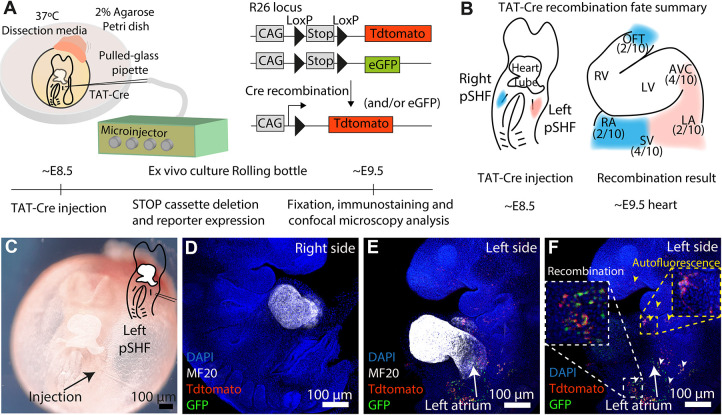
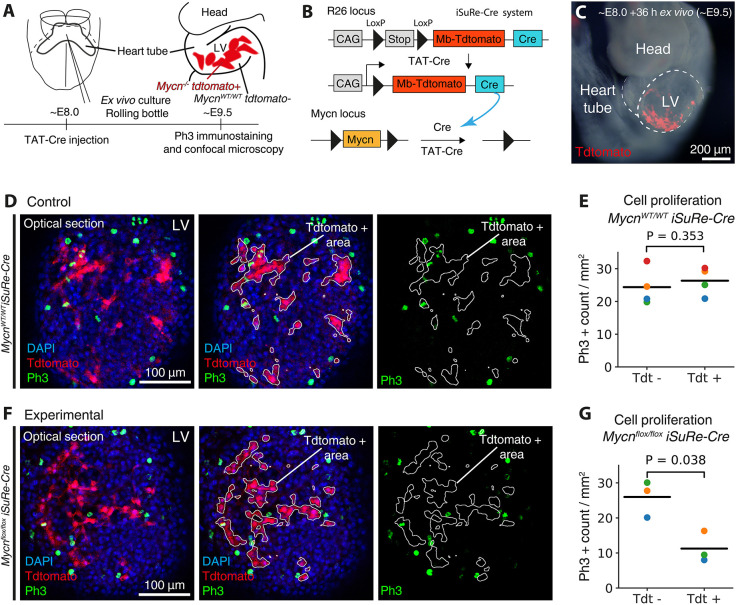
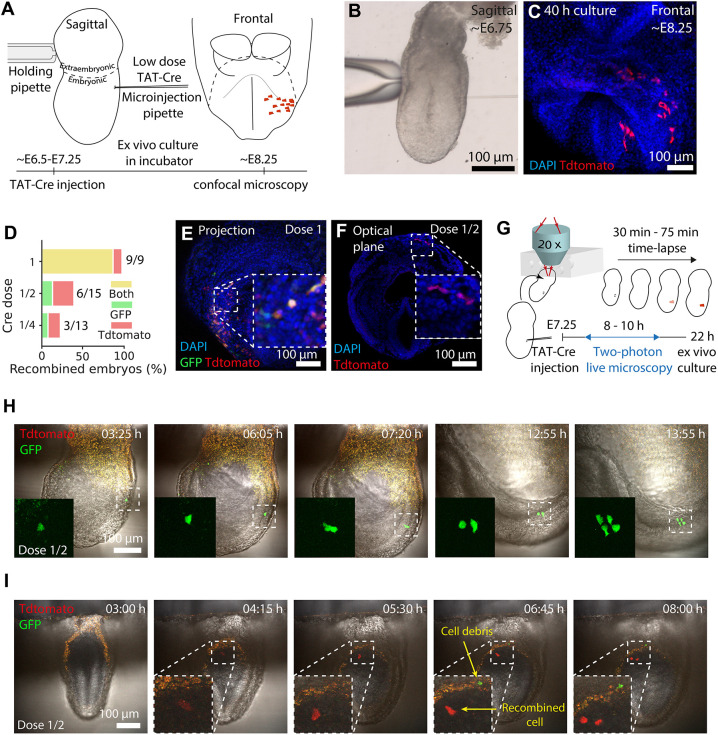
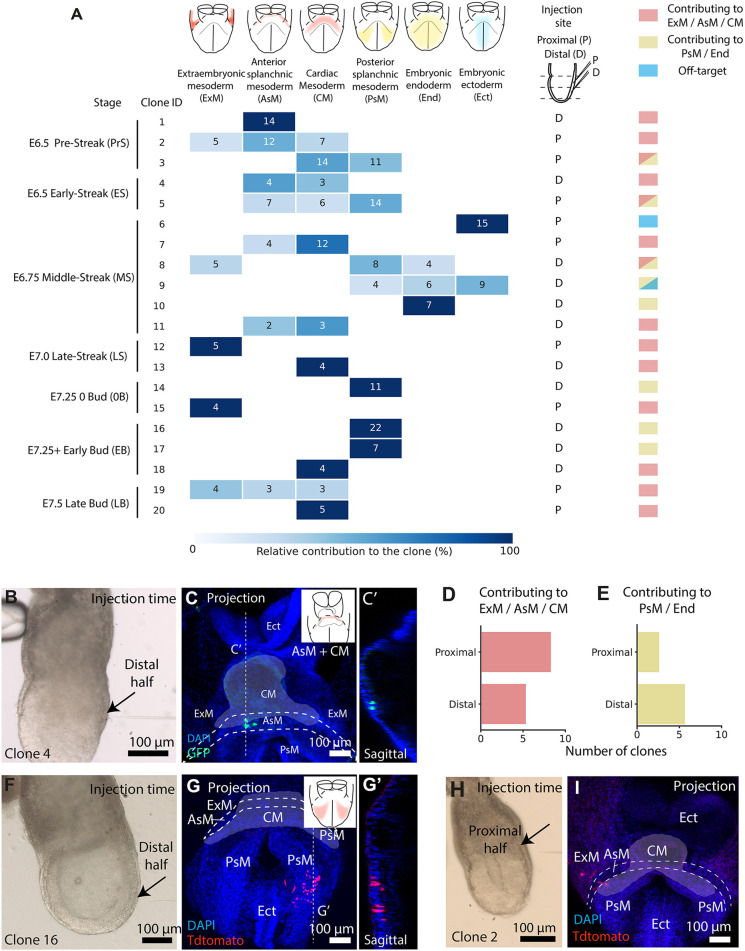
Tracing and manipulating cells in embryos are essential to understand development. Lipophilic dye microinjections, viral transfection and iontophoresis have been key to map the origin of the progenitor cells that form the different organs in the post-implantation mouse embryo. These techniques require advanced manipulation skills and only iontophoresis, a demanding approach of limited efficiency, has been used for single-cell labelling. Here, we perform lineage tracing and local gene ablation using cell-permeant Cre recombinase (TAT-Cre) microinjection. First, we map the fate of undifferentiated progenitors to the different heart chambers. Then, we achieve single-cell recombination by titrating the dose of TAT-Cre, which allows clonal analysis of nascent mesoderm progenitors. Finally, injecting TAT-Cre to Mycnflox/flox embryos in the primitive heart tube revealed that Mycn plays a cell-autonomous role in maintaining cardiomyocyte proliferation. This tool will help researchers identify the cell progenitors and gene networks involved in organ development, helping to understand the origin of congenital defects.
追踪和操作胚胎中的细胞对于理解发育至关重要。亲脂性染料微注射、病毒转染和电穿孔已成为绘制形成植入后小鼠胚胎不同器官的祖细胞起源图谱的关键技术。这些技术需要先进的操作技能,并且只有电穿孔,一种效率有限的苛刻方法,已被用于单细胞标记。在这里,我们使用细胞通透型 Cre 重组酶(TAT-Cre)微注射进行谱系追踪和局部基因消融。首先,我们将未分化祖细胞的命运映射到不同的心脏腔室。然后,通过滴定 TAT-Cre 的剂量来实现单细胞重组,从而允许对新生中胚层祖细胞进行克隆分析。最后,将 TAT-Cre 注射到原始心脏管中的 Mycnflox/flox 胚胎中,揭示了 MycN 在维持心肌细胞增殖中具有细胞自主作用。该工具将帮助研究人员识别参与器官发育的细胞祖细胞和基因网络,有助于理解先天性缺陷的起源。