School of Life Science, Handong Global University, Pohang, Gyungbuk, Republic of Korea.
Basic Research Center, HEM Pharma Inc., Pohang, Gyungbuk, Republic of Korea.
PLoS One. 2023 Feb 3;18(2):e0280850. doi: 10.1371/journal.pone.0280850. eCollection 2023.
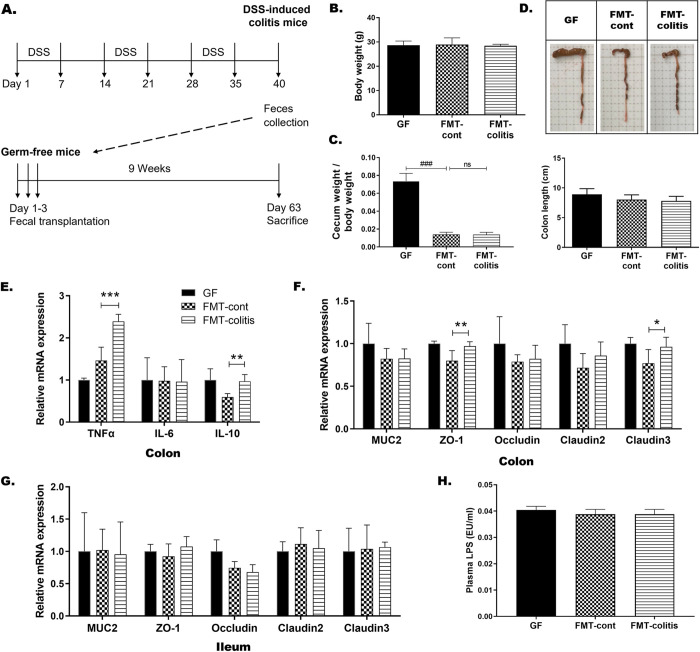
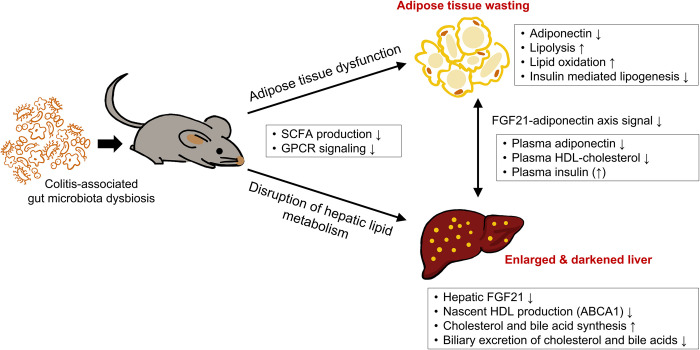
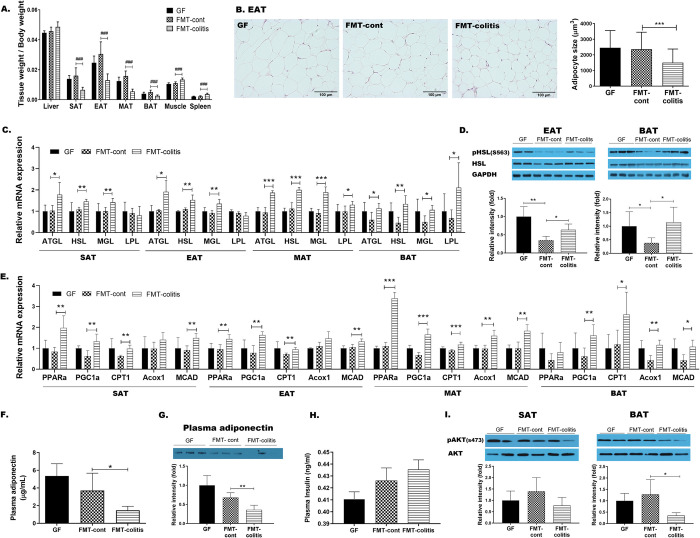
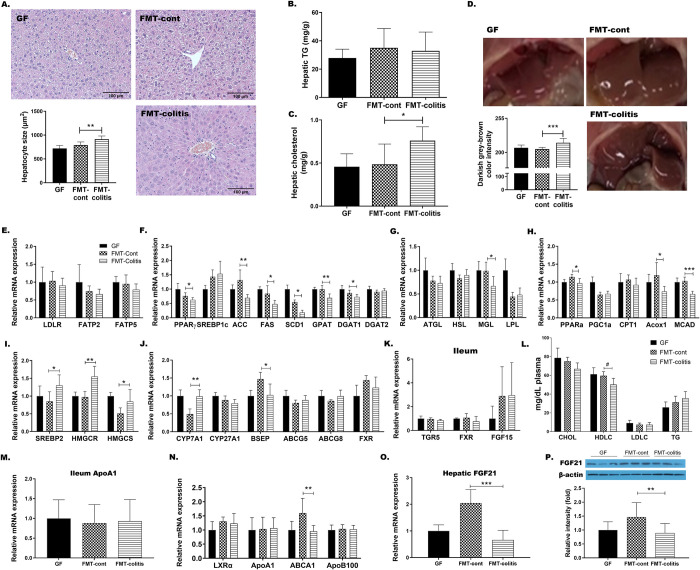
Hepatobiliary abnormality and metabolic disorders are frequently observed complications in patients with inflammatory bowel diseases (IBD). Given that microbiota dysbiosis is a common pathophysiological feature of both IBD and metabolic diseases, we examined how the IBD-induced dysbiosis affects the host metabolism and contributes to the development of associated metabolic diseases using germ-free (GF) mice transplanted with fecal microbiota of DSS-induced colitis mice. There was no significant change in inflammation or barrier integrity in the gut of GF mice that received microbiota from colitis mice compared to their counterparts that were transplanted with microbiota from non-colitis healthy mice. Interestingly, it was observed that the GF recipients of colitis-induced altered microbiota showed a significant decrease in the weight of adipose tissues including mesenteric, epididymal, subcutaneous, and brown fat without any change in body weight, which was accompanied by abnormalities in adipose tissue functions such as fat storage and adiponectin production. Transplantation of colitis-induced altered microbiota also disrupted hepatic lipid metabolism in the GF recipient mice, which was observed by increases in synthesis and accumulation of cholesterol and bile acids in hepatocytes and a decrease in plasma HDL-cholesterol. Additional observations including elevated plasma levels of insulin, decreased hepatic production of FGF21, and decreased levels of fecal short chain fatty acids (SCFAs) and hepatic expression of SCFA receptors led to a conclusion that the transplantation of the colitis-associated dysbiotic microbiota was causally associated with impairments of insulin action and FGF21-adiponectin axis, possibly due to the low SCFA-producing capacity of the colonized microbiota, leading to metabolic abnormalities including adipose tissue dysfunction and dysregulated hepatic lipid metabolism. Our findings suggest potential mechanisms that explain how colitis-associated gut dysbiosis may contribute to the development of metabolic dysfunctions, which could be applied to clinical practice to improve the efficacy of treatment of IBD patients with comorbid metabolic disorders or vice versa.
肝胆异常和代谢紊乱是炎症性肠病(IBD)患者常见的并发症。鉴于微生物失调是 IBD 和代谢疾病的共同病理生理特征,我们研究了 IBD 引起的微生物失调如何影响宿主代谢并导致相关代谢疾病的发展,方法是使用无菌(GF)小鼠移植 DSS 诱导结肠炎小鼠的粪便微生物群。与接受非结肠炎健康小鼠来源微生物群移植的对照相比,接受结肠炎小鼠来源微生物群移植的 GF 小鼠的肠道炎症或屏障完整性没有明显变化。有趣的是,观察到接受结肠炎诱导的改变的微生物群的 GF 受体的脂肪组织重量显着减少,包括肠系膜、附睾、皮下和棕色脂肪,而体重没有变化,这伴随着脂肪组织功能的异常,如脂肪储存和脂联素产生。移植结肠炎诱导的改变的微生物群也破坏了 GF 受体小鼠的肝脂质代谢,这表现在肝细胞中胆固醇和胆汁酸的合成和积累增加,血浆高密度脂蛋白胆固醇减少。其他观察结果包括血浆胰岛素水平升高、FGF21 肝生成减少以及粪便短链脂肪酸(SCFA)水平降低和肝 SCFA 受体表达降低,导致结论认为,结肠炎相关的失调微生物群的移植与胰岛素作用和 FGF21-脂联素轴的损害有关,可能是由于定植微生物群产生 SCFA 的能力降低,导致代谢异常,包括脂肪组织功能障碍和肝脂质代谢失调。我们的研究结果提出了一些潜在的机制,可以解释结肠炎相关的肠道微生物失调如何导致代谢功能障碍的发展,这可能应用于临床实践,以提高伴有代谢紊乱的 IBD 患者治疗的疗效或反之亦然。