Laboratory for Pathophysiological and Health Science, RIKEN Center for Biosystems Dynamics Research, 6-7-3 Minatojima Minamimachi, Chuo-Ku, Kobe, Hyogo, 650-0047, Japan.
Novel PET Diagnostics Laboratory, RIKEN Innovation Center, Kobe, Hyogo, Japan.
Sci Rep. 2023 Feb 3;13(1):1961. doi: 10.1038/s41598-023-29166-y.
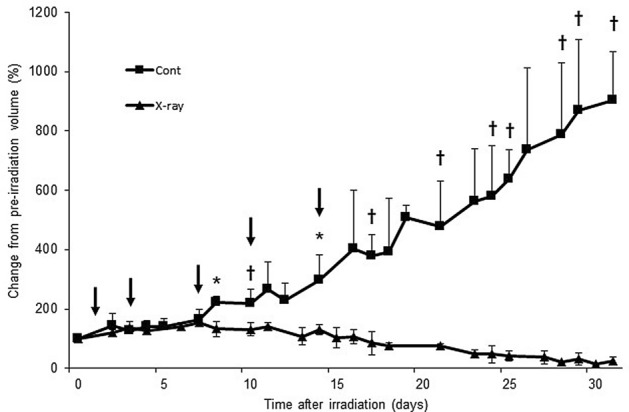
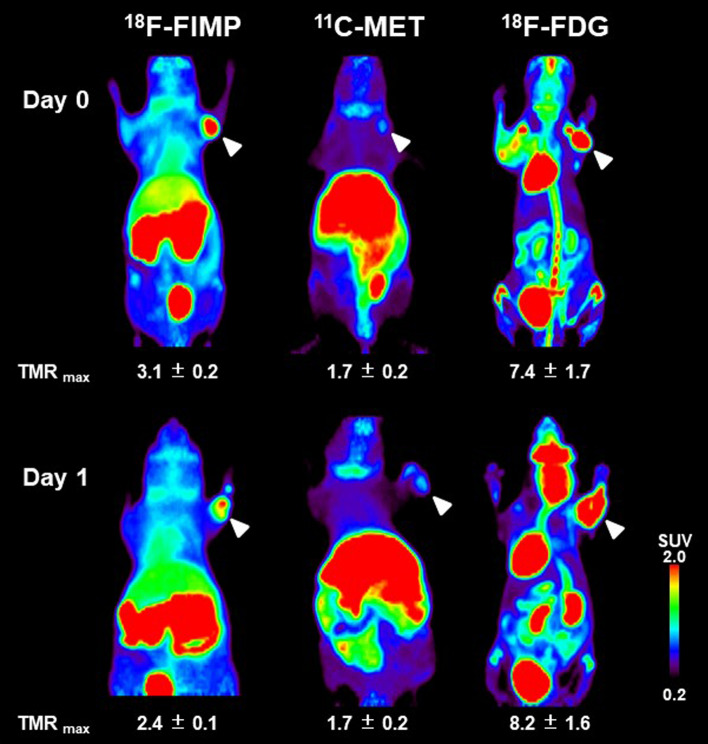
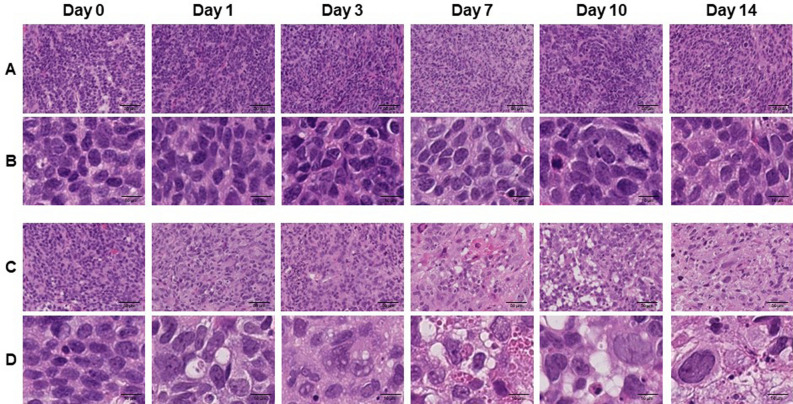
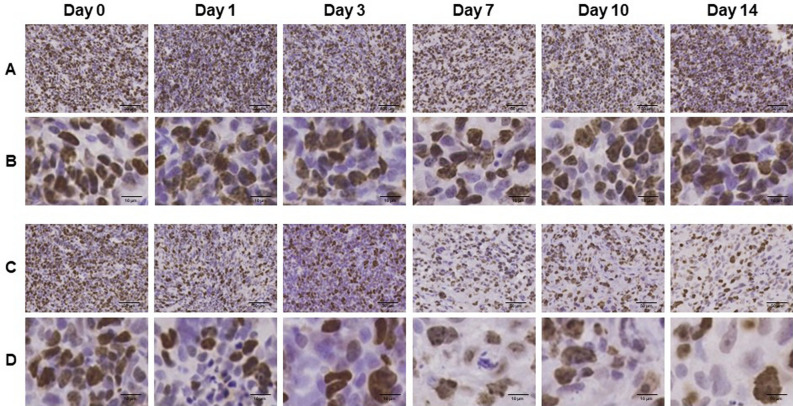
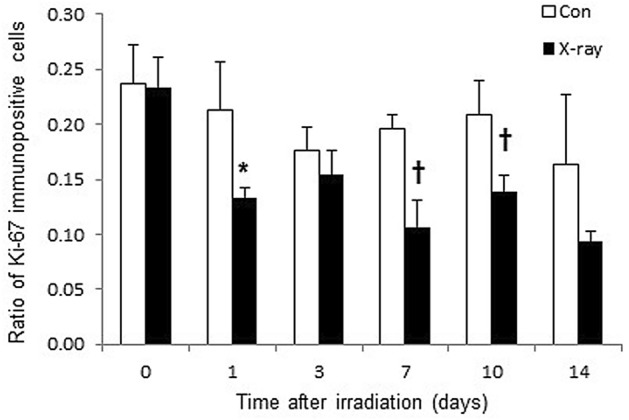
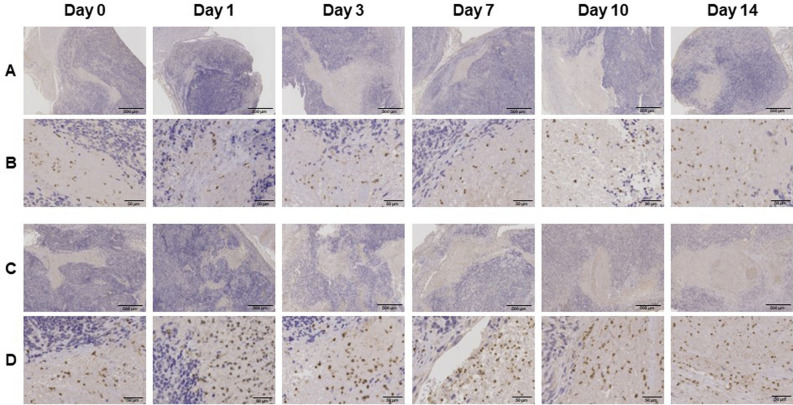
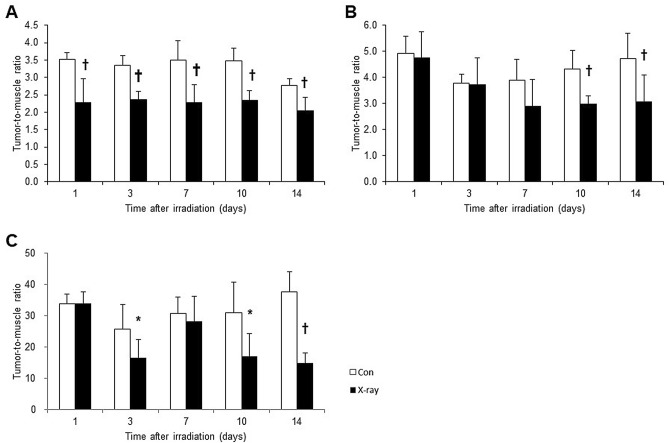
Several limitations of [F]FDG have been reported, such as nonspecific uptake of inflammation foci. Moreover, [C]MET has been found to accumulate in normal and inflammatory tissues as well as tumors. To increase specificity to tumor tissues, PET probes with tumor-specific molecular targets have been actively developed. [F]FIMP was found to be highly accumulated in LAT1-positive tumors but not in inflamed tissue. The aim of this study was to explore whether [F]FIMP can be used for the early-phase evaluation of radiotherapy accompanied by inflammation, and compare its effectiveness with those of [C]MET and [F]FDG. Tumor uptake of [F]FIMP decreased at day 1 after irradiation, and remained low until day 14. Comparatively, that of [F]FDG initially decreased at day 3 but was transiently elevated at day 7 and then decreased again at day 10. Decreased tumor uptake of [C]MET was observed at day 10. In line with the uptake of [F]FIMP, the ratio of Ki-67 immuno-positive cells in tumor tissues significantly decreased at day 1, 7, and 10 as compared with that in the control. These findings suggest that [F]FIMP may be a PET probe involved in the early detection and prediction of radiotherapy efficacy, although further clarification is needed.
已报道了[F]FDG 的一些局限性,例如炎症灶的非特异性摄取。此外,已经发现[C]MET 在正常组织、炎症组织和肿瘤中都有积累。为了提高对肿瘤组织的特异性,已经积极开发了具有肿瘤特异性分子靶标的 PET 探针。[F]FIMP 被发现高度积聚在 LAT1 阳性肿瘤中,但不在炎症组织中积聚。本研究旨在探讨[F]FIMP 是否可用于伴有炎症的放射治疗的早期评估,并比较其与[C]MET 和[F]FDG 的效果。[F]FIMP 的肿瘤摄取在照射后第 1 天下降,并持续低至第 14 天。相比之下,[F]FDG 的摄取最初在第 3 天下降,但在第 7 天短暂升高,然后在第 10 天再次下降。[C]MET 的肿瘤摄取在第 10 天下降。与[F]FIMP 的摄取一致,与对照组相比,肿瘤组织中 Ki-67 免疫阳性细胞的比例在第 1、7 和 10 天显著下降。这些发现表明,[F]FIMP 可能是一种参与放射治疗效果早期检测和预测的 PET 探针,尽管需要进一步澄清。