Department of Education, Psychology, and Communication, University of Bari Aldo Moro, Bari, Italy.
IMT School for Advanced Studies Lucca, Lucca, Italy.
Sci Rep. 2023 Feb 4;13(1):2035. doi: 10.1038/s41598-023-29124-8.
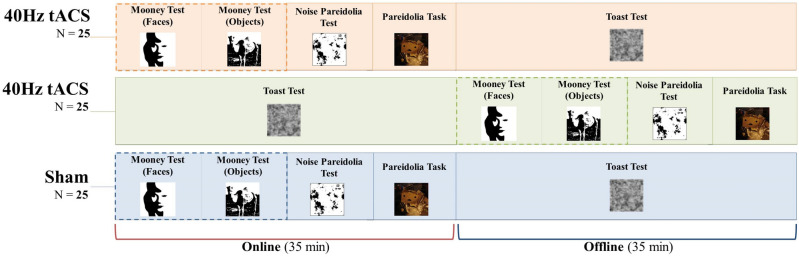
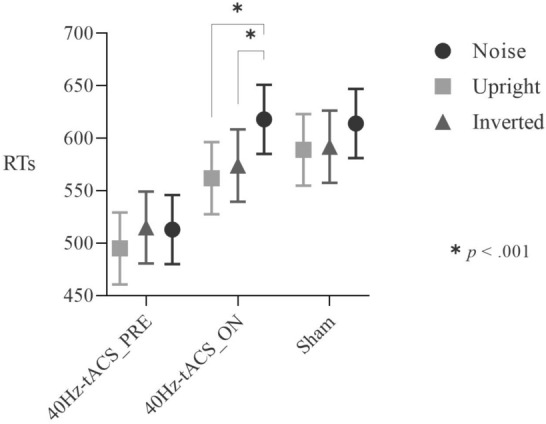
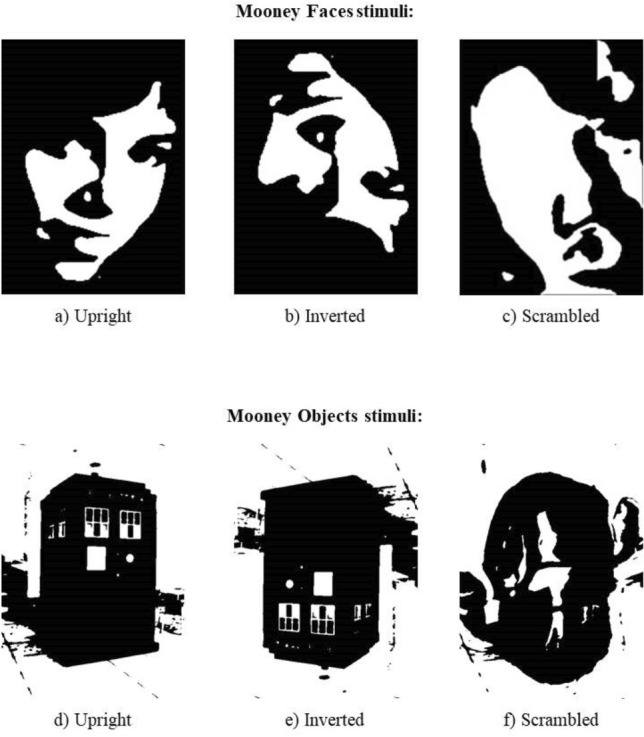
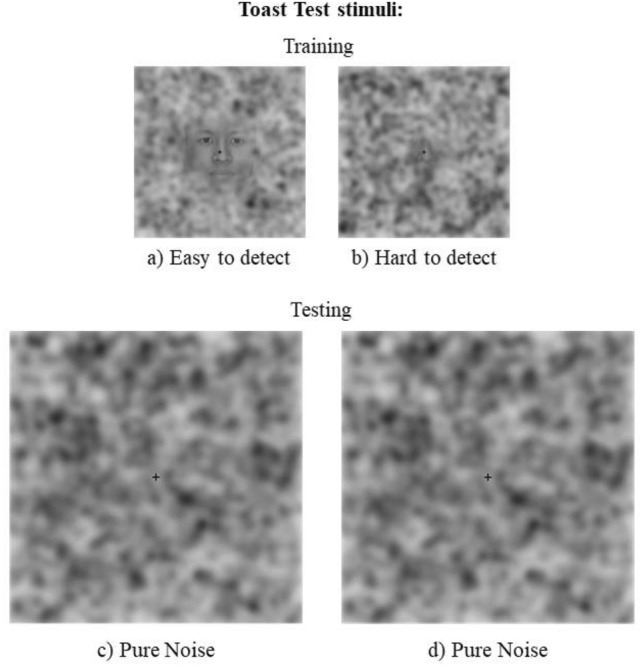
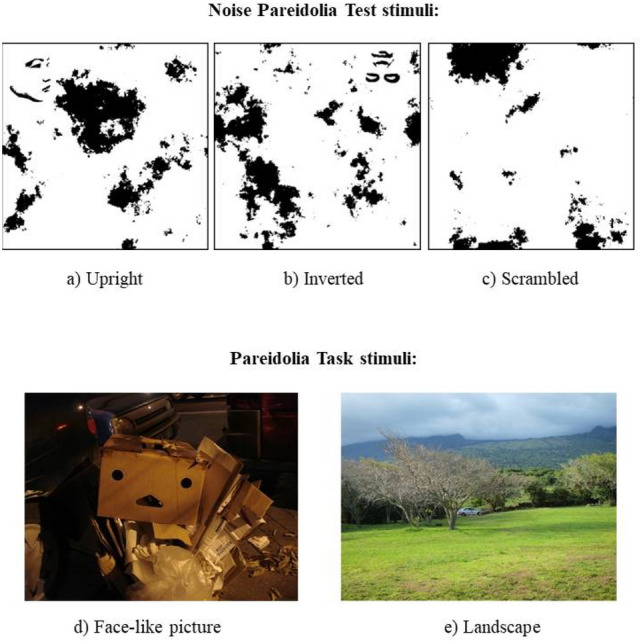
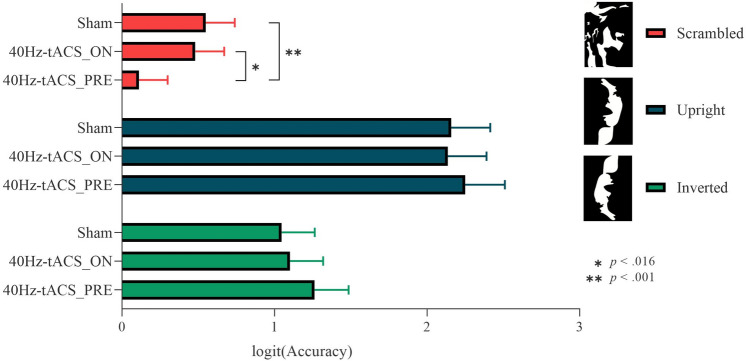
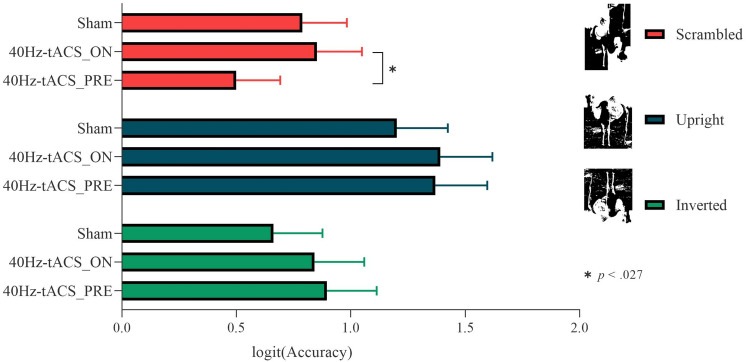
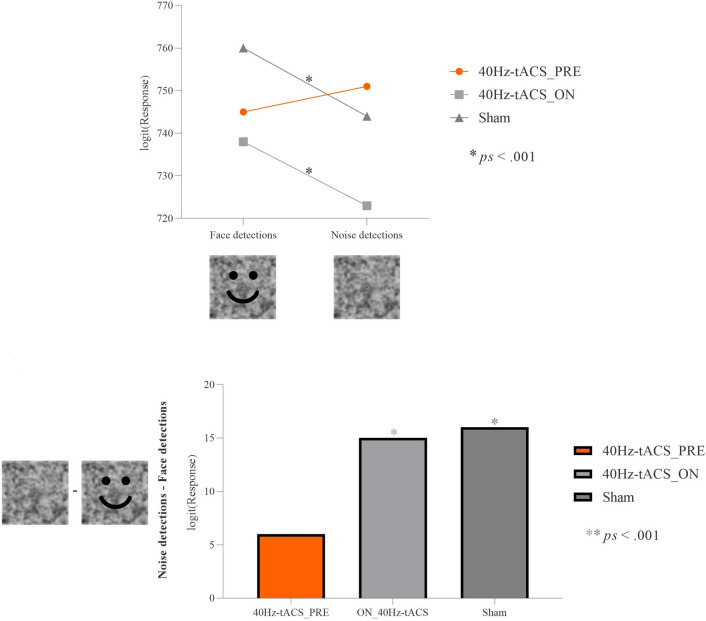
Pareidolia refers to the perception of ambiguous sensory patterns as carrying a specific meaning. In its most common form, pareidolia involves human-like facial features, where random objects or patterns are illusionary recognized as faces. The current study investigated the neurophysiological correlates of face pareidolia via transcranial alternating current stimulation (tACS). tACS was delivered at gamma (40 Hz) frequency over critical nodes of the "face perception" network (i.e., right lateral occipito-temporal and left prefrontal cortex) of 75 healthy participants while completing four face perception tasks ('Mooney test' for faces, 'Toast test', 'Noise pareidolia test', 'Pareidolia task') and an object perception task ('Mooney test' for objects). In this single-blind, sham-controlled between-subjects study, participants received 35 min of either Sham, Online, (40Hz-tACS_ON), or Offline (40Hz-tACS_PRE) stimulation. Results showed that face pareidolia was causally enhanced by 40Hz-tACS_PRE in the Mooney test for faces in which, as compared to sham, participants more often misperceived scrambled stimuli as faces. In addition, as compared to sham, participants receiving 40Hz-tACS_PRE showed similar reaction times (RTs) when perceiving illusory faces and correctly recognizing noise stimuli in the Toast test, thus not exhibiting hesitancy in identifying faces where there were none. Also, 40Hz-tACS_ON induced slower rejections of face pareidolia responses in the Noise pareidolia test. The current study indicates that 40 Hz tACS can enhance pareidolic illusions in healthy individuals and, thus, that high frequency (i.e., gamma band) oscillations are critical in forming coherent and meaningful visual perception.
错觉关联是指将模糊的感官模式感知为具有特定意义的现象。其最常见的形式是人类面孔错觉关联,即随机物体或模式被错觉性地识别为面孔。本研究通过经颅交流电刺激(tACS)来研究面孔错觉关联的神经生理相关性。在 75 名健康参与者完成四项面孔感知任务(面孔的“Mooney 测试”、“Toast 测试”、“噪声错觉关联测试”、“错觉关联任务”)和一项物体感知任务(物体的“Mooney 测试”)的过程中,tACS 以伽马(40 Hz)频率施加于“面孔感知”网络的关键节点(即右侧外侧枕颞叶和左侧前额叶皮质)。在这项单盲、假刺激对照的被试间研究中,参与者接受了 35 分钟的假刺激、在线刺激(40 Hz-tACS_ON)或离线刺激(40 Hz-tACS_PRE)。结果表明,40 Hz-tACS_PRE 可增强面孔的 Mooney 测试中的面孔错觉关联,与假刺激相比,参与者更容易将杂乱刺激误认为人脸。此外,与假刺激相比,接受 40 Hz-tACS_PRE 的参与者在感知幻觉面孔和正确识别 Toast 测试中的噪声刺激时表现出相似的反应时间(RTs),因此在不存在面孔时不会犹豫不决。此外,40 Hz-tACS_ON 会导致在噪声错觉关联测试中对面孔错觉关联反应的拒绝速度变慢。本研究表明,40 Hz tACS 可以增强健康个体的错觉关联幻觉,因此高频(即伽马波段)振荡对于形成连贯且有意义的视觉感知至关重要。