Department of Biochemistry, School of Medicine, Shenzhen Campus of Sun Yat-sen University, Shenzhen, Guangdong, 510275, China.
Department of Dermatology, Duke University Medical Center, Durham, NC, 27710, USA.
Adv Sci (Weinh). 2023 Apr;10(10):e2205835. doi: 10.1002/advs.202205835. Epub 2023 Feb 5.
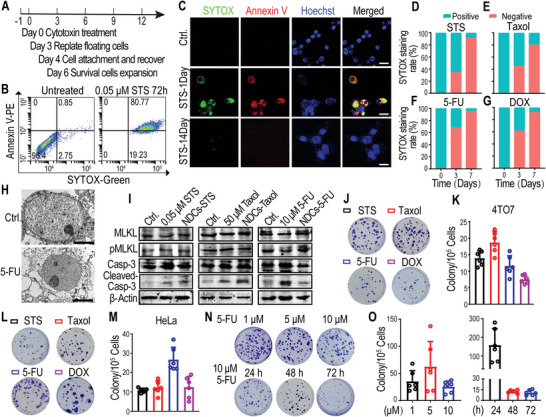
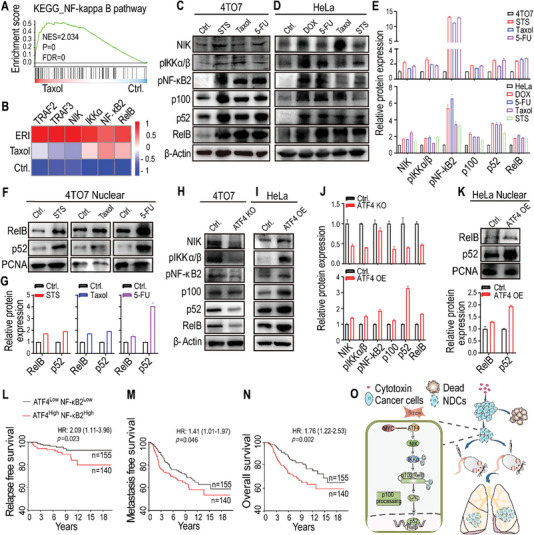
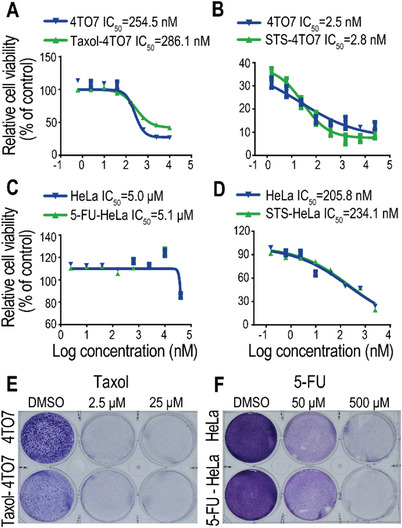
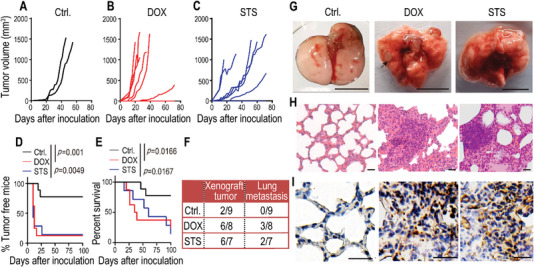
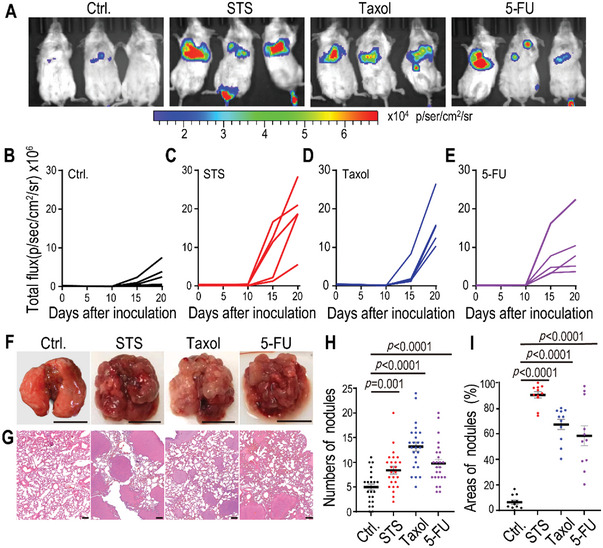
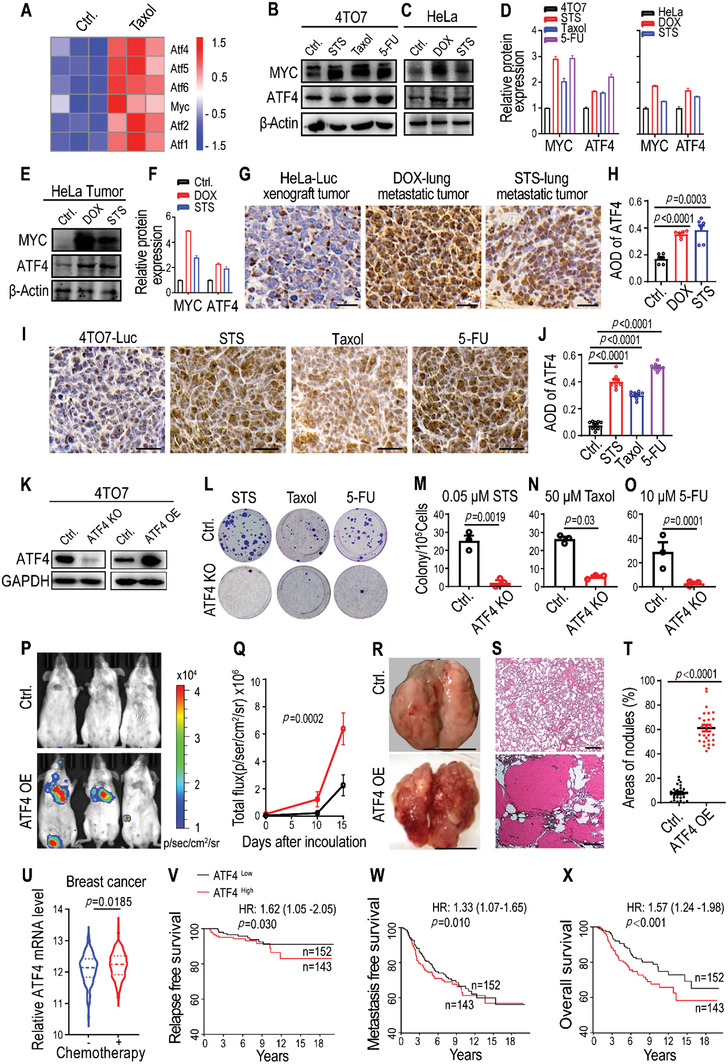
Cytotoxic chemotherapy is a primary treatment modality for many patients with advanced cancer. Increasing preclinical and clinical observations indicate that chemotherapy can exacerbate tumor metastasis. However, the underlying mechanism remains unclear. Here, it is attempted to identify the mechanisms underlying chemotherapy-induced cancer recurrence and metastasis. It is revealed that a small subpopulation of "near-death cells" (NDCs) with compromised plasma membranes can reverse the death process to enhance survival and repopulation after exposure to lethal doses of cytotoxins. Moreover, these NDCs acquire enhanced tumorigenic and metastatic capabilities, but maintain chemosensitivity in multiple models. Mechanistically, cytotoxin exposure induces activating transcription factor 4 (ATF4)-dependent nonclassical NF-κB signaling activation; ultimately, this results in nuclear translocation of p52 and RelB in NDCs. Deletion of ATF4 in parental cancer cells significantly reduces colony formation and metastasis of NDCs, whereas overexpression of ATF4 activates the nonclassical NF-κB signaling pathway to promote chemotherapy-induced metastasis of NDCs. Overall, these results provide novel mechanistic insights into the chemotherapy-induced metastasis and indicate the pivotal role of NDCs in mediating tumor relapse after cytotoxic therapy. This study also suggests that targeting ATF4 may be an effective approach in improving the efficacy of chemotherapy.
细胞毒性化疗是许多晚期癌症患者的主要治疗方式。越来越多的临床前和临床观察表明,化疗会加剧肿瘤转移。然而,其潜在机制尚不清楚。本研究试图确定化疗引起癌症复发和转移的机制。研究结果表明,一小部分细胞膜受损的“濒死细胞”(NDCs)可以逆转死亡过程,在暴露于致死剂量的细胞毒素后增强存活和增殖能力。此外,这些 NDCs获得了增强的致瘤和转移能力,但在多种模型中仍保持化疗敏感性。从机制上讲,细胞毒素暴露会诱导激活转录因子 4(ATF4)依赖性非经典 NF-κB 信号通路的激活;最终导致 NDC 中 p52 和 RelB 的核易位。在亲本癌细胞中敲除 ATF4 可显著减少 NDC 的集落形成和转移,而过表达 ATF4 则可激活非经典 NF-κB 信号通路,促进 NDC 化疗诱导的转移。总的来说,这些结果为化疗诱导的转移提供了新的机制见解,并表明 NDC 在介导细胞毒性治疗后肿瘤复发中起关键作用。该研究还表明,靶向 ATF4 可能是提高化疗疗效的有效方法。