Zheng Yanhui, Han Yaobao, Sun Qiao, Li Zhen
Center for Molecular Imaging and Nuclear Medicine State Key Laboratory of Radiation Medicine and Protection School for Radiological and Interdisciplinary Sciences (RAD-X) Collaborative Innovation Center of Radiation Medicine of Jiangsu Higher Education Institutions Soochow University Suzhou China.
Exploration (Beijing). 2022 Feb 25;2(3):20210166. doi: 10.1002/EXP.20210166. eCollection 2022 Jun.
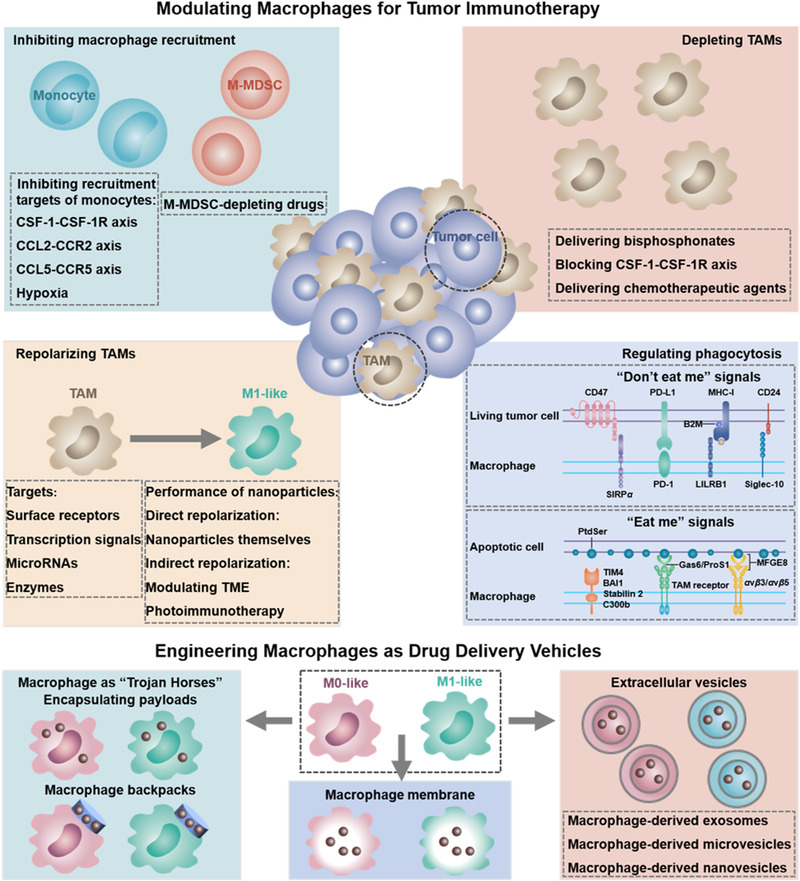
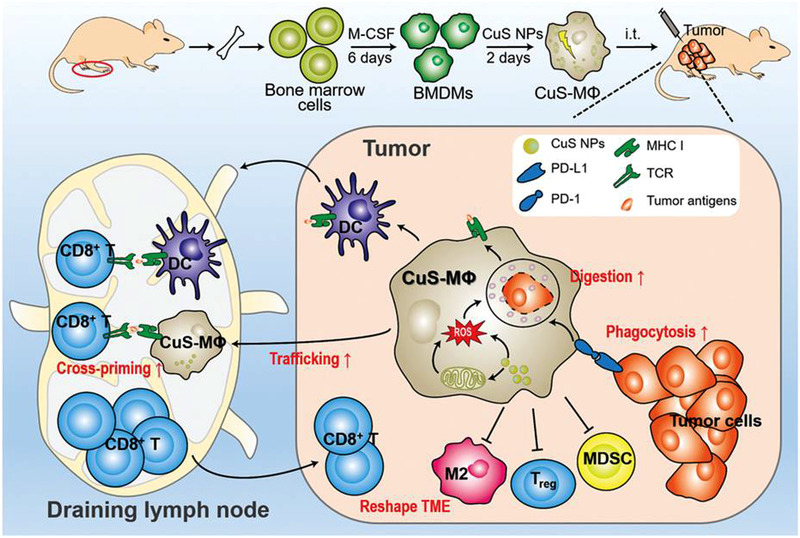
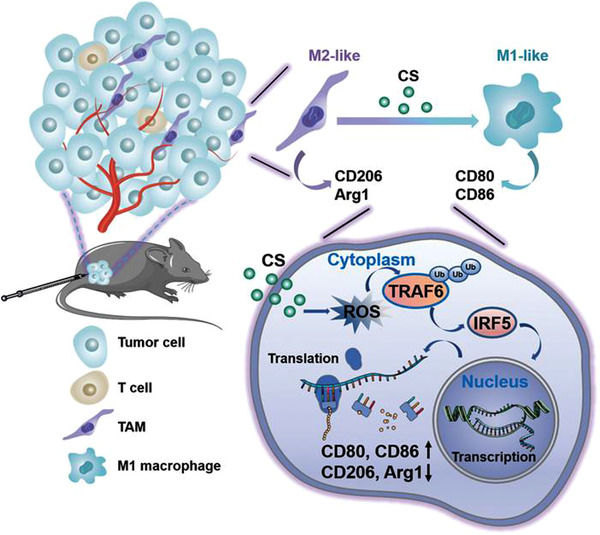
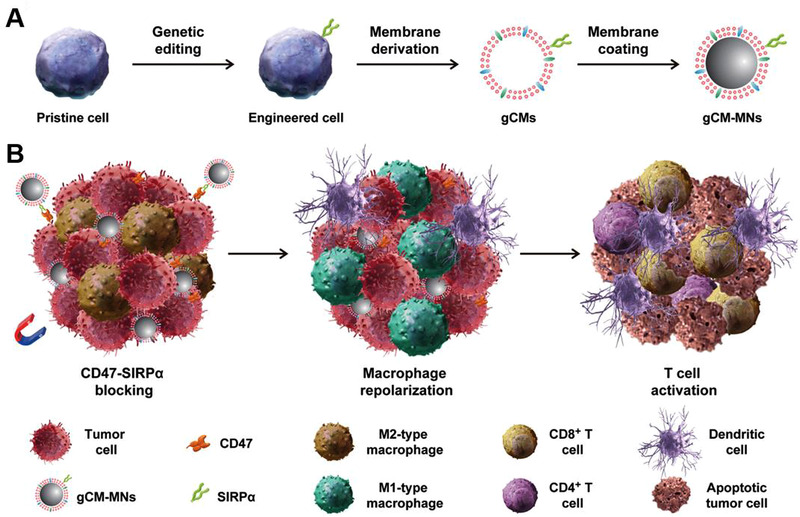
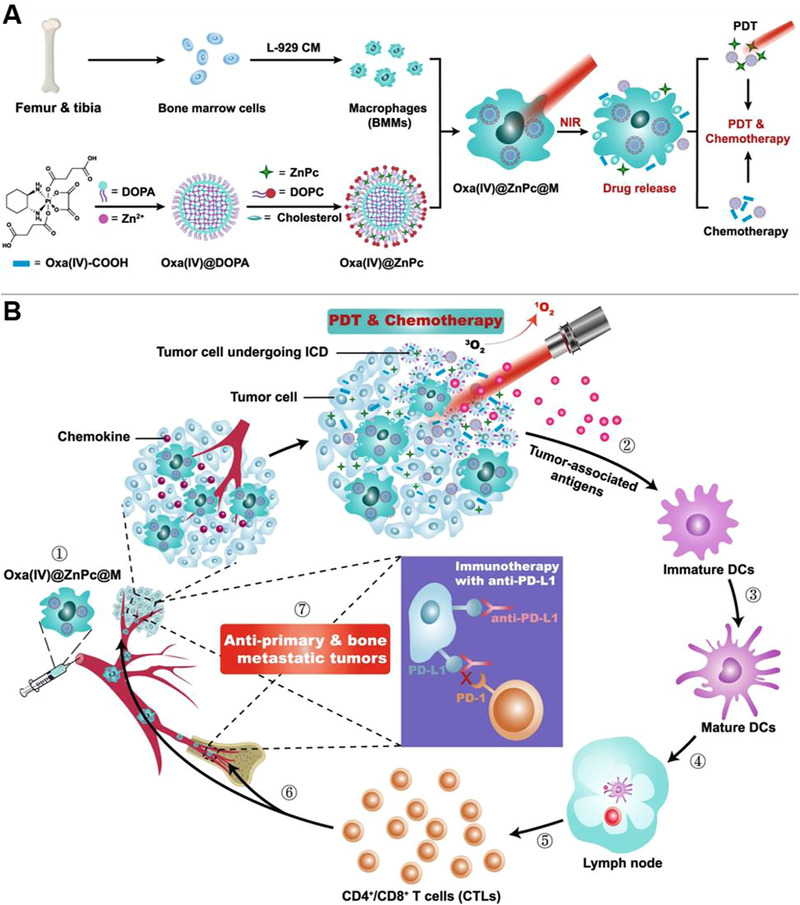
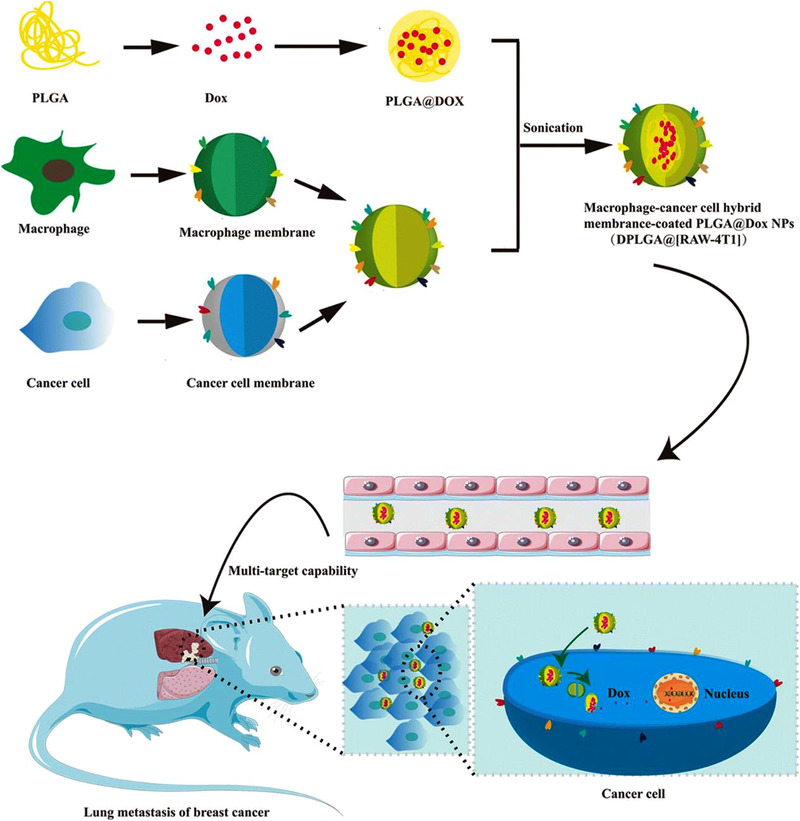
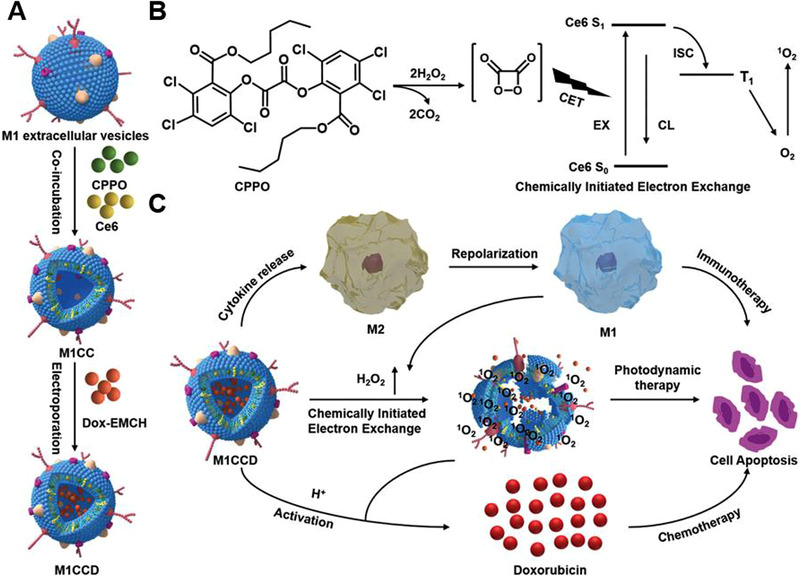
Reprogramming the immunosuppressive tumor microenvironment by modulating macrophages holds great promise in tumor immunotherapy. As a class of professional phagocytes and antigen-presenting cells in the innate immune system, macrophages can not only directly engulf and clear tumor cells, but also play roles in presenting tumor-specific antigen to initiate adaptive immunity. However, the tumor-associated macrophages (TAMs) usually display tumor-supportive M2 phenotype rather than anti-tumor M1 phenotype. They can support tumor cells to escape immunological surveillance, aggravate tumor progression, and impede tumor-specific T cell immunity. Although many TAMs-modulating agents have shown great success in therapy of multiple tumors, they face enormous challenges including poor tumor accumulation and off-target side effects. An alternative solution is the use of advanced nanostructures, which not only can deliver TAMs-modulating agents to augment therapeutic efficacy, but also can directly serve as modulators of TAMs. Another important strategy is the exploitation of macrophages and macrophage-derived components as tumor-targeting delivery vehicles. Herein, we summarize the recent advances in targeting and engineering macrophages for tumor immunotherapy, including (1) direct and indirect effects of macrophages on the augmentation of immunotherapy and (2) strategies for engineering macrophage-based drug carriers. The existing perspectives and challenges of macrophage-based tumor immunotherapies are also highlighted.
通过调节巨噬细胞来重编程免疫抑制性肿瘤微环境在肿瘤免疫治疗中具有巨大潜力。作为先天免疫系统中的一类专业吞噬细胞和抗原呈递细胞,巨噬细胞不仅可以直接吞噬和清除肿瘤细胞,还在呈递肿瘤特异性抗原以启动适应性免疫方面发挥作用。然而,肿瘤相关巨噬细胞(TAM)通常表现出支持肿瘤的M2表型,而非抗肿瘤的M1表型。它们可以支持肿瘤细胞逃避免疫监视,加剧肿瘤进展,并阻碍肿瘤特异性T细胞免疫。尽管许多调节TAM的药物在多种肿瘤治疗中已显示出巨大成功,但它们面临着巨大挑战,包括肿瘤蓄积不佳和脱靶副作用。另一种解决方案是使用先进的纳米结构,其不仅可以递送调节TAM的药物以增强治疗效果,还可以直接作为TAM的调节剂。另一个重要策略是利用巨噬细胞和巨噬细胞衍生成分作为肿瘤靶向递送载体。在此,我们总结了在肿瘤免疫治疗中靶向和改造巨噬细胞的最新进展,包括(1)巨噬细胞对增强免疫治疗的直接和间接作用,以及(2)基于巨噬细胞的药物载体的工程化策略。还强调了基于巨噬细胞的肿瘤免疫治疗的现有观点和挑战。