Wu Migao, Andreev Pavel, Benyoucef Morad
Faculty of Engineering, University of Ottawa, Ottawa, ON K1N 6N5 Canada.
Telfer School of Management, University of Ottawa, Ottawa, ON K1N 6N5 Canada.
Inf Technol Manag. 2023 Feb 1:1-30. doi: 10.1007/s10799-023-00388-w.
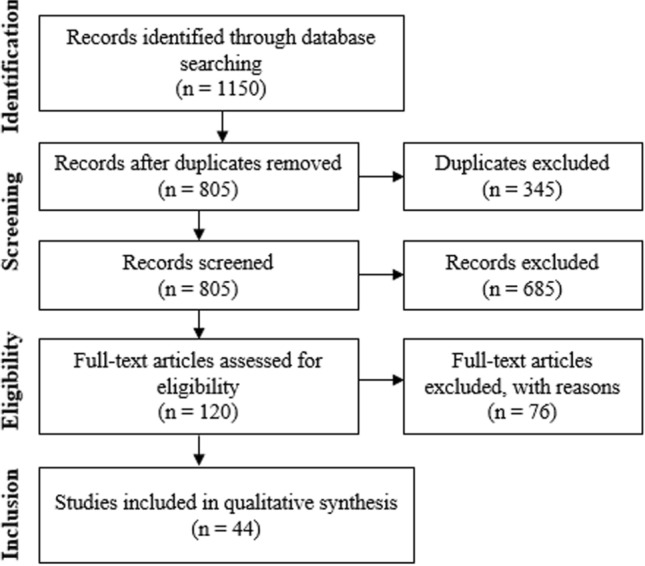
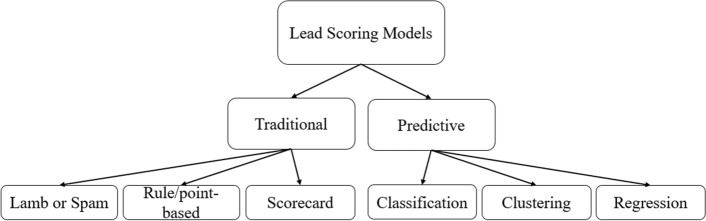
Although lead scoring is an essential component of lead management, there is a lack of a comprehensive literature review and a classification framework dedicated to it. Lead scoring is an effective and efficient way of measuring the quality of leads. In addition, as a critical Information Technology tool, a proper lead scoring model acts as an alleviator to weaken the conflicts between sales and marketing functions. Yet, little is known regarding lead scoring models and their impact on sales performance. Lead scoring models are commonly categorized into two classes: traditional and predictive. While the former primarily relies on the experience and knowledge of salespeople and marketers, the latter utilizes data mining models and machine learning algorithms to support the scoring process. This study aims to review and analyze the existing literature on lead scoring models and their impact on sales performance. A systematic literature review was conducted to examine lead scoring models. A total of 44 studies have met the criteria and were included for analysis. Fourteen metrics were identified to measure the impact of lead scoring models on sales performance. With the increased use of data mining and machine learning techniques in the fourth industrial revolution, predictive lead scoring models are expected to replace traditional lead scoring models as they positively impact sales performance. Despite the relative cost of implementing and maintaining predictive lead scoring models, it is still beneficial to supersede traditional lead scoring models, given the higher effectiveness and efficiency of predictive lead scoring models. This study reveals that classification is the most popular data mining model, while decision tree and logistic regression are the most applied algorithms among all the predictive lead scoring models. This study contributes by systematizing and recommending which machine learning method (i.e., supervised and/or unsupervised) shall be used to build predictive lead scoring models based on the integrity of different types of data sources. Additionally, this study offers both theoretical and practical research directions in the lead scoring field.
尽管潜在客户评分是潜在客户管理的重要组成部分,但缺乏专门针对它的全面文献综述和分类框架。潜在客户评分是衡量潜在客户质量的一种有效且高效的方法。此外,作为一种关键的信息技术工具,合适的潜在客户评分模型可作为一种缓解因素,以削弱销售和营销职能之间的冲突。然而,关于潜在客户评分模型及其对销售业绩的影响,人们所知甚少。潜在客户评分模型通常分为两类:传统模型和预测模型。前者主要依赖销售人员和营销人员的经验和知识,而后者则利用数据挖掘模型和机器学习算法来支持评分过程。本研究旨在回顾和分析关于潜在客户评分模型及其对销售业绩影响的现有文献。我们进行了一项系统的文献综述,以研究潜在客户评分模型。共有44项研究符合标准并被纳入分析。确定了14个指标来衡量潜在客户评分模型对销售业绩的影响。随着数据挖掘和机器学习技术在第四次工业革命中的使用增加,预测性潜在客户评分模型有望取代传统潜在客户评分模型,因为它们对销售业绩有积极影响。尽管实施和维护预测性潜在客户评分模型的成本相对较高,但鉴于预测性潜在客户评分模型具有更高的有效性和效率,取代传统潜在客户评分模型仍然是有益的。本研究表明,分类是最流行的数据挖掘模型,而决策树和逻辑回归是所有预测性潜在客户评分模型中应用最多的算法。本研究的贡献在于,根据不同类型数据源的完整性,系统地推荐了应使用哪种机器学习方法(即监督式和/或无监督式)来构建预测性潜在客户评分模型。此外,本研究还为潜在客户评分领域提供了理论和实践研究方向。