Sharlandjieva Vassilena, Beristain Alexander G, Terry Jefferson
BC Children's Hospital Research Institute, Vancouver, BC, Canada.
Department of Obstetrics and Gynaecology, The University of British Columbia, Vancouver, BC, Canada.
Front Med (Lausanne). 2023 Jan 19;10:1096262. doi: 10.3389/fmed.2023.1096262. eCollection 2023.
Bacteria derived from the maternal circulation have been suggested to seed the human placenta during development leading to an intrinsic placental microbiome. This concept has become controversial as numerous studies suggest that the apparent placental microbiome is mostly, if not completely, comprised of contaminants. If the maternal circulation seeds the placenta then there should be an increase in abundance and diversity of detectable bacteria with onset of maternal perfusion of the placenta around 10 weeks gestational age; however, if only contaminants are present then there should be no significant evolution of the placental microbiome with increasing gestational age. This pilot study addresses whether bacterial abundance and diversity increase in human placenta and whether there is an associated shift in the immunophenotype of the decidual immune cell complement before and after initiation of placental perfusion.
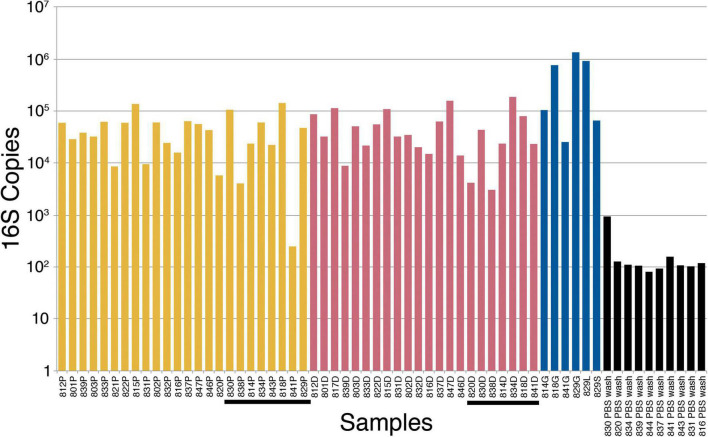
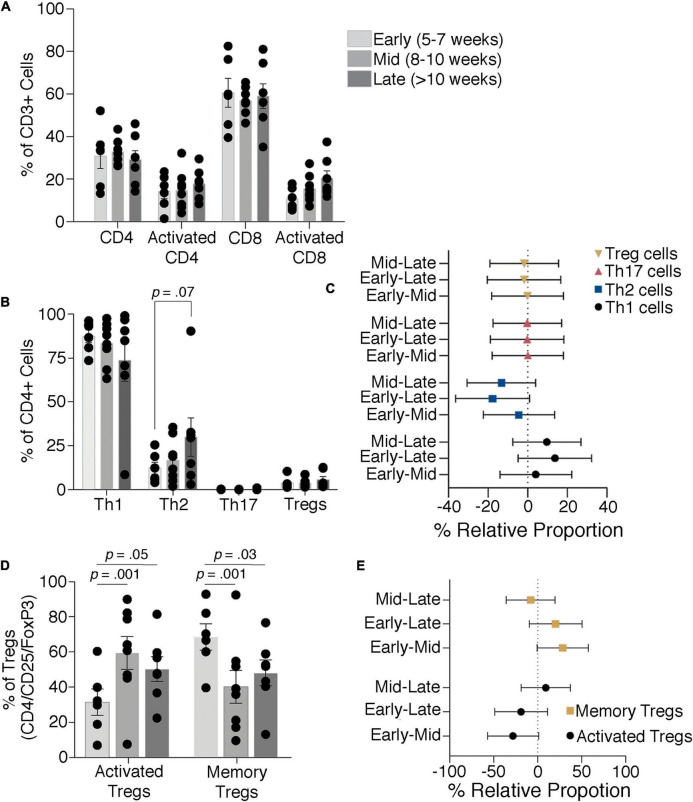
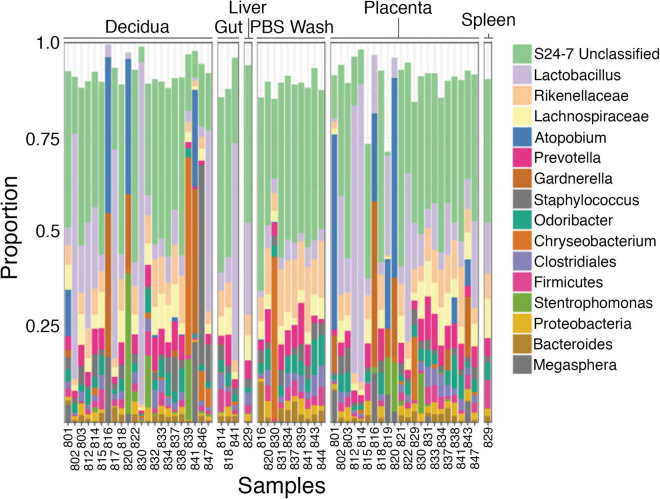
Human placental and decidual tissue from 5 to 19 weeks gestational age, handled aseptically to minimize contamination, is assessed by quantitative 16S polymerase chain reaction (PCR), 16S gene sequencing, and immunological flow cytometry studies.
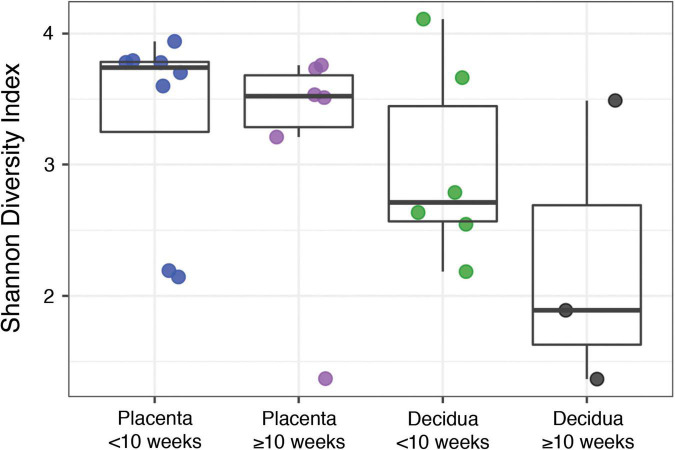
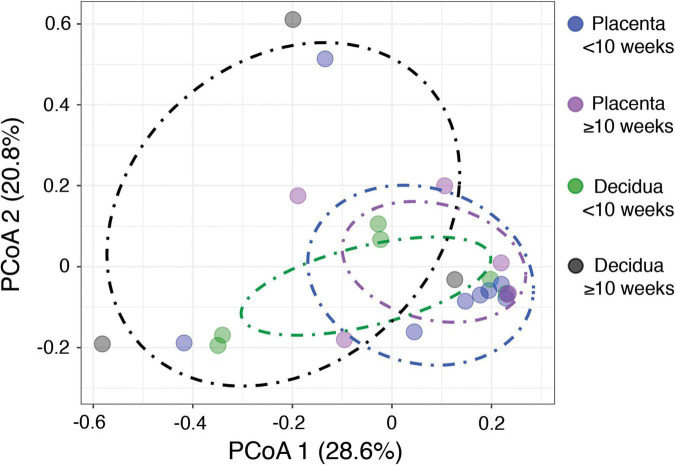
A weak positive correlation between placental bacterial abundance and gestational age is identified but is not statistically significant. No significant changes in bacterial diversity are found with increasing gestational age. The proportion of decidual activated memory T helper cells increases with gestational age but no change was observed in other lymphocyte subsets.
This pilot study does not strongly support bacterial colonization of the placenta after initiation of maternal perfusion; however, the minor trends towards increases in bacterial abundance and activated memory T helper cells may represent an early stage of this process. Additional investigations in larger cohorts are warranted.
有研究表明,源自母体循环系统的细菌在发育过程中会定植于人类胎盘,从而形成胎盘固有微生物群。这一概念颇具争议,因为众多研究表明,胎盘表面的微生物群即便不是完全由污染物构成,也大多如此。如果母体循环系统会向胎盘输送细菌,那么在孕10周左右胎盘开始接受母体灌注时,可检测到的细菌数量和种类应该会增加;然而,如果胎盘微生物群只是污染物,那么随着孕周增加,胎盘微生物群应该不会有显著变化。这项初步研究旨在探讨人类胎盘内细菌数量和种类是否增加,以及胎盘灌注开始前后蜕膜免疫细胞补体的免疫表型是否会发生相应变化。
对妊娠5至19周的人类胎盘和蜕膜组织进行无菌处理以尽量减少污染,然后通过定量16S聚合酶链反应(PCR)、16S基因测序和免疫流式细胞术研究进行评估。
胎盘细菌数量与孕周之间存在微弱的正相关,但无统计学意义。随着孕周增加,细菌多样性未发现显著变化。蜕膜活化记忆T辅助细胞的比例随孕周增加而升高,但其他淋巴细胞亚群未观察到变化。
这项初步研究并未有力支持母体灌注开始后细菌在胎盘定植;然而,细菌数量和活化记忆T辅助细胞数量增加的微弱趋势可能代表了这一过程的早期阶段。有必要对更大的队列进行进一步研究。