Centre of Excellence in Molecular Biology, University of the Punjab, Lahore, Pakistan.
Department of Chemistry, Physics and Atmospheric Sciences Jackson state University, Jackson, MS, United States of America.
PLoS One. 2023 Feb 6;18(2):e0280963. doi: 10.1371/journal.pone.0280963. eCollection 2023.
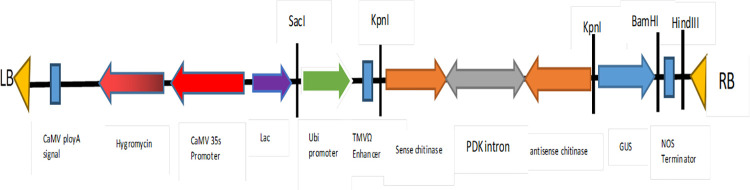
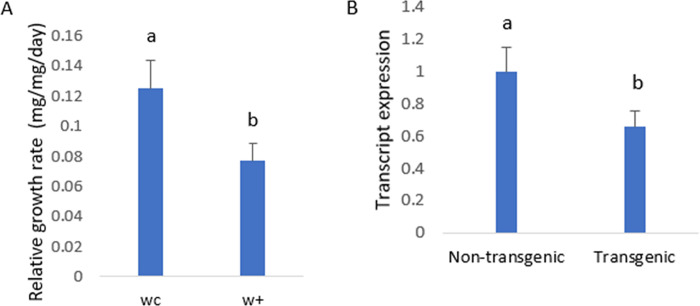
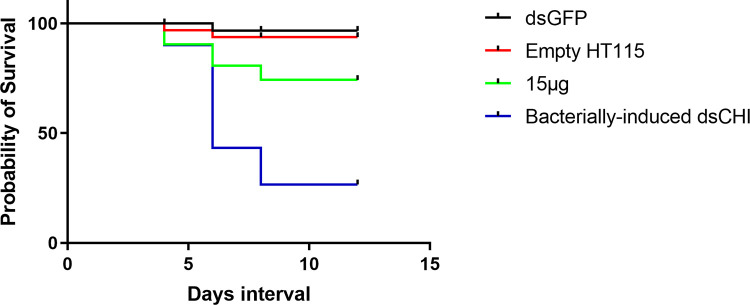
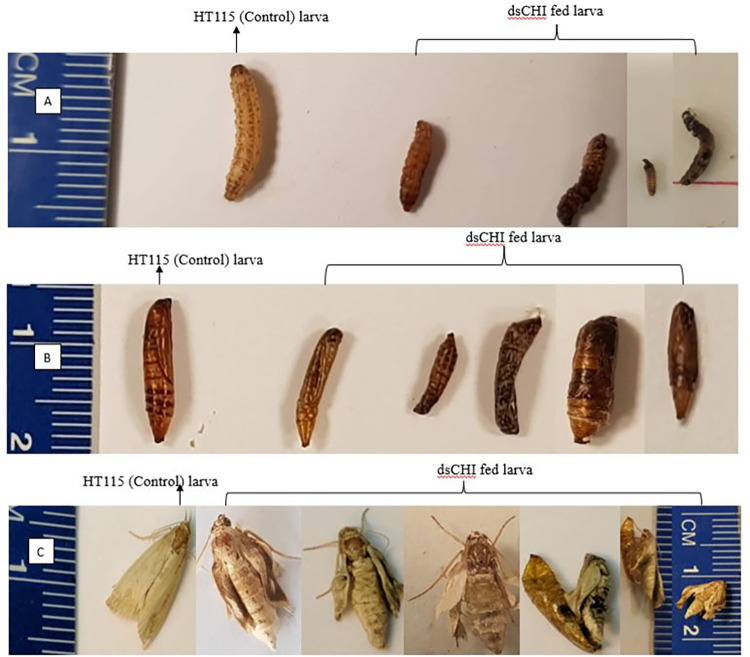
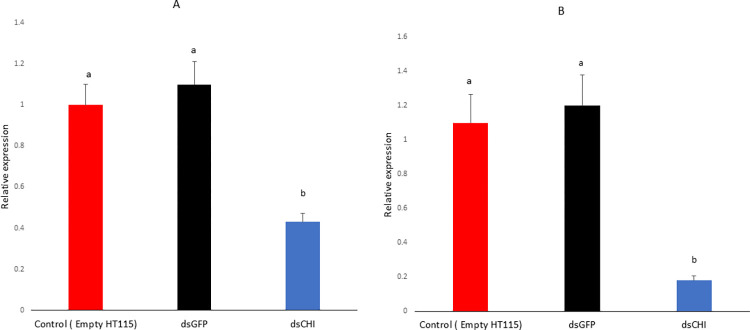
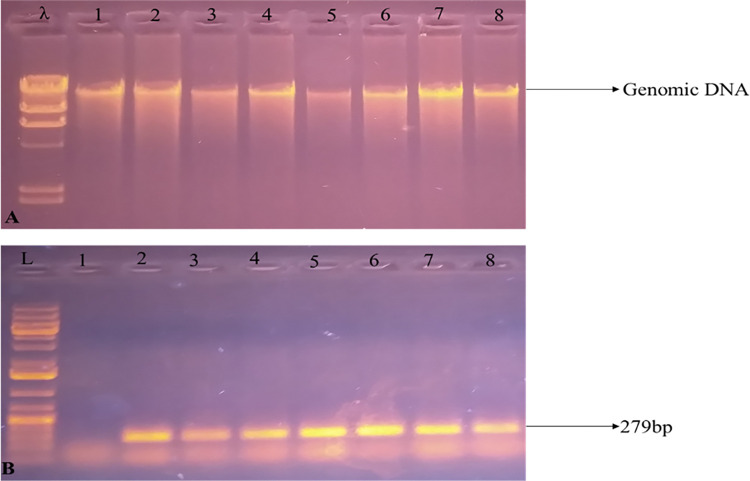
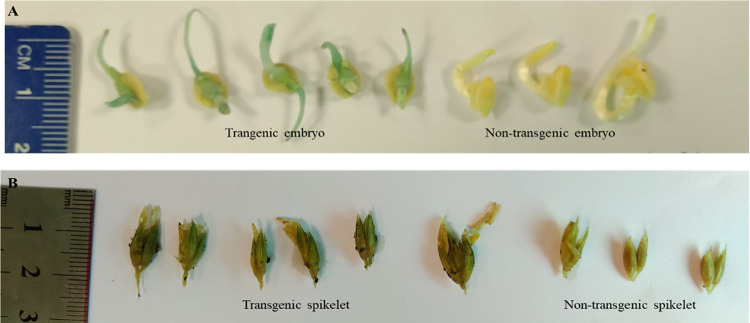
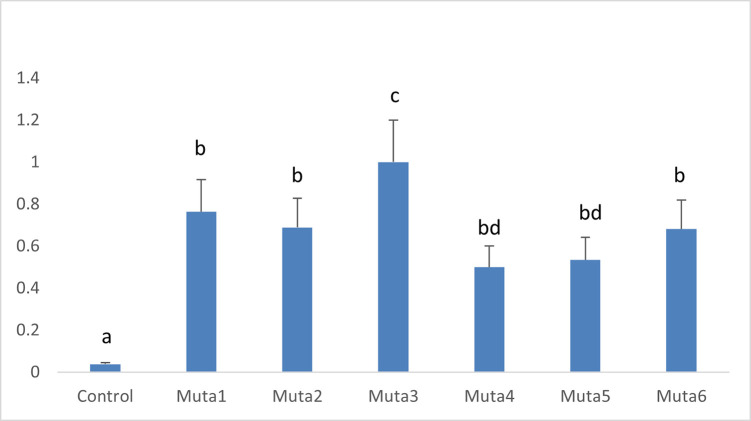
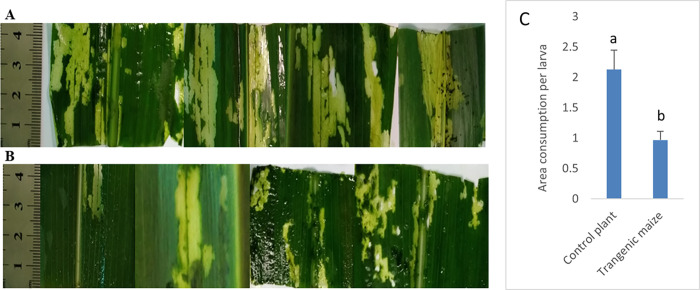
RNAi-based insecticides for crop protection have witnessed rapid improvement over the years. However, their potential to efficiently control maize stem borer (Chilo partellus) pests has remained underexplored. In this study, double-stranded C. partellus chitinase (dsCHI) toxicity was investigated in C. partellus larvae. Furthermore, we developed transgenic maize lines expressing dsRNA targeted against C. partellus chitinase transcripts and performed detached leaf insect feeding bioassays. Our results revealed that C. partellus chitinase transcript expression was significantly downregulated by 57% and 82% in the larvae. Larvae exhibited various phenotypic distortion levels across developmental stages, and 53% mortality occurred in transgenic fed larvae compared to those fed on nontransgenic leaves. In conclusion, we have identified the C. partellus chitinase gene as a potential target for RNAi-mediated control and demonstrated that oral delivery via bacteria and plant-mediated delivery are viable means of achieving C. partellus RNAi-mediated control.
基于 RNAi 的杀虫剂在作物保护方面近年来取得了快速发展。然而,它们在有效控制玉米螟(Chilo partellus)害虫方面的潜力仍未得到充分探索。本研究调查了双链 C. partellus 几丁质酶(dsCHI)对 C. partellus 幼虫的毒性。此外,我们还开发了表达靶向 C. partellus 几丁质酶转录本的 dsRNA 的转基因玉米品系,并进行了离体叶片昆虫饲养生物测定。我们的结果表明,dsCHI 处理后 C. partellus 几丁质酶转录本的表达水平显著下调了 57%和 82%。幼虫在不同发育阶段表现出不同程度的表型畸形,转基因喂养的幼虫死亡率为 53%,而非转基因喂养的幼虫死亡率为 0。总之,我们已经确定 C. partellus 几丁质酶基因为 RNAi 介导控制的潜在靶标,并证明通过细菌和植物介导的口服传递是实现 C. partellus RNAi 介导控制的可行方法。