Coulter Department of Biomedical Engineering, Georgia Institute of Technology and Emory University, Atlanta, Georgia 30332, United States.
Molecular and Systems Pharmacology Graduate Program, Emory University School of Medicine, Atlanta, Georgia 30307, United States.
Biomacromolecules. 2023 Mar 13;24(3):1164-1172. doi: 10.1021/acs.biomac.2c01207. Epub 2023 Feb 6.
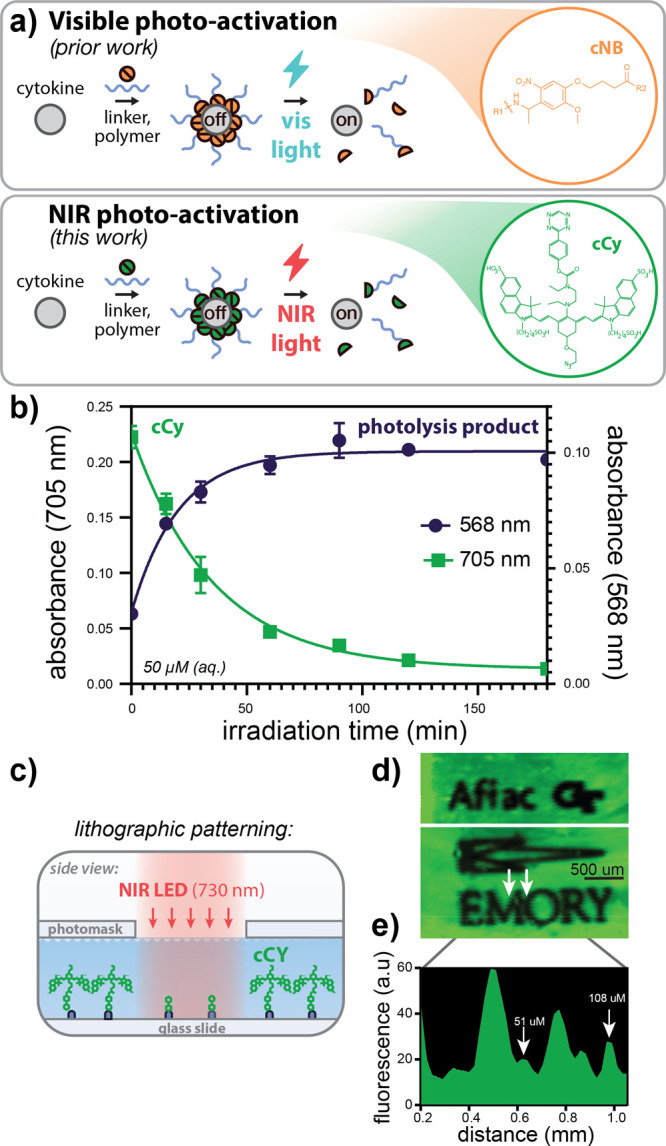
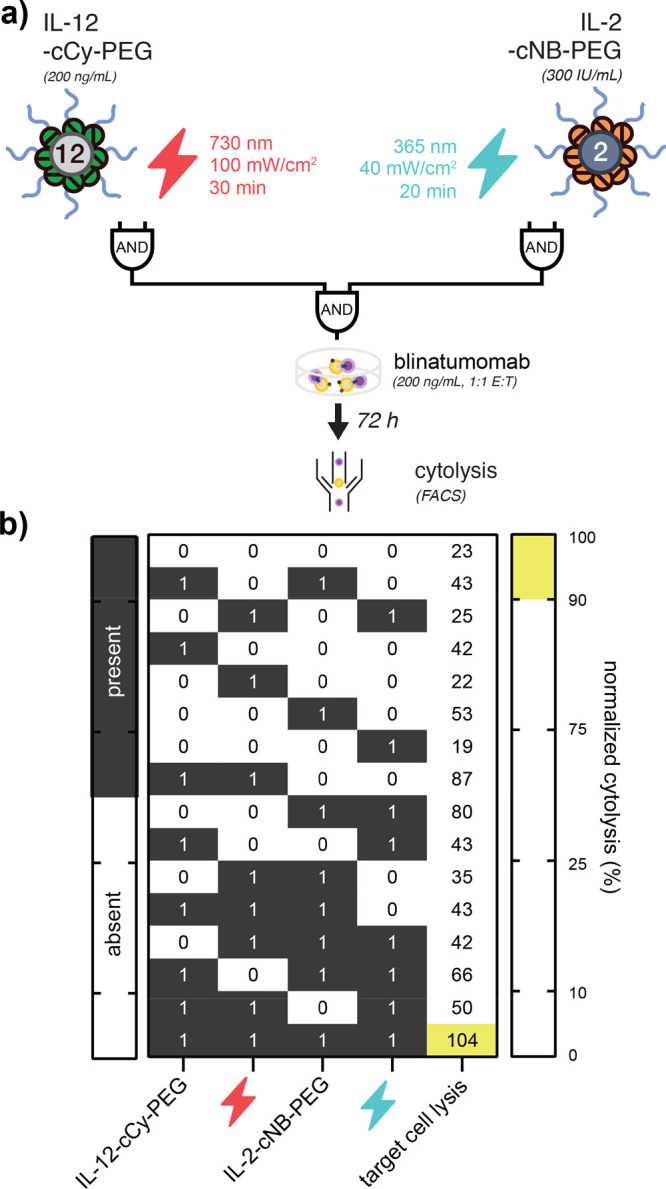
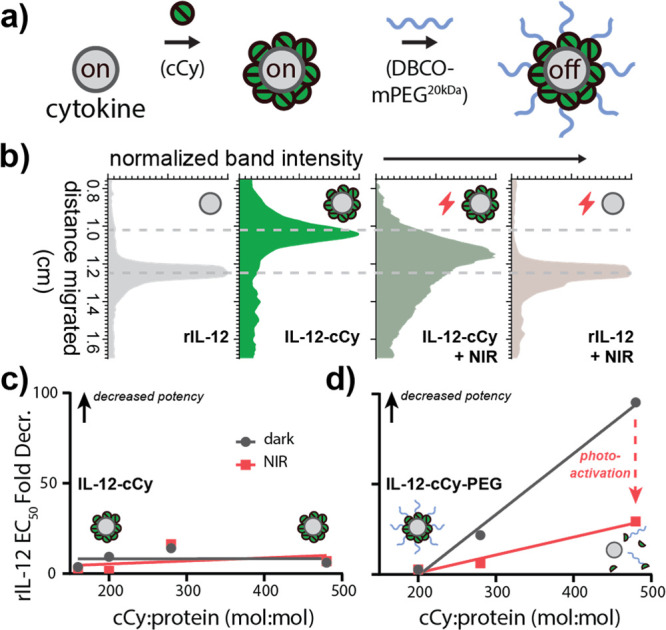
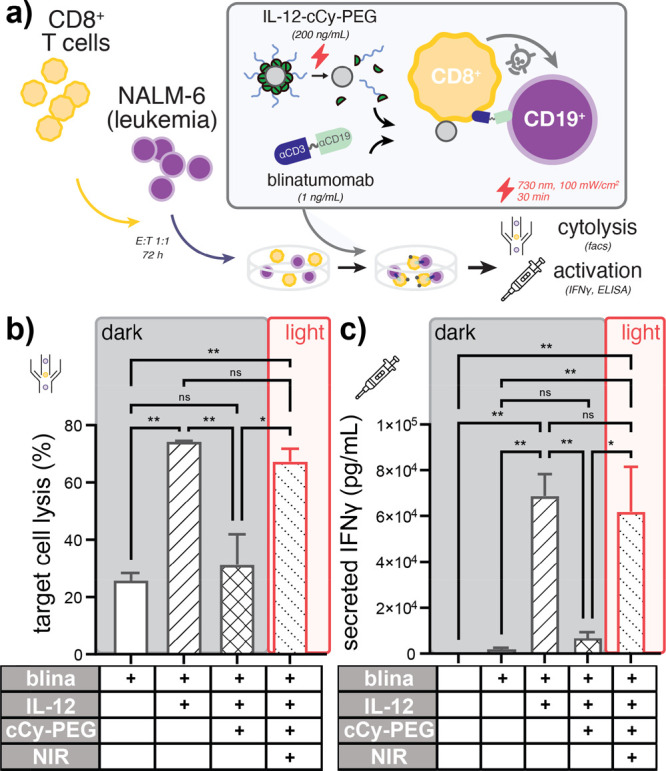
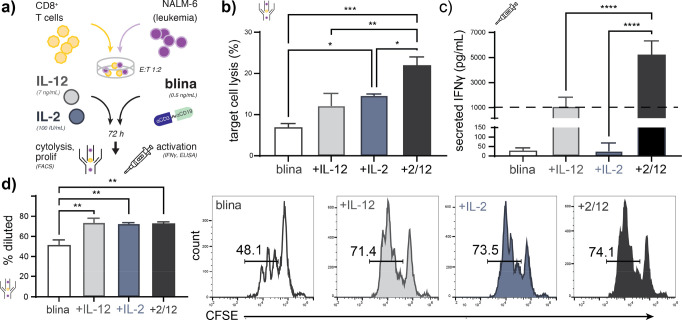
Cytokines act as potent, extracellular signals of the human immune system and can elicit striking treatment responses in patients with autoimmune disease, tissue damage, and cancer. Yet, despite their therapeutic potential, recombinant cytokine-mediated immune responses remain difficult to control as their administration is often systemic, whereas their intended sites of action are localized. To address the challenge of spatially and temporally constraining cytokine signals, we recently devised a strategy whereby recombinant cytokines are reversibly inactivated via chemical modification with photo-labile polymers that respond to visible LED light. Extending this approach to enable both in vivo and multicolor immune activation, here we describe a strategy whereby cytokines appended with heptamethine cyanine-polyethylene glycol are selectively re-activated ex vivo using tissue-penetrating near-infrared (NIR) light. We show that NIR LED light illumination of caged, pro-inflammatory cytokines restores cognate receptor signaling and potentiates the activity of T cell-engager cancer immunotherapies ex vivo. Using combinations of visible- and NIR-responsive cytokines, we further demonstrate multiwavelength optical control of T cell cytolysis ex vivo, as well as the ability to perform Boolean logic using multicolored light and orthogonally photocaged cytokine pairs as inputs and T cell activity as outputs. Together, this work demonstrates a novel approach to control extracellular immune cell signals using light, a strategy that in the future may improve our understanding of and ability to treat cancer and other diseases.
细胞因子作为人类免疫系统的有效、细胞外信号,可以在自身免疫性疾病、组织损伤和癌症患者中引发显著的治疗反应。然而,尽管具有治疗潜力,但由于重组细胞因子介导的免疫反应通常是全身性的,而其预期的作用部位是局部的,因此仍然难以控制。为了解决细胞因子信号的时空限制问题,我们最近设计了一种策略,通过用对可见光 LED 光有反应的光不稳定聚合物对重组细胞因子进行可逆化学修饰,从而使它们失活。为了扩展这种方法以实现体内和多色免疫激活,我们在这里描述了一种策略,即用七甲川氰基聚乙二醇修饰的细胞因子通过组织穿透近红外(NIR)光选择性地在体外重新激活。我们表明,用笼状促炎细胞因子对 NIR LED 光的照射恢复了同源受体信号,并增强了 T 细胞结合癌症免疫疗法在体外的活性。通过使用可见和近红外响应性细胞因子的组合,我们进一步证明了体外 T 细胞细胞溶解的多波长光学控制,以及使用多色光和正交光笼细胞因子对作为输入和 T 细胞活性作为输出进行布尔逻辑运算的能力。总之,这项工作展示了一种使用光控制细胞外免疫细胞信号的新方法,该策略可能会提高我们对癌症和其他疾病的理解和治疗能力。