Hafstad Stine Marie, Bauer Jonas, Harris Anette, Pallesen Ståle
Department of Psychosocial Science, University of Bergen, Post Box 7807, 5020, Bergen, Norway.
Optentia, the Vaal Triangle Campus of the North-West University, Vanderbijlpark, South Africa.
J Eat Disord. 2023 Feb 6;11(1):15. doi: 10.1186/s40337-023-00739-6.
Orthorexia Nervosa (ON) describes a pathological obsession with proper and high-quality nutrition that is necessary to research further in order to elucidate its prevalence and correlates which may bear implications for prevention and treatment. The aim of this study was to review studies that report the prevalence of ON in people who exercise, calculate an overall prevalence through a random-effects meta-analysis approach and investigate the association of ON prevalence using a random-effects meta-regression. In addition, a sub-group-analysis based on ON-instruments and a sensitivity analysis excluding students samples, were conducted.
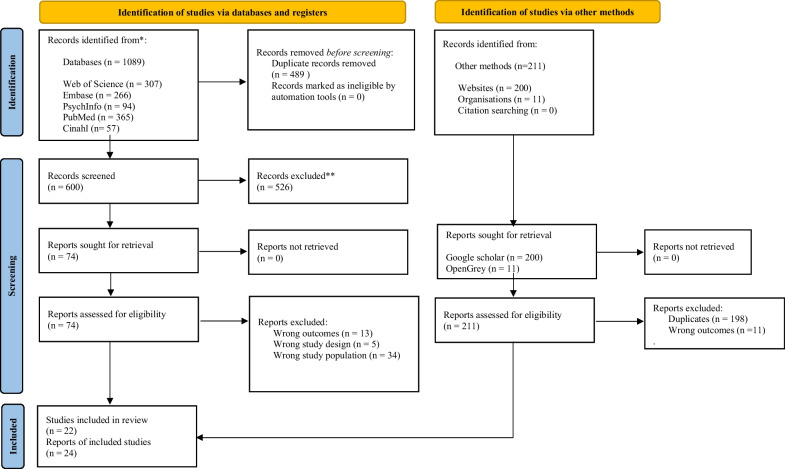
Systematic searches were conducted in the following online databases: PubMed, Embase, Web of Science, PsychInfo, CINAHL, Google Scholar and OpenNet. The following search terms were used: Orthore* AND (prevalenc* OR incidenc* OR frequen* OR cut-off OR epidem*). A total of 613 unique hits were reviewed by two blinded authors, and 24 studies were coded and assessed for risk of bias (Holy et.al). The meta-regression included three independent variables (sex, type of sport, and sample size).
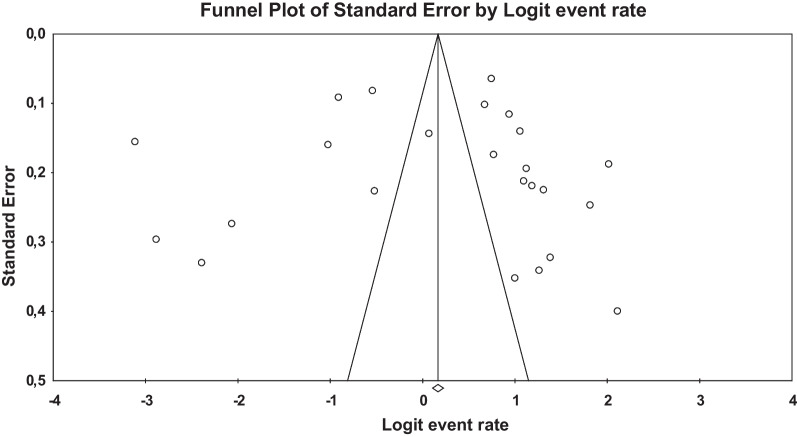
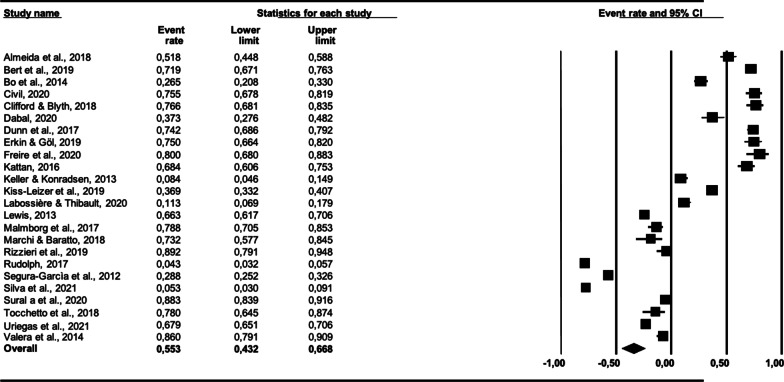
The overall prevalence of ON in the exercising population was 55.3% (95% CI 43.2-66.8). Cochran's Q was 11,436.38 (df = 23, p < 0.0000), and the I was 98.4%, indicating high heterogeneity across studies. The sensitivity showed an overall prevalence of 51.3% (95% CI 51.3-70.0). There was a significant difference in prevalence estimates based on the instruments used (Q = 33.6, df = 2, p < 0.01).
The overall prevalence of ON in exercising populations was very high. The between-study disparity was large and was partly explained by the ON-instrument administered. One fourth of the studies had a moderate risk of bias. The majority of the studies did not specify relevant demographic information about the sample, and information about the type of sport was frequently missing.
正食癖(ON)描述了一种对恰当且高质量营养的病态痴迷,有必要进一步研究以阐明其患病率及相关因素,这可能对预防和治疗有重要意义。本研究的目的是回顾报告运动人群中正食癖患病率的研究,通过随机效应荟萃分析方法计算总体患病率,并使用随机效应荟萃回归研究正食癖患病率的相关性。此外,还进行了基于正食癖测量工具的亚组分析以及排除学生样本的敏感性分析。
在以下在线数据库中进行系统检索:PubMed、Embase、科学网、心理信息数据库、护理学与健康领域数据库、谷歌学术和OpenNet。使用了以下检索词:Orthore* AND(prevalenc* OR incidenc* OR frequen* OR cut-off OR epidem*)。两位盲法作者共审查了613条独立记录,对24项研究进行编码并评估偏倚风险(霍利等人)。荟萃回归包括三个自变量(性别、运动类型和样本量)。
运动人群中正食癖的总体患病率为55.3%(95%可信区间43.2 - 66.8)。 Cochr an's Q为11,436.38(自由度=23, p < 0.0000),I²为98.4%,表明各研究间存在高度异质性。敏感性分析显示总体患病率为51.3%(95%可信区间51.3 - 70.0)。基于所使用的测量工具,患病率估计存在显著差异(Q = 33.6,自由度=2,p < 0.01)。
运动人群中正食癖的总体患病率非常高。研究间差异很大,部分原因是所使用的正食癖测量工具。四分之一的研究存在中度偏倚风险。大多数研究未详细说明样本的相关人口统计学信息,且运动类型的信息经常缺失。