Department of Pediatric Cardiology, University of Health Sciences İstanbul Mehmet Akif Ersoy Thoracic and Cardiovascular Surgery Training and Research Hospital, İstanbul, Türkiye.
Department of Pediatric Cardiac Surgery, University of Health Sciences İstanbul Mehmet Akif Ersoy Thoracic and Cardiovascular Surgery Education and Research Hospital, İstanbul, Türkiye.
Anatol J Cardiol. 2023 Feb;27(2):106-112. doi: 10.14744/AnatolJCardiol.2022.2235.
Isolated complete atrioventricular block is a rare disease often associated with maternal autoantibodies. This study aimed to present the midterm data of patients at our clinic diagnosed with isolated complete atrioventricular block.
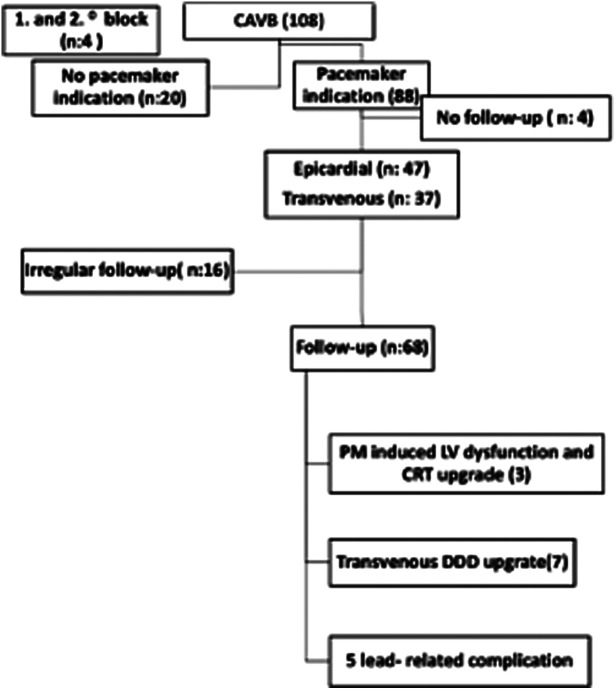
We evaluated 108 patients diagnosed with isolated complete atrioventricular block. Demographic data of the patients, electrocardiography, echocardiography, 24-hour Holter monitoring data, and follow-up and complications of the patients who underwent pacemaker implantation were evaluated retrospectively.
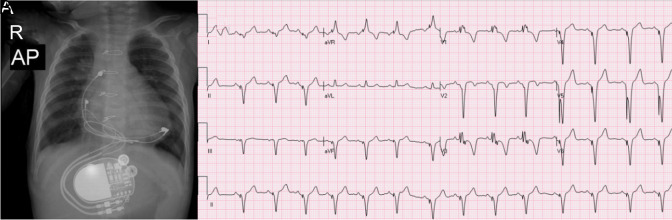
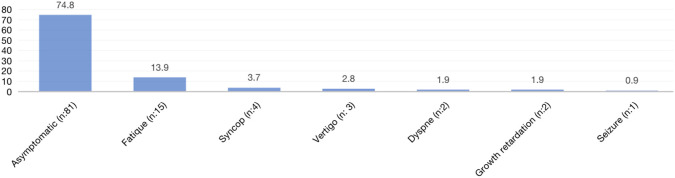
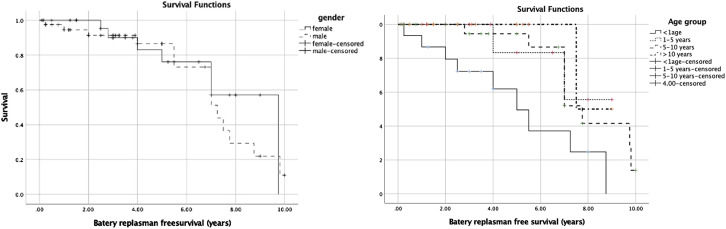
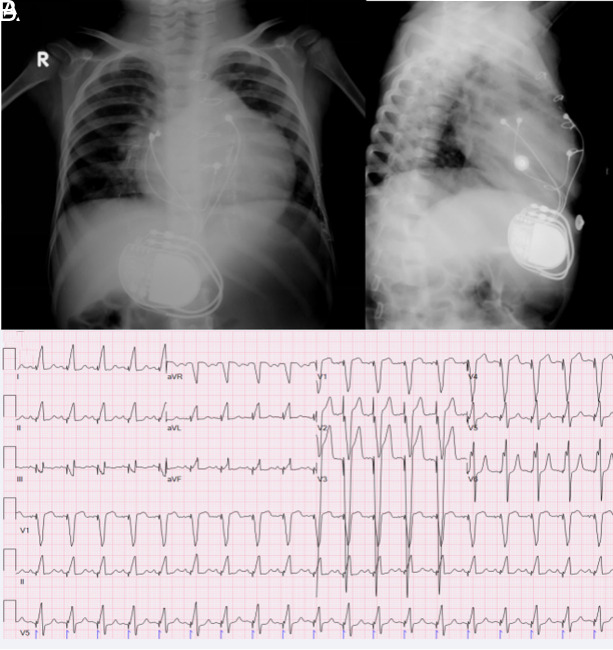
The mean age of the patients at diagnosis was 5.51 ± 5.05 years. At the time of diagnosis, 74.8% of the patients had no symptoms associated with complete atrioventricular block. The most common symptom was fatigue. Pacemaker implantation was needed in 88 (81.4%) patients during follow-up. Significant bradycardia was the most common pacemaker implantation indication. The mean battery life was 5.41 ± 2.65 years. The battery replacement-free period of 68 patients who underwent pacemaker implantation and continued their follow-up was 4.18 ± 2.89 (0.1-10) years. Pacemaker-related complications developed in 8 patients during follow-up. Left ventricular dysfunction developed (dyssynchrony induced) in 3 patients at follow-up, and all were paced from the right ventricular anterior wall. Those patients underwent cardiac resynchronization therapy and their left ventricular dysfunction improved.
Isolated complete atrioventricular block is a rare disease requiring careful clinical follow-up. Patients are often asymptomatic and significant bradycardia is the most common indication for pacemaker implantation. Left ventricular dysfunction is an important cause of morbidity, especially in patients with right ventricular anterior wall pacing. Physicians should be aware of left ventricular dysfunction during follow-up. Cardiac resynchronization therapy should be considered as a treatment option for left ventricular dysfunction.
孤立性完全性房室传导阻滞是一种罕见疾病,常与母体自身抗体有关。本研究旨在介绍我院诊断为孤立性完全性房室传导阻滞患者的中期数据。
我们评估了 108 例诊断为孤立性完全性房室传导阻滞的患者。回顾性评估患者的人口统计学数据、心电图、超声心动图、24 小时动态心电图监测数据以及接受起搏器植入的患者的随访和并发症。
患者诊断时的平均年龄为 5.51±5.05 岁。在诊断时,74.8%的患者没有与完全性房室传导阻滞相关的症状。最常见的症状是疲劳。在随访过程中,88(81.4%)例患者需要植入起搏器。显著心动过缓是最常见的起搏器植入指征。平均电池寿命为 5.41±2.65 年。继续随访的 88 例植入起搏器的患者中,有 68 例无电池更换期为 4.18±2.89(0.1-10)年。在随访期间,有 8 例患者出现起搏器相关并发症。3 例患者在随访时出现左心室功能障碍(由不同步引起),均为右心室前壁起搏。这些患者接受了心脏再同步治疗,其左心室功能得到改善。
孤立性完全性房室传导阻滞是一种罕见疾病,需要仔细的临床随访。患者通常无症状,显著心动过缓是植入起搏器的最常见指征。左心室功能障碍是发病率的重要原因,尤其是在接受右心室前壁起搏的患者中。医生应在随访期间注意左心室功能障碍。心脏再同步治疗应作为左心室功能障碍的治疗选择。