Jones Celina Y, Williams Christopher L, Moreno Sara P, Morris Danna K, Mondello Chiara, Karlseder Jan, Bertuch Alison A
Department of Pediatrics, Division of Hematology/Oncology, Baylor College of Medicine, Houston, TX 77030, USA.
Texas Children's Cancer Center, Texas Children's Hospital, Houston, TX 77030, USA.
bioRxiv. 2023 Jan 27:2023.01.26.525615. doi: 10.1101/2023.01.26.525615.
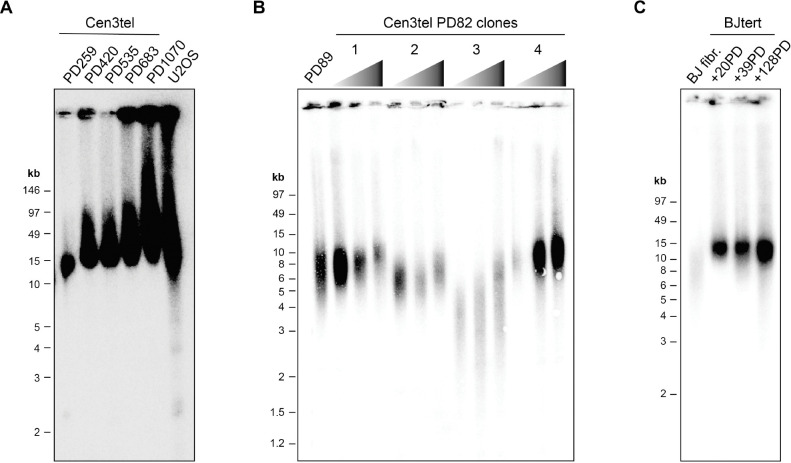
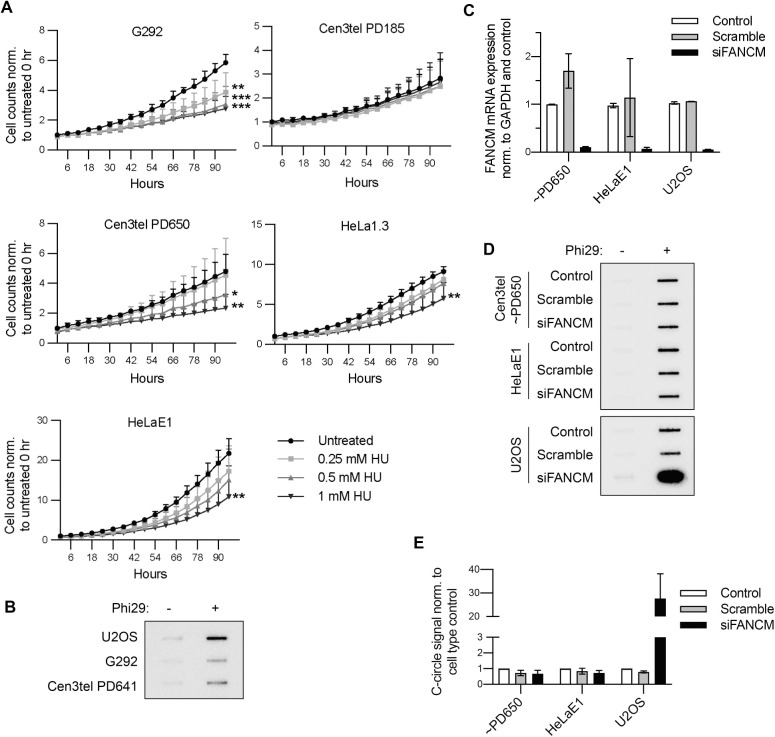
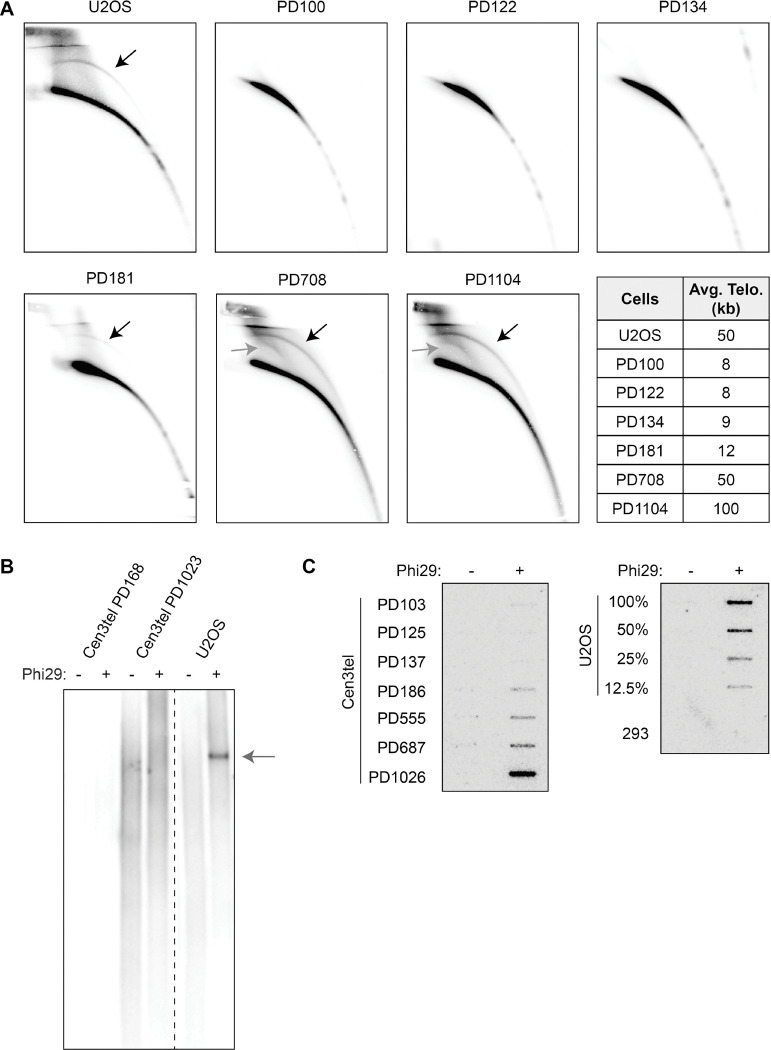
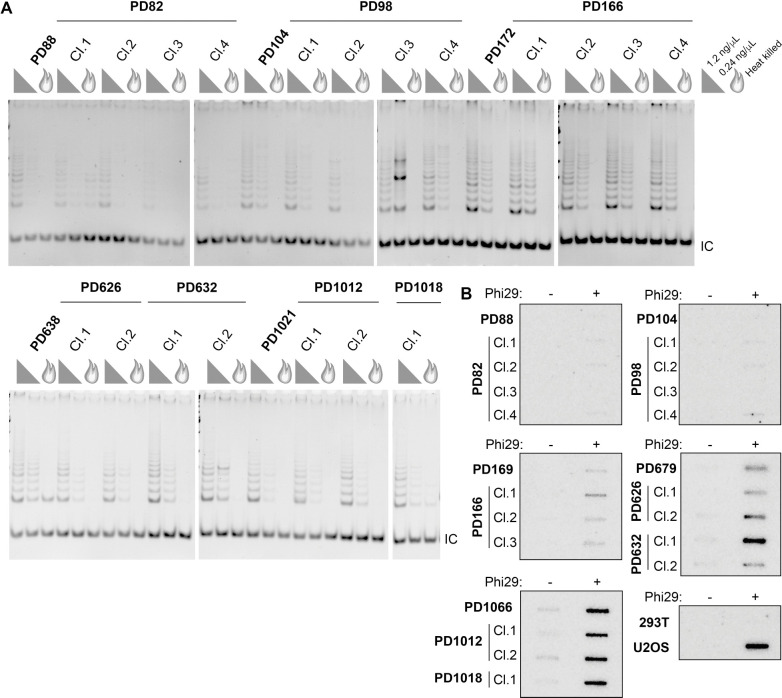
Telomere length maintenance is crucial to cancer cell immortality. Up to 15% of cancers utilize a telomerase-independent, recombination-based mechanism termed alternative lengthening of telomeres (ALT). The primary ALT biomarker is the C-circle, a type of circular DNA with extrachromosomal telomere repeats (cECTRs). How C-circles form is not well characterized. To investigate C-circle formation in telomerase+ cells, we studied the human cen3tel cell line, in which telomeres progressively hyper-elongated post -immortalization. cECTR signal was observed in 2D gels and C-circle assays but not t-circle assays, which also detect cECTRs. Telomerase activity and C-circle signal were not separable in the analysis of clonal populations, consistent with C-circle production occurring within telomerase+ cells. Two other long telomere, telomerase+ (LTT+) cell lines, HeLa1.3 (23 kb telomeres) and HeLaE1 (50 kb telomeres), had similar cECTR properties. Telomerase activity did not directly impact C-circle signal in LTT+ cells; instead, C-circle signal correlated with telomere length. LTT+ lines were less sensitive to hydroxyurea than an ALT+ cell line, suggesting that ALT status is a stronger contributor to replication stress levels than telomere length. Additionally, FANCM did not suppress C-circles in LTT+ cells as it does in ALT+ cells. Thus, C-circle formation may be driven by telomere length, independently of telomerase and replication stress, highlighting limitations of C-circles as a stand-alone ALT biomarker.
端粒长度维持对癌细胞的永生化至关重要。高达15%的癌症利用一种不依赖端粒酶、基于重组的机制,称为端粒替代延长(ALT)。主要的ALT生物标志物是C环,一种带有染色体外端粒重复序列(cECTR)的环状DNA。C环如何形成尚未得到很好的表征。为了研究端粒酶阳性细胞中的C环形成,我们研究了人类cen3tel细胞系,在该细胞系中,端粒在永生化后逐渐过度延长。在二维凝胶和C环检测中观察到了cECTR信号,但在也能检测cECTR的t环检测中未观察到。在克隆群体分析中,端粒酶活性和C环信号不可分离,这与C环在端粒酶阳性细胞内产生一致。另外两个长端粒、端粒酶阳性(LTT+)细胞系,HeLa1.3(端粒约23 kb)和HeLaE1(端粒约50 kb),具有相似的cECTR特性。端粒酶活性在LTT+细胞中并未直接影响C环信号;相反,C环信号与端粒长度相关。LTT+细胞系对羟基脲的敏感性低于ALT+细胞系,这表明ALT状态比端粒长度对复制应激水平的影响更大。此外,FANCM在LTT+细胞中不像在ALT+细胞中那样抑制C环。因此,C环的形成可能由端粒长度驱动,独立于端粒酶和复制应激,这突出了C环作为单一ALT生物标志物的局限性。