Konigsberg Iain R, Lin Nancy W, Liao Shu-Yi, Liu Cuining, MacPhail Kristyn, Mroz Margaret M, Davidson Elizabeth, Restrepo Clara I, Sharma Sunita, Li Li, Maier Lisa A, Yang Ivana V
Department of Biomedical Informatics, School of Medicine, University of Colorado - Anschutz Medical Campus, Aurora, CO.
Division of Environmental and Occupational Health Sciences, Department of Medicine, National Jewish Health, Denver CO.
bioRxiv. 2023 Jan 27:2023.01.26.525601. doi: 10.1101/2023.01.26.525601.
Sarcoidosis is a heterogeneous, granulomatous disease that can prove difficult to diagnose, with no accurate biomarkers of disease progression. Therefore, we profiled and integrated the DNA methylome, mRNAs, and microRNAs to identify molecular changes associated with sarcoidosis and disease progression that might illuminate underlying mechanisms of disease and potential genomic biomarkers.
Bronchoalveolar lavage cells from 64 sarcoidosis subjects and 16 healthy controls were used. DNA methylation was profiled on Illumina HumanMethylationEPIC arrays, mRNA by RNA-sequencing, and miRNAs by small RNA-sequencing. Linear models were fit to test for effect of diagnosis and phenotype, adjusting for age, sex, and smoking. We built a supervised multi-omics model using a subset of features from each dataset.
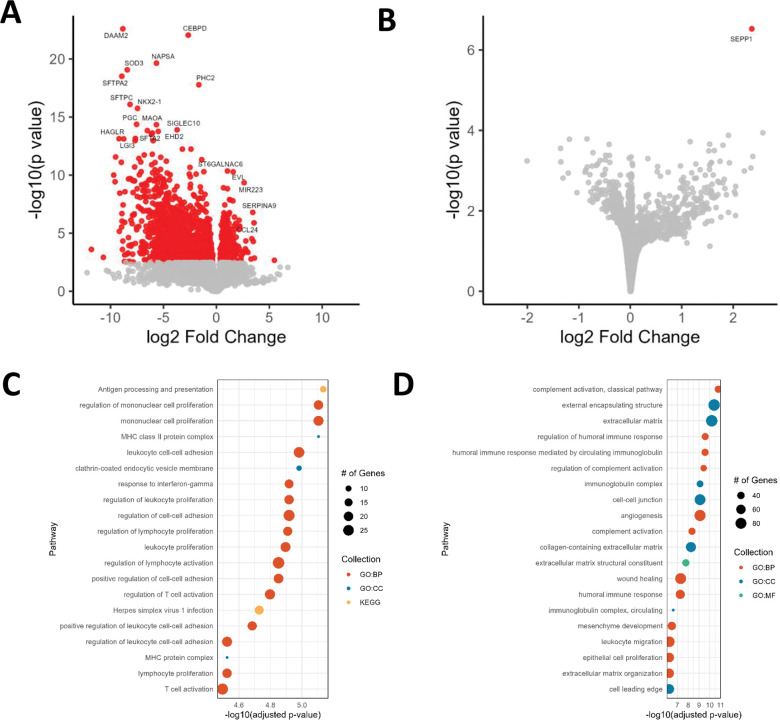
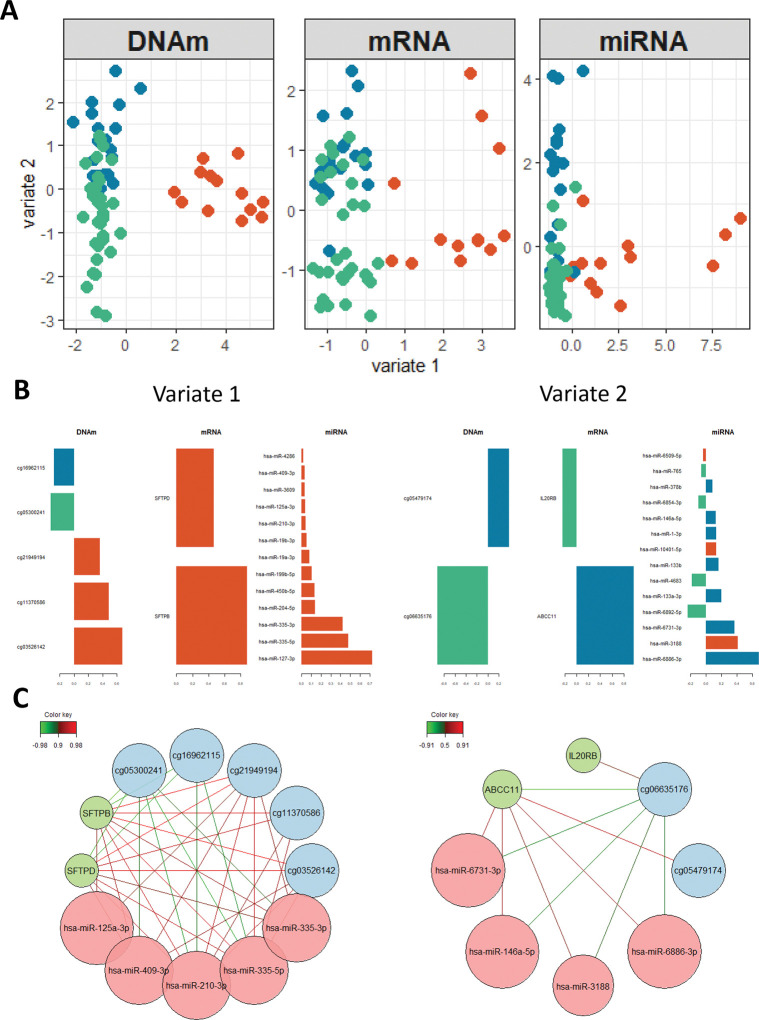
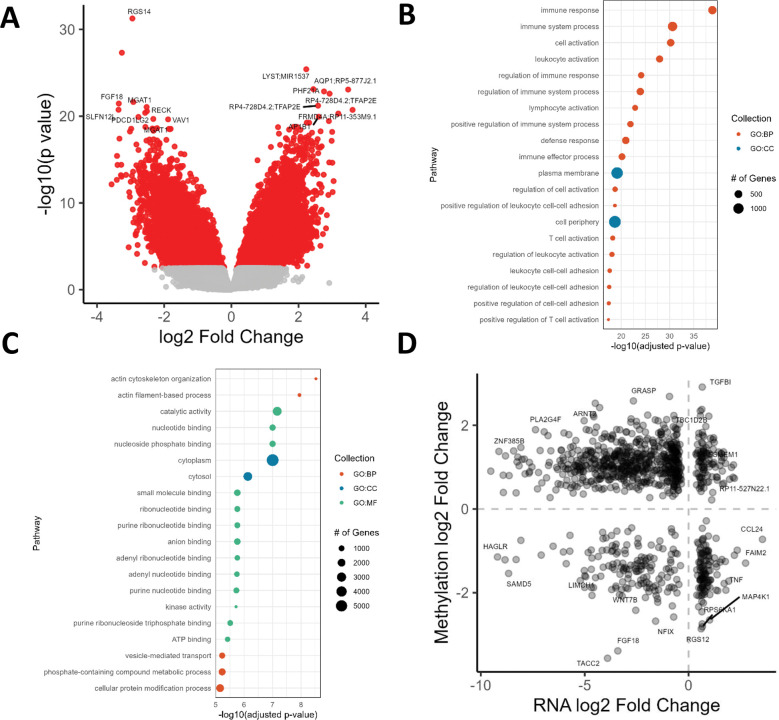
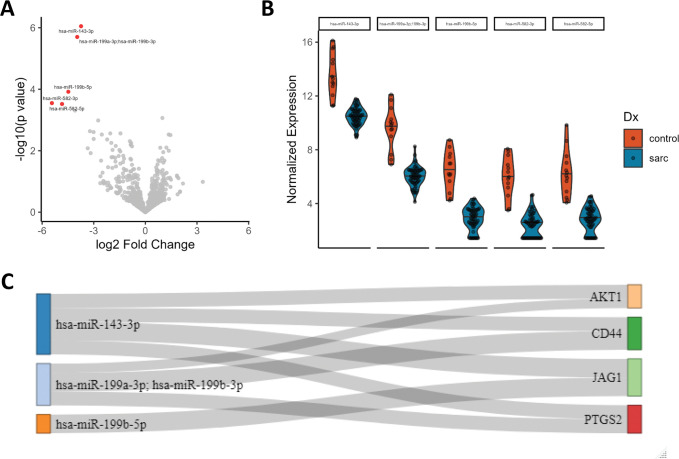
We identified 46,812 CpGs, 1,842 mRNAs, and 5 miRNAs associated with sarcoidosis versus controls and 1 mRNA, - a protein that supplies selenium to cells, associated with disease progression. Our integrated model emphasized the prominence of the PI3K/AKT1 pathway in sarcoidosis, which is important in T cell and mTOR function. Novel immune related genes and miRNAs including , , , and hsa-miR-199b-5p, distinguished sarcoidosis from controls. Our integrated model also demonstrated differential expression/methylation of , miR-146a-3p, and miR-378b between non-progressive and progressive sarcoidosis.
Leveraging the DNA methylome, transcriptome, and miRNA-sequencing in sarcoidosis BAL cells, we detected widespread molecular changes associated with disease, many which are involved in immune response. These molecules may serve as diagnostic/prognostic biomarkers and/or drug targets, although future testing will be required for confirmation.
结节病是一种异质性肉芽肿性疾病,诊断可能具有挑战性,且没有准确的疾病进展生物标志物。因此,我们对DNA甲基化组、mRNA和微小RNA进行了分析和整合,以识别与结节病及疾病进展相关的分子变化,这些变化可能阐明疾病的潜在机制和潜在的基因组生物标志物。
使用了来自64名结节病患者和16名健康对照的支气管肺泡灌洗细胞。在Illumina HumanMethylationEPIC阵列上分析DNA甲基化,通过RNA测序分析mRNA,通过小RNA测序分析微小RNA。采用线性模型来检验诊断和表型的影响,并对年龄、性别和吸烟情况进行校正。我们使用每个数据集的一部分特征构建了一个监督多组学模型。
我们鉴定出46,812个与结节病患者和对照相关的CpG、1,842个mRNA和5个微小RNA,以及1个与疾病进展相关的mRNA——一种为细胞提供硒的蛋白质。我们的整合模型强调了PI3K/AKT1通路在结节病中的突出地位,该通路在T细胞和mTOR功能中很重要。包括、、和hsa-miR-199b-5p在内的新型免疫相关基因和微小RNA将结节病与对照区分开来。我们的整合模型还显示了非进展性和进展性结节病之间、miR-146a-3p和miR-378b的差异表达/甲基化。
通过利用结节病支气管肺泡灌洗细胞中的DNA甲基化组、转录组和微小RNA测序,我们检测到了与疾病相关的广泛分子变化,其中许多与免疫反应有关。这些分子可能作为诊断/预后生物标志物和/或药物靶点,尽管未来还需要进一步测试来证实。