Hubei Key Laboratory of Cell Homeostasis, College of Life Sciences, Frontier Science Center for Immunology and Metabolism, TaiKang Center for Life and Medical Sciences, Wuhan University, Wuhan, 430072, China.
Medical Research Institute, Zhongnan Hospital of Wuhan University, Wuhan University, Wuhan, 430071, China.
Cell Death Dis. 2023 Feb 7;14(2):87. doi: 10.1038/s41419-023-05625-2.
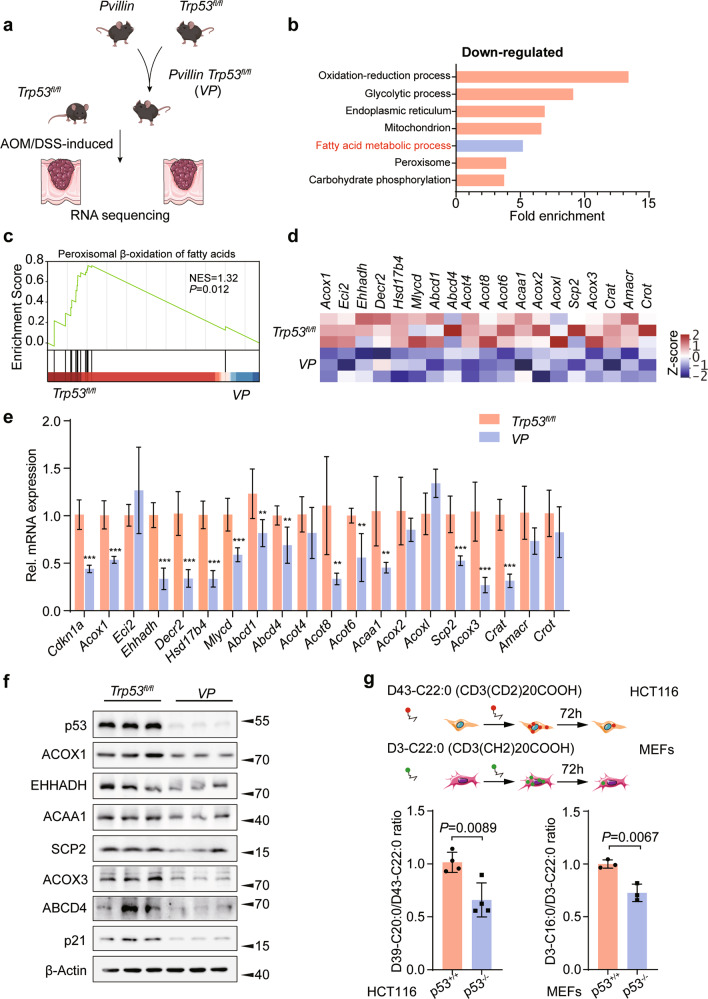
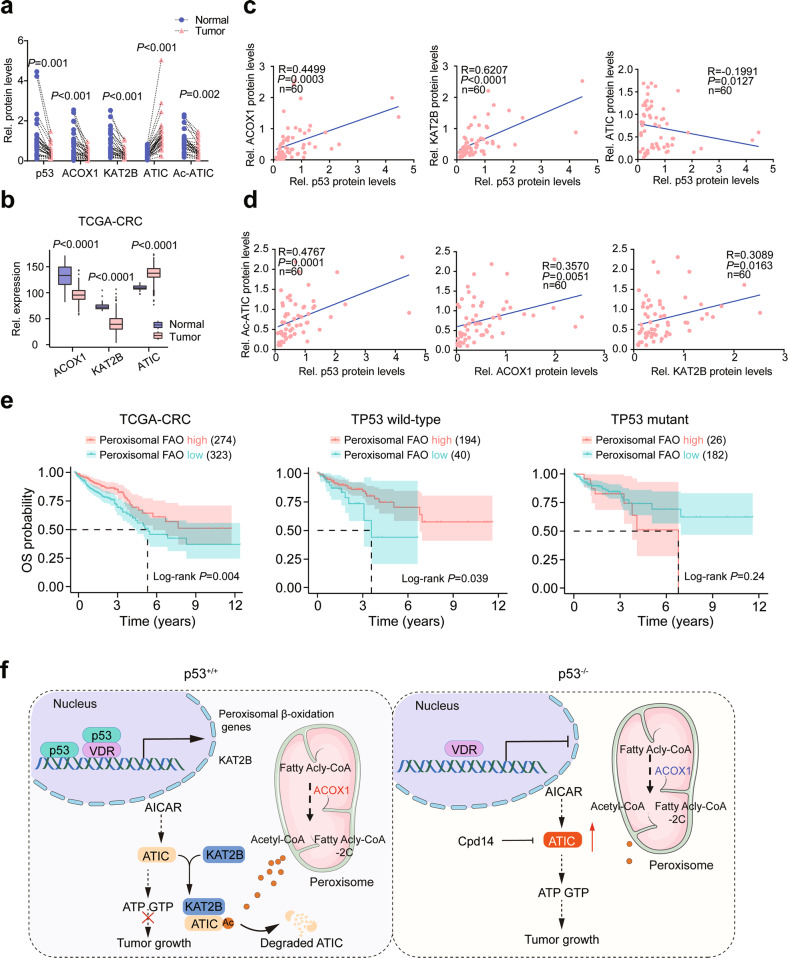
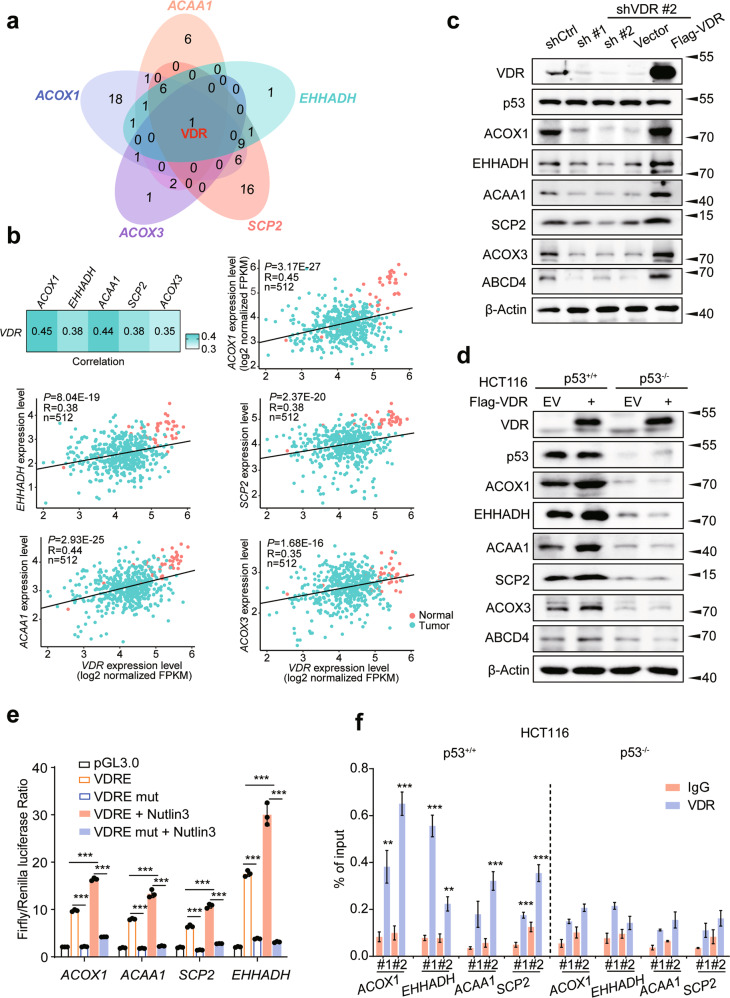
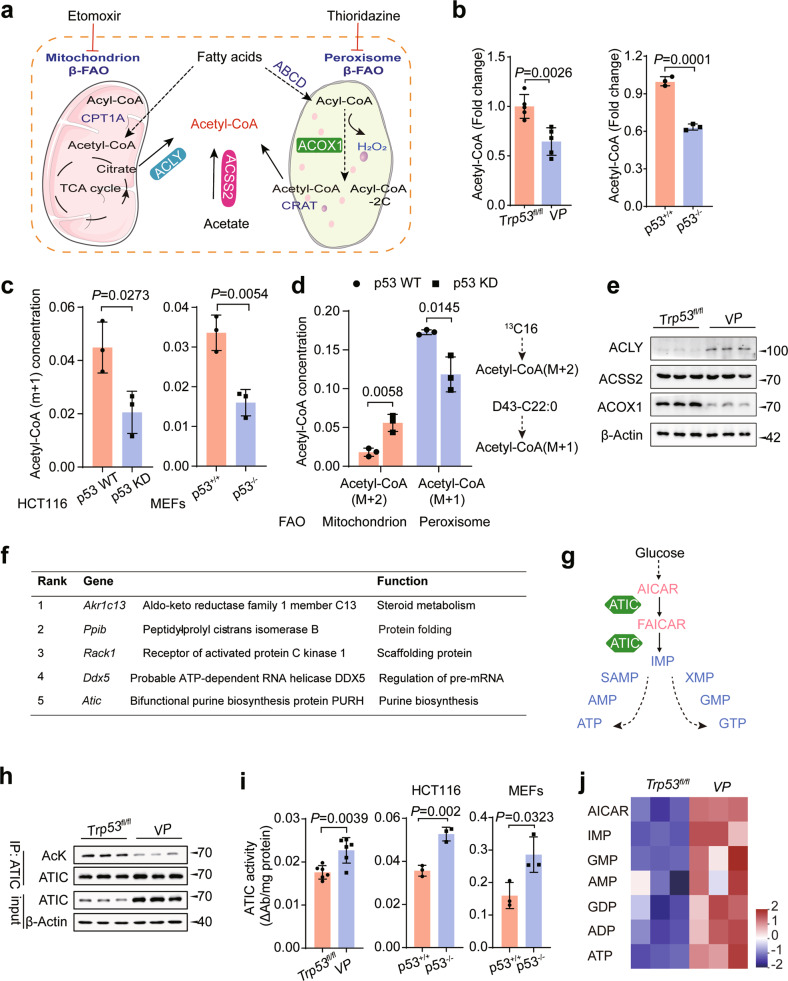
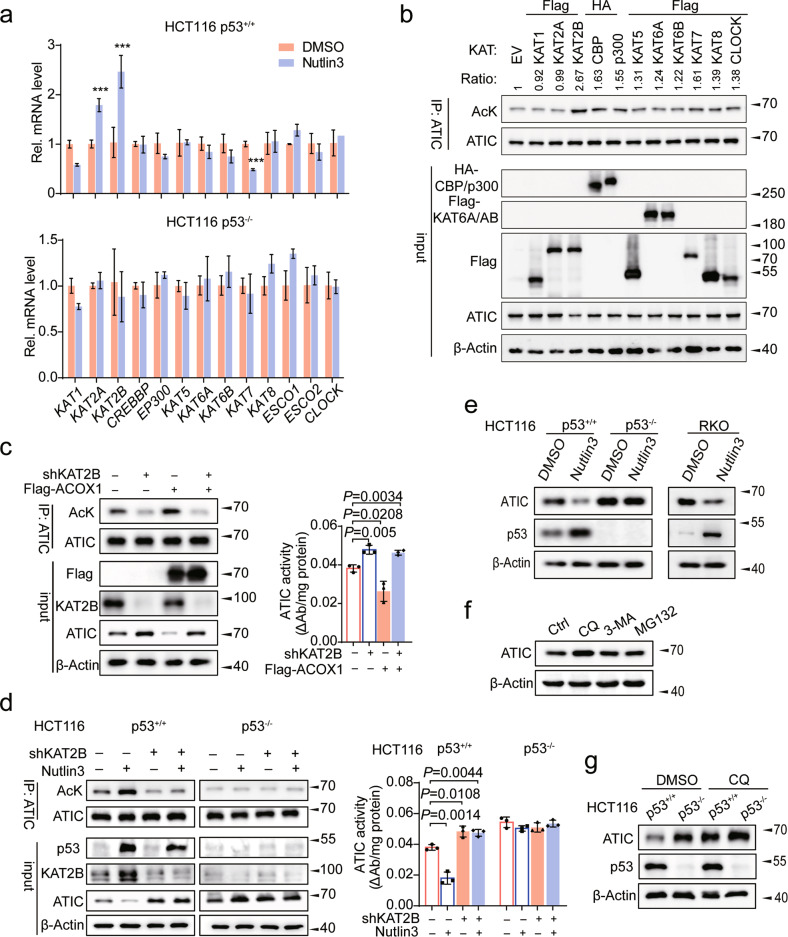
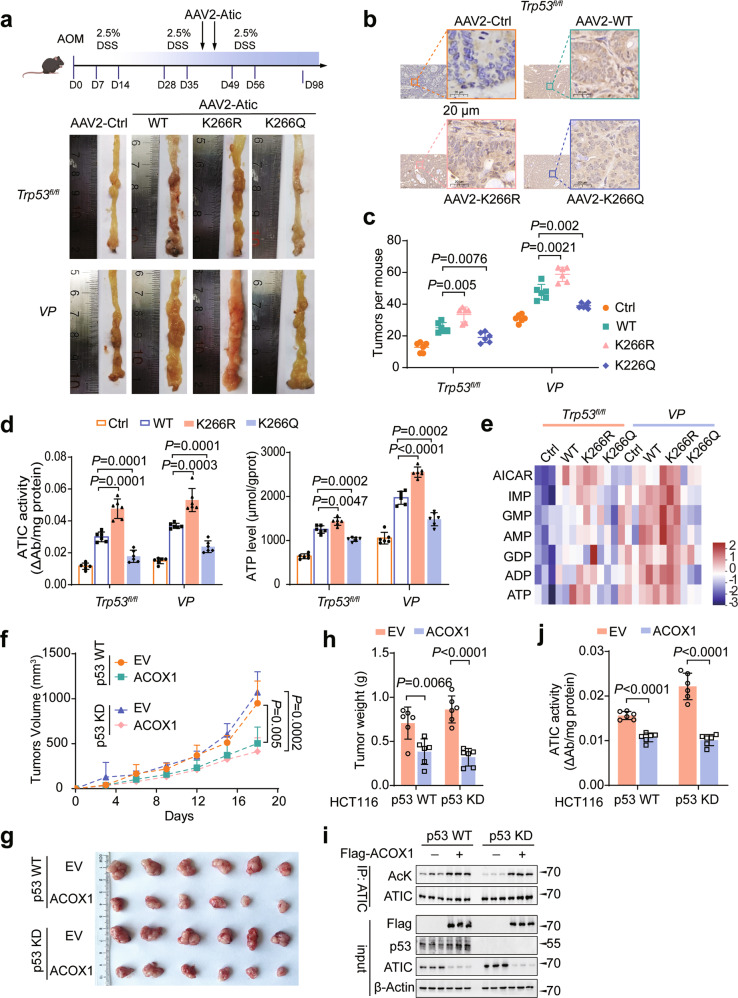
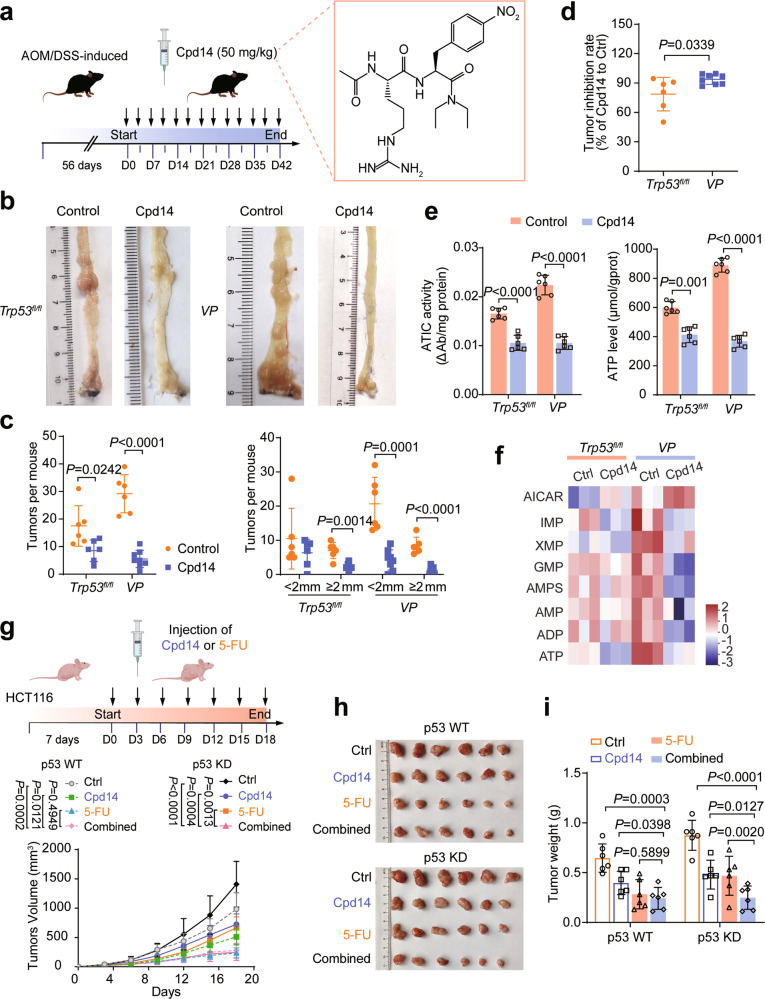
The metabolic pathways through which p53 functions as a potent tumor suppressor are incompletely understood. Here we report that, by associating with the Vitamin D receptor (VDR), p53 induces numerous genes encoding enzymes for peroxisomal fatty acid β-oxidation (FAO). This leads to increased cytosolic acetyl-CoA levels and acetylation of the enzyme 5-Aminoimidazole-4-Carboxamide Ribonucleotide Formyltransferase/IMP Cyclohydrolase (ATIC), which catalyzes the last two steps in the purine biosynthetic pathway. This acetylation step, mediated by lysine acetyltransferase 2B (KAT2B), occurs at ATIC Lys 266, dramatically inhibits ATIC activity, and inversely correlates with colorectal cancer (CRC) tumor growth in vitro and in vivo, and acetylation of ATIC is downregulated in human CRC samples. p53-deficient CRCs with high levels of ATIC is more susceptible to ATIC inhibition. Collectively, these findings link p53 to peroxisomal FAO, purine biosynthesis, and CRC pathogenesis in a manner that is regulated by the levels of ATIC acetylation.
p53 作为一种强效肿瘤抑制因子发挥作用的代谢途径尚未完全阐明。在这里,我们报告称,p53 通过与维生素 D 受体 (VDR) 结合,诱导许多编码过氧化物酶体脂肪酸 β-氧化 (FAO) 酶的基因。这导致胞质乙酰辅酶 A 水平升高,并使酶 5-氨基咪唑-4-羧基酰胺核糖核苷酸甲酰基转移酶/IMP 环水解酶 (ATIC) 乙酰化,后者催化嘌呤生物合成途径的最后两个步骤。这种由赖氨酸乙酰转移酶 2B (KAT2B) 介导的乙酰化步骤发生在 ATIC Lys 266 上,可显著抑制 ATIC 活性,并与体外和体内结直肠癌 (CRC) 肿瘤生长呈负相关,并且人 CRC 样本中 ATIC 的乙酰化水平下调。具有高水平 ATIC 的 p53 缺陷型 CRC 对 ATIC 抑制更为敏感。总之,这些发现将 p53 与过氧化物酶体 FAO、嘌呤生物合成和 CRC 发病机制联系起来,其方式受 ATIC 乙酰化水平的调节。