Mazzarino Randall C, Baresova Veronika, Zikánová Marie, Duval Nathan, Wilkinson Terry G, Patterson David, Vacano Guido N
Knoebel Institute for Healthy Aging, University of Denver, 2155 E. Wesley Avenue, Denver, CO 80210, USA.
Eleanor Roosevelt Institute, University of Denver, Denver, CO 80210, USA.
Mol Genet Metab Rep. 2020 Sep 2;25:100642. doi: 10.1016/j.ymgmr.2020.100642. eCollection 2020 Dec.
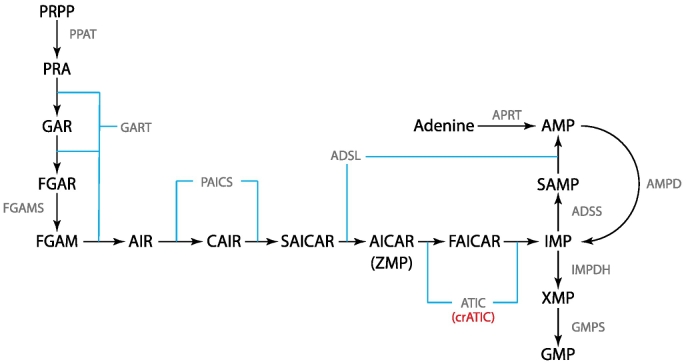
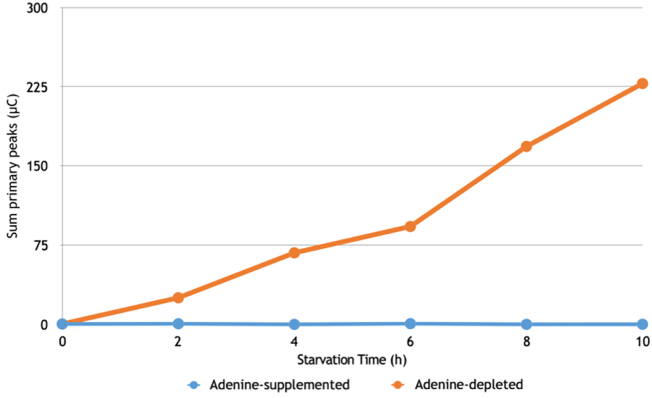
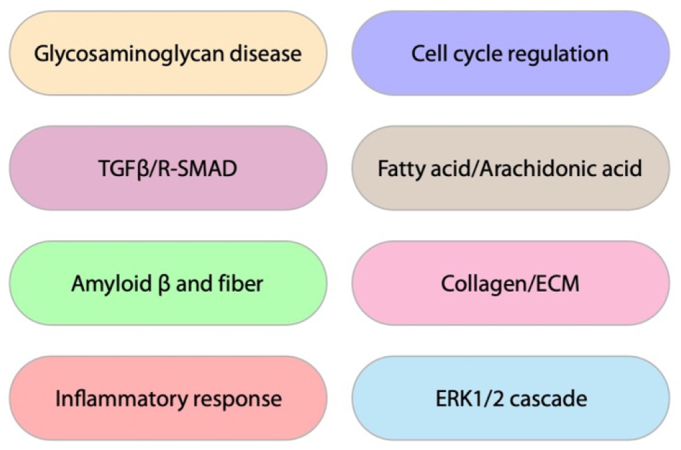
In de novo purine biosynthesis (DNPS), 5-aminoimidazole-4-carboxamide ribonucleotide formyltransferase (EC 2.1.2.3)/inosine monophosphate cyclohydrolase (EC 3.5.4.10) (ATIC) catalyzes the last two reactions of the pathway: conversion of 5-aminoimidazole-4-carboxamide ribonucleotide [aka -nucleotide monophosphate (ZMP)] to 5-formamido-4-imidazolecarboxamide ribonucleotide (FAICAR) then to inosine monophosphate (IMP). Mutations in ATIC cause an untreatable and devastating inborn error of metabolism in humans. ZMP is an adenosine monophosphate (AMP) mimetic and a known activator of AMP-activated protein kinase (AMPK). Recently, a HeLa cell line null mutant for ATIC was constructed via CRISPR-Cas9 mutagenesis. This mutant, crATIC, accumulates ZMP during purine starvation. Given that the mutant can accumulate ZMP in the absence of treatment with exogenous compounds, crATIC is likely an important cellular model of DNPS inactivation and ZMP accumulation. In the current study, we characterize the crATIC transcriptome versus the HeLa transcriptome in purine-supplemented and purine-depleted growth conditions. We report and discuss transcriptome changes with particular relevance to Alzheimer's disease and in genes relevant to lipid and fatty acid synthesis, neurodevelopment, embryogenesis, cell cycle maintenance and progression, extracellular matrix, immune function, TGFβ and other cellular processes.
在从头嘌呤生物合成(DNPS)过程中,5-氨基咪唑-4-甲酰胺核糖核苷酸甲酰基转移酶(EC 2.1.2.3)/肌苷单磷酸环水解酶(EC 3.5.4.10)(ATIC)催化该途径的最后两个反应:将5-氨基咪唑-4-甲酰胺核糖核苷酸[又名 - 核苷酸单磷酸(ZMP)]转化为5-甲酰胺基-4-咪唑甲酰胺核糖核苷酸(FAICAR),然后转化为肌苷单磷酸(IMP)。ATIC中的突变会导致人类一种无法治疗且具有毁灭性的先天性代谢缺陷。ZMP是一种单磷酸腺苷(AMP)模拟物,也是已知的AMP激活蛋白激酶(AMPK)激活剂。最近,通过CRISPR-Cas9诱变构建了ATIC的HeLa细胞系缺失突变体。该突变体crATIC在嘌呤饥饿期间积累ZMP。鉴于该突变体在未用外源化合物处理的情况下就能积累ZMP,crATIC可能是DNPS失活和ZMP积累的重要细胞模型。在本研究中,我们对在补充嘌呤和缺乏嘌呤的生长条件下crATIC转录组与HeLa转录组进行了表征。我们报告并讨论了转录组变化,特别涉及阿尔茨海默病以及与脂质和脂肪酸合成、神经发育、胚胎发生、细胞周期维持与进展、细胞外基质、免疫功能、TGFβ及其他细胞过程相关的基因。