CytoGenomics Lab, Department of Genetics and Biotechnology (DGB), University of Trás-Os-Montes and Alto Douro (UTAD), 5000-801, Vila Real, Portugal.
BioISI - Biosystems & Integrative Sciences Institute, Faculty of Sciences, University of Lisboa, 1749-016, Lisbon, Portugal.
BMC Biol. 2023 Feb 8;21(1):28. doi: 10.1186/s12915-023-01521-5.
Pericentromeric regions of human chromosomes are composed of tandem-repeated and highly organized sequences named satellite DNAs. Human classical satellite DNAs are classified into three families named HSat1, HSat2, and HSat3, which have historically posed a challenge for the assembly of the human reference genome where they are misrepresented due to their repetitive nature. Although being known for a long time as the most AT-rich fraction of the human genome, classical satellite HSat1A has been disregarded in genomic and transcriptional studies, falling behind other human satellites in terms of functional knowledge. Here, we aim to characterize and provide an understanding on the biological relevance of HSat1A.
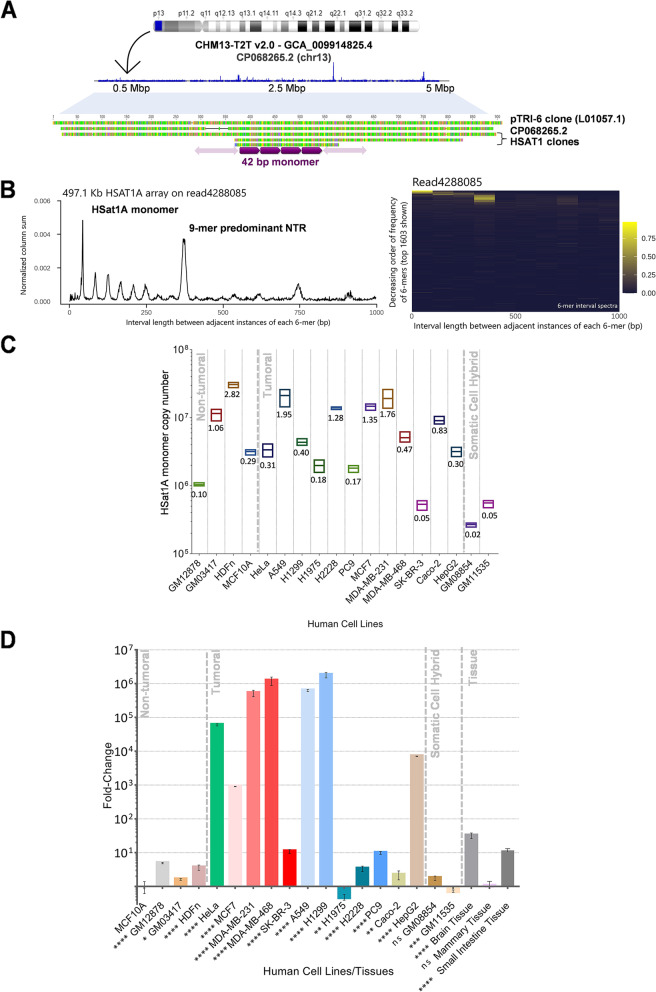
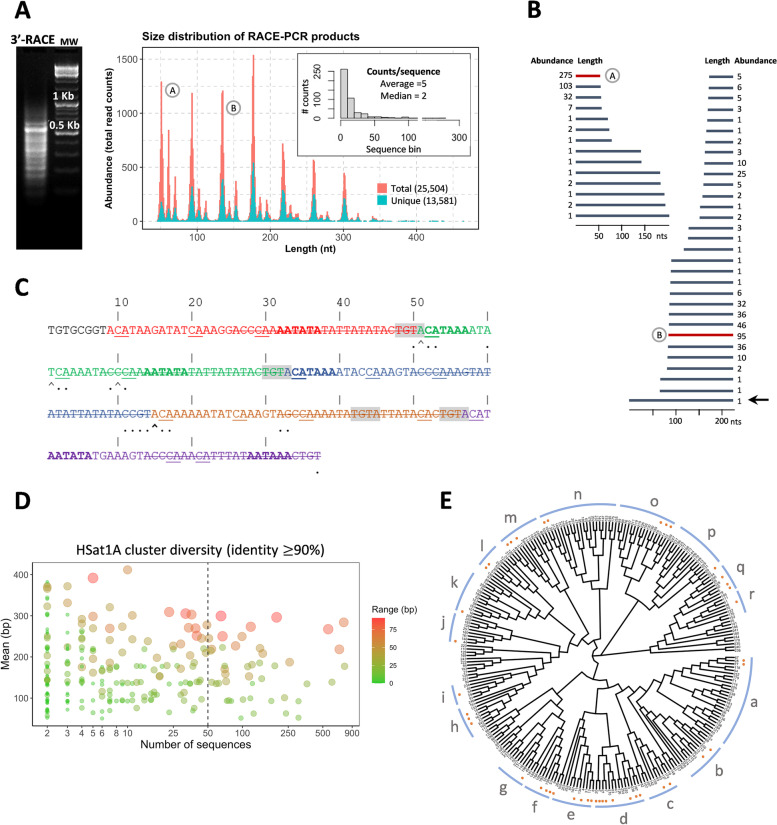
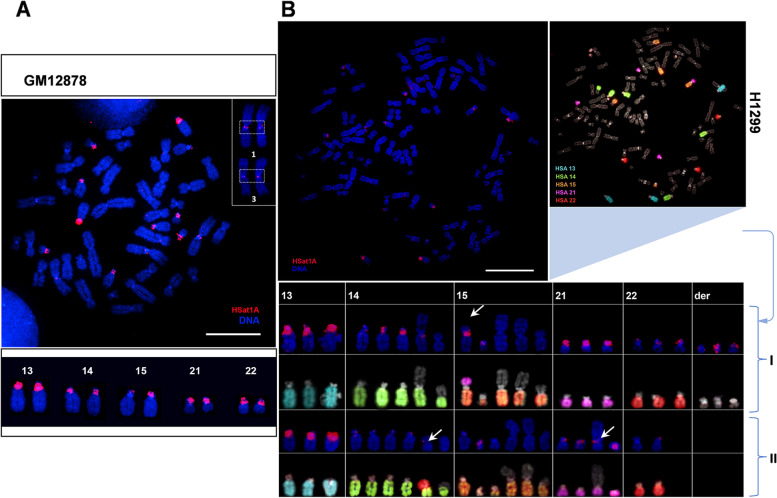
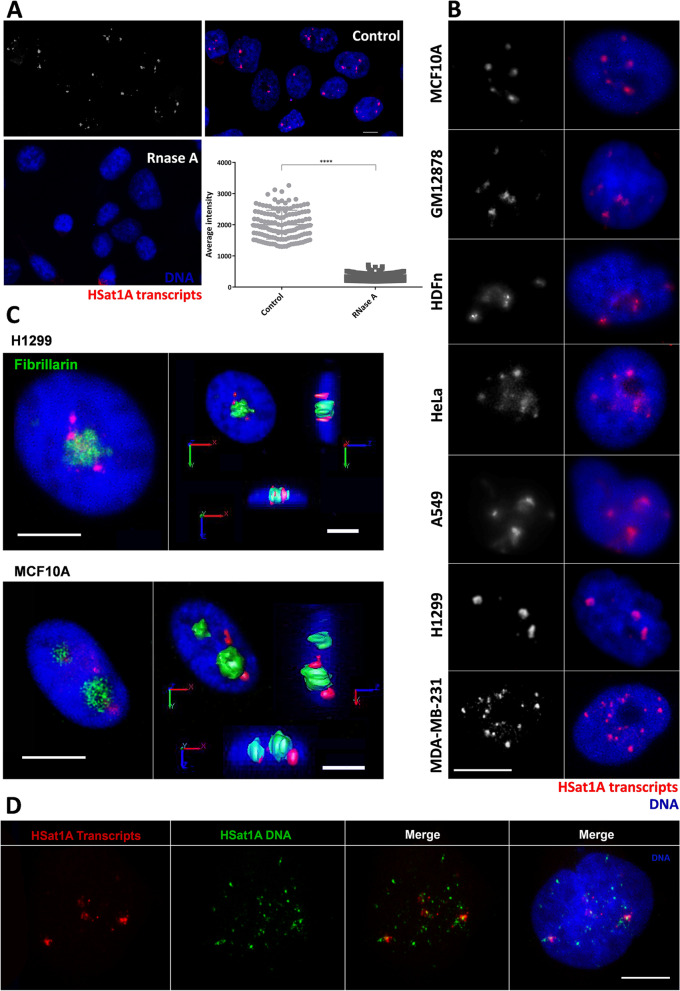
The path followed herein trails with HSat1A isolation and cloning, followed by in silico analysis. Monomer copy number and expression data was obtained in a wide variety of human cell lines, with greatly varying profiles in tumoral/non-tumoral samples. HSat1A was mapped in human chromosomes and applied in in situ transcriptional assays. Additionally, it was possible to observe the nuclear organization of HSat1A transcripts and further characterize them by 3' RACE-Seq. Size-varying polyadenylated HSat1A transcripts were detected, which possibly accounts for the intricate regulation of alternative polyadenylation.
As far as we know, this work pioneers HSat1A transcription studies. With the emergence of new human genome assemblies, acrocentric pericentromeres are becoming relevant characters in disease and other biological contexts. HSat1A sequences and associated noncoding RNAs will most certainly prove significant in the future of HSat research.
人类染色体着丝粒区域由串联重复且高度组织化的序列组成,这些序列被命名为卫星 DNA。人类经典卫星 DNA 可分为三个家族,分别命名为 HSat1、HSat2 和 HSat3。由于其重复性质,这些家族在组装人类参考基因组时一直存在问题,导致它们的代表性不足。尽管经典卫星 HSat1A 长期以来一直被认为是人类基因组中 AT 含量最丰富的部分,但在基因组学和转录组学研究中,它一直被忽视,在功能知识方面落后于其他人类卫星。在这里,我们旨在对 HSat1A 的生物学相关性进行特征描述和理解。
本文的研究路径遵循 HSat1A 的分离和克隆,然后进行计算机分析。在各种人类细胞系中获得了单体拷贝数和表达数据,在肿瘤/非肿瘤样本中呈现出极大的差异。HSat1A 被映射到人类染色体上,并应用于原位转录分析。此外,还可以观察到 HSat1A 转录本的核组织,并通过 3' RACE-Seq 进一步对其进行特征描述。检测到大小变化的多聚腺苷酸化 HSat1A 转录本,这可能解释了可变多聚腺苷酸化的复杂调控。
据我们所知,这项工作开创了 HSat1A 转录研究的先河。随着新的人类基因组组装的出现,近端着丝粒在疾病和其他生物学背景下变得越来越重要。HSat1A 序列和相关的非编码 RNA 将来在 HSat 研究中肯定会非常重要。