Li Yaru, Li Yiwei, Bai Qinghua, Wen Mingzhu, Ma Dandan, Lin Yisha, Chu Jinpu
The First Affiliated Hospital of Zhengzhou University, Zhengzhou, China.
College of Stomatology, Zhengzhou University, Zhengzhou, China.
Front Physiol. 2023 Jan 23;14:1076265. doi: 10.3389/fphys.2023.1076265. eCollection 2023.
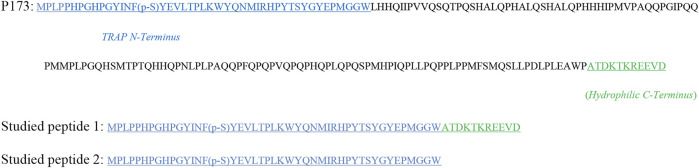
To explore the regulatory effect of recombinant amelogenin peptide TRAP on the remineralization of early enamel carious lesions. Forty-eight bovine enamel blocks that prepared initial lesions were split at random into four groups for immersion treatment for 12 days: 1) remineralizing medium; 2) studied peptide 1 (consisting of the N- and C-termini of porcine amelogenin) + remineralizing medium; 3) studied peptide 2 (TRAP) + remineralizing medium; 4) fluoride + remineralizing medium. After demineralization and remineralization immersion, each specimen's mean mineral loss and lesion depth were measured using micro-computed tomography (micro-CT). The changes in lesion depth (∆LD) and mineral gain (∆Z) were computed following remineralization. The enamel samples were then cut into sections and examined with polarized light microscopy (PLM). The cross-section morphology was observed by scanning electron microscopy (SEM). The crystal phase was analyzed by an X-ray micro-diffractometer (XRD). The calcium-binding properties were determined using isothermal titration calorimetry (ITC). Micro-CT analysis revealed a significant reduction in mineral loss in the four groups following the remineralization treatment ( < 0.05). The treatment with fluoride resulted in the greatest ∆Z and ∆LD, whereas the treatment with a remineralizing medium showed the least ∆Z and ∆LD among all groups. The ∆Z and ∆LD of the studied peptide 1 and studied peptide 2 groups were greater than those of the remineralizing medium group. However, there was no significant difference between the studied peptide 1 and studied peptide 2 groups ( > 0.05). All of the samples that the PLM analyzed had a thickening of the surface layer. A negative birefringent band changed in the lesion's body. The SEM displayed that minerals were formed in all four groups of samples. The XRD results indicated that the products of remineralization of the studied peptide were hydroxyapatite crystals (HA). ITC showed that there were two binding modes between the calcium and peptide TRAP. This study confirmed the potential of the recombinant amelogenin peptide TRAP as a key functional motif of amelogenin protein for enamel remineralization and provided a promising biomaterial for remineralization in initial enamel carious lesion treatment.
探讨重组釉原蛋白肽TRAP对早期釉质龋损再矿化的调节作用。将制备好初始病损的48个牛牙釉质块随机分为四组,进行12天的浸泡处理:1)再矿化介质;2)研究肽1(由猪釉原蛋白的N端和C端组成)+再矿化介质;3)研究肽2(TRAP)+再矿化介质;4)氟化物+再矿化介质。脱矿和再矿化浸泡后,使用显微计算机断层扫描(micro-CT)测量每个标本的平均矿物质流失和病损深度。再矿化后计算病损深度变化(∆LD)和矿物质增加量(∆Z)。然后将牙釉质样本切成薄片,用偏光显微镜(PLM)检查。通过扫描电子显微镜(SEM)观察横截面形态。用X射线微衍射仪(XRD)分析晶体相。使用等温滴定量热法(ITC)测定钙结合特性。Micro-CT分析显示,再矿化处理后四组的矿物质流失均显著减少(<0.05)。氟化物处理导致最大的∆Z和∆LD,而在所有组中,用再矿化介质处理显示出最小的∆Z和∆LD。研究肽1组和研究肽2组的∆Z和∆LD大于再矿化介质组。然而,研究肽1组和研究肽2组之间没有显著差异(>0.05)。PLM分析的所有样本表面层均增厚。病损体内负双折射带发生变化。SEM显示所有四组样本中均形成了矿物质。XRD结果表明,研究肽的再矿化产物为羟基磷灰石晶体(HA)。ITC表明钙与肽TRAP之间存在两种结合模式。本研究证实了重组釉原蛋白肽TRAP作为釉原蛋白关键功能基序促进釉质再矿化的潜力,并为早期釉质龋损治疗中的再矿化提供了一种有前景的生物材料。