Key Laboratory of Endocrinology of National Health Commission, Department of Endocrinology, Peking Union Medical College Hospital, Chinese Academy of Medical Sciences & Peking Union Medical College, Beijing, China.
Department of Endocrinology and Metabolism, Shanxi Medical University Second Hospital, Shanxi Medical University, China.
Mediators Inflamm. 2023 Jan 29;2023:8974960. doi: 10.1155/2023/8974960. eCollection 2023.
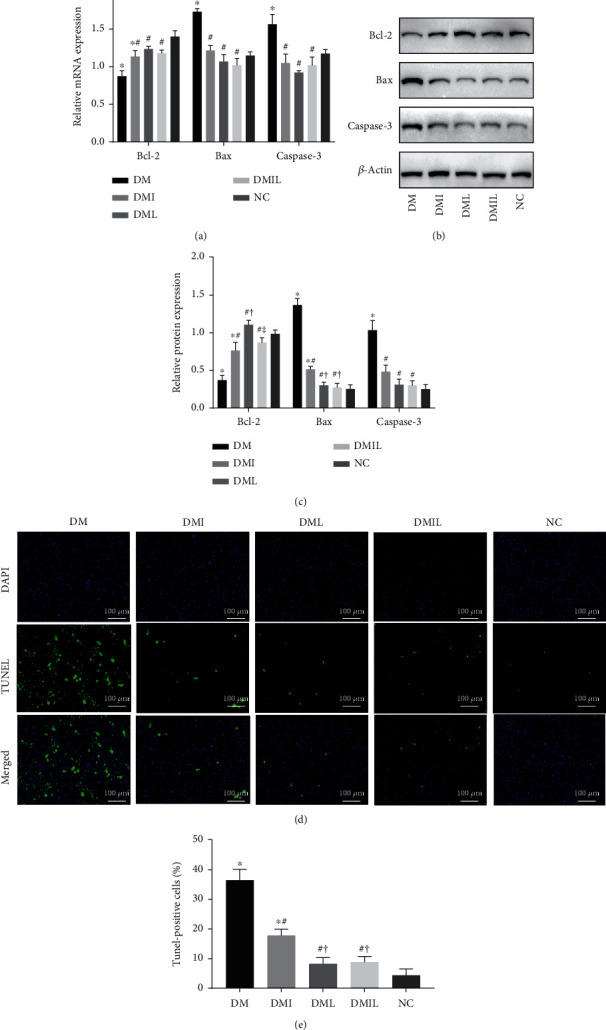
Liraglutide has been extensively applied in the treatment of type 2 diabetes mellitus and also has hepatoprotective effects. However, the role of liraglutide treatment on liver injury in a mouse model of type 1 diabetes mellitus (T1DM) induced by streptozotocin (STZ) and its underlying mechanisms remain to be elucidated. In the present study, diabetes was initiated in experimental animals by single-dose intraperitoneal inoculation of STZ. Forty female C57BL/6J mice were equally assigned into five groups: diabetic group, insulin+diabetic group, liraglutide+diabetic group, insulin+liraglutide+diabetic group, and control group for eight weeks. Diabetic mice exhibited a significantly elevated blood glucose level and decreased body weight, and morphological changes of increased steatosis and apoptosis were observed in the liver compared with the control. Furthermore, a significant increase in the levels of malondialdehyde and inflammatory markers such as tumor necrosis factor- (TNF-), interleukin-6 (IL-6), and interleukin 1 (IL-1) and the proapoptotic proteins caspase-3 and Bax were observed in the livers of diabetic mice, together with marked increases in antioxidants superoxide dismutase (SOD) and glutathione peroxidase (GPX) as well as antiapoptotic protein Bcl-2, all of which were significantly mitigated by treatment with liraglutide, insulin, and their combinations. Interestingly, liraglutide monotherapy showed better efficacy in ameliorating liver injury in T1DM mice than insulin monotherapy, similar to the combined drug therapy. Furthermore, the expression of Wnt/-catenin signaling pathway-associated molecules was upregulated in the liver of mice treated with liraglutide or insulin. The results of the present study suggested that liraglutide improves T1DM-induced liver injury and may have important implications for the treatment of nonalcoholic fatty liver disease (NAFLD) in patients with T1DM.
利拉鲁肽已广泛应用于 2 型糖尿病的治疗,并且具有肝保护作用。然而,利拉鲁肽治疗在链脲佐菌素(STZ)诱导的 1 型糖尿病(T1DM)小鼠模型中对肝损伤的作用及其潜在机制仍有待阐明。在本研究中,通过单次腹腔内接种 STZ 诱导实验动物发生糖尿病。将 40 只雌性 C57BL/6J 小鼠等分为五组:糖尿病组、胰岛素+糖尿病组、利拉鲁肽+糖尿病组、胰岛素+利拉鲁肽+糖尿病组和对照组,持续 8 周。与对照组相比,糖尿病小鼠的血糖水平显著升高,体重减轻,肝脏出现脂肪变性和细胞凋亡增加的形态学变化。此外,糖尿病小鼠肝脏中丙二醛和炎症标志物如肿瘤坏死因子-(TNF-)、白细胞介素 6(IL-6)和白细胞介素 1(IL-1)水平显著升高,促凋亡蛋白 caspase-3 和 Bax 水平升高,抗氧化剂超氧化物歧化酶(SOD)和谷胱甘肽过氧化物酶(GPX)以及抗凋亡蛋白 Bcl-2 水平显著升高,这些变化均被利拉鲁肽、胰岛素及其联合治疗显著改善。有趣的是,与胰岛素单药治疗相比,利拉鲁肽单药治疗在改善 T1DM 小鼠的肝损伤方面显示出更好的疗效,与联合药物治疗相似。此外,利拉鲁肽或胰岛素治疗的小鼠肝脏中 Wnt/-catenin 信号通路相关分子的表达上调。本研究结果表明,利拉鲁肽可改善 T1DM 引起的肝损伤,这对于治疗 T1DM 患者的非酒精性脂肪性肝病(NAFLD)可能具有重要意义。