Centre SÈVE, Département de Biologie, Université de Sherbrooke, Sherbrooke, QC, Canada.
Nat Commun. 2023 Feb 9;14(1):713. doi: 10.1038/s41467-023-36382-7.
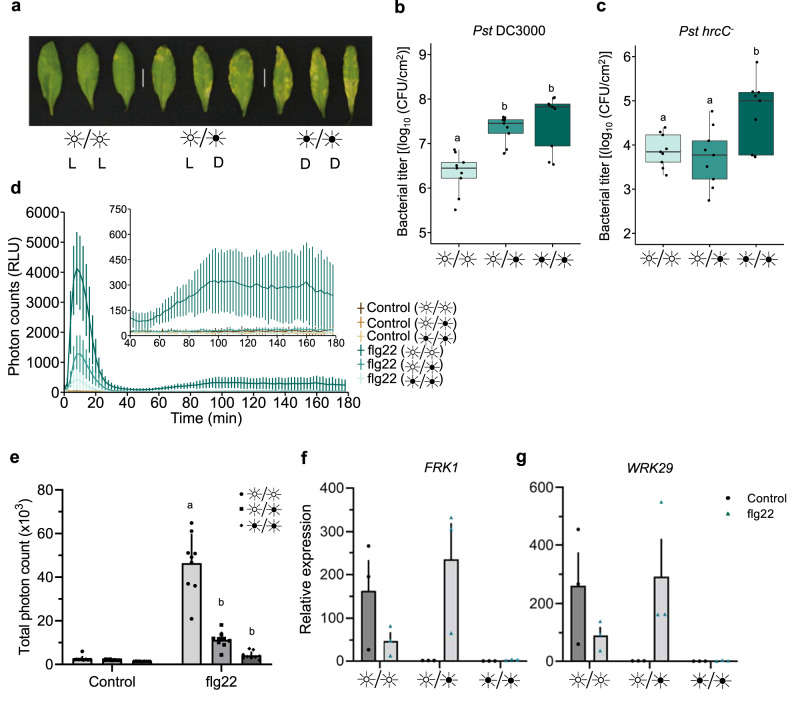
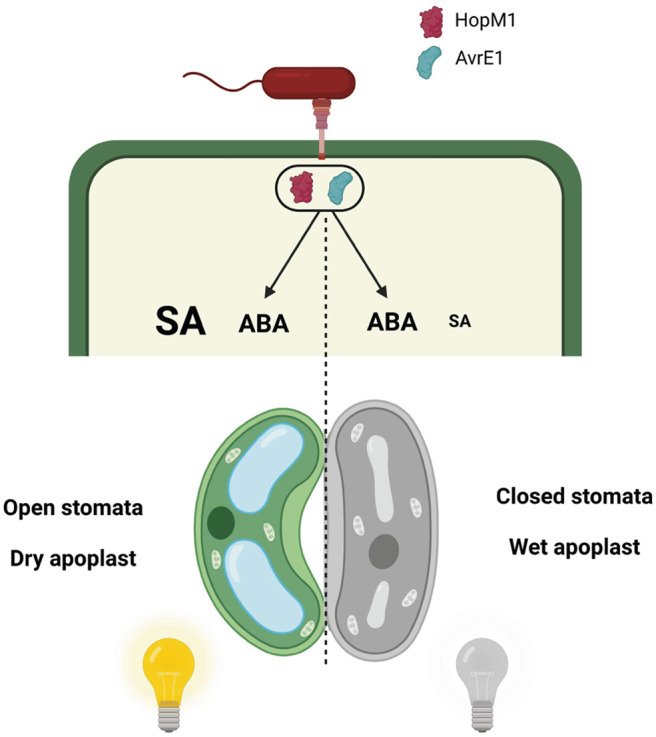
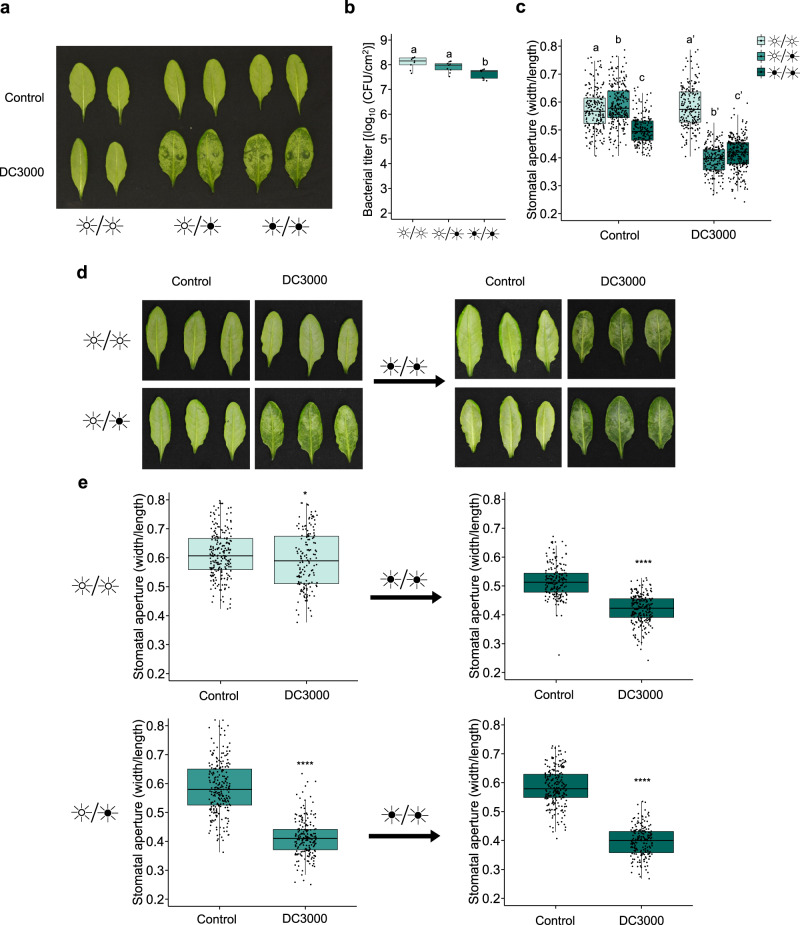
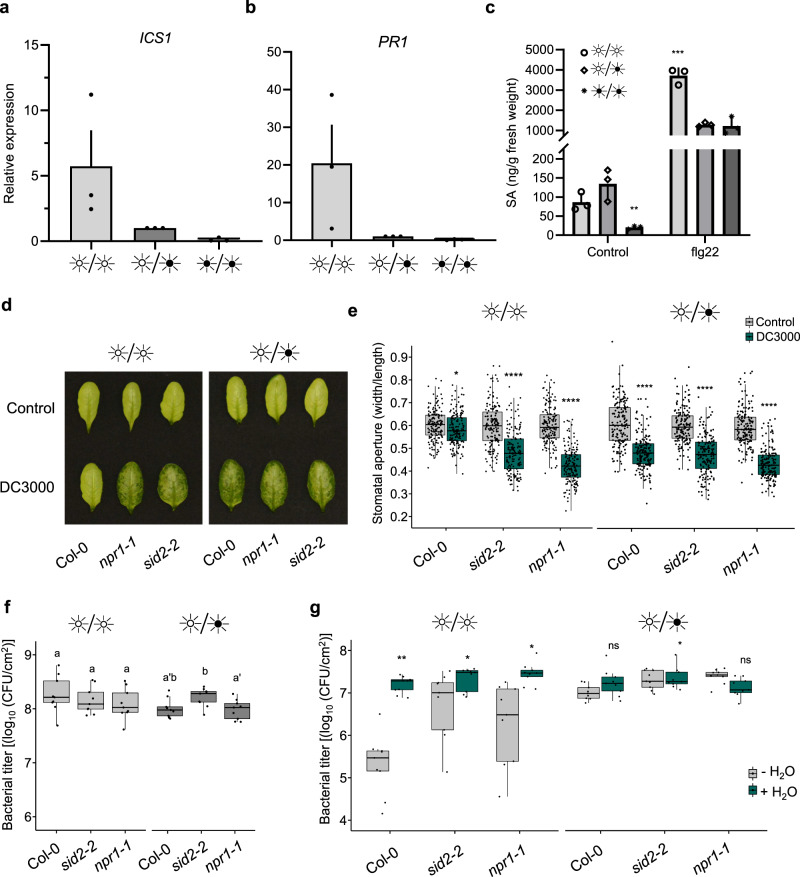
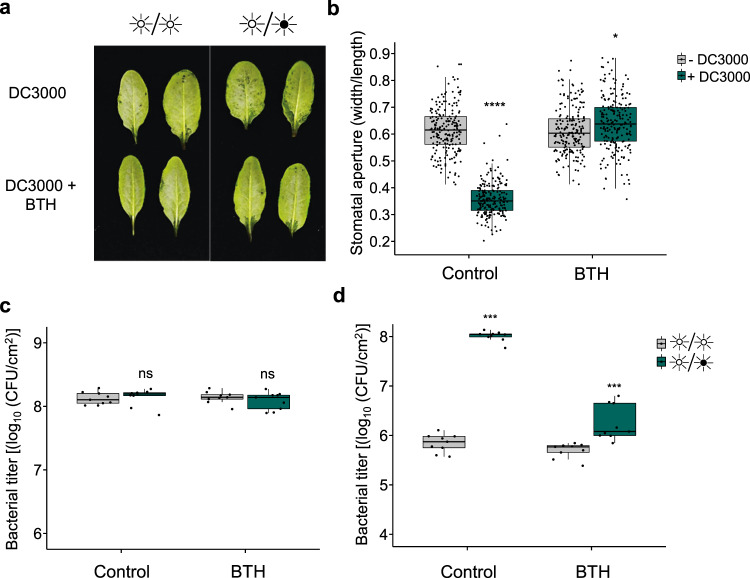
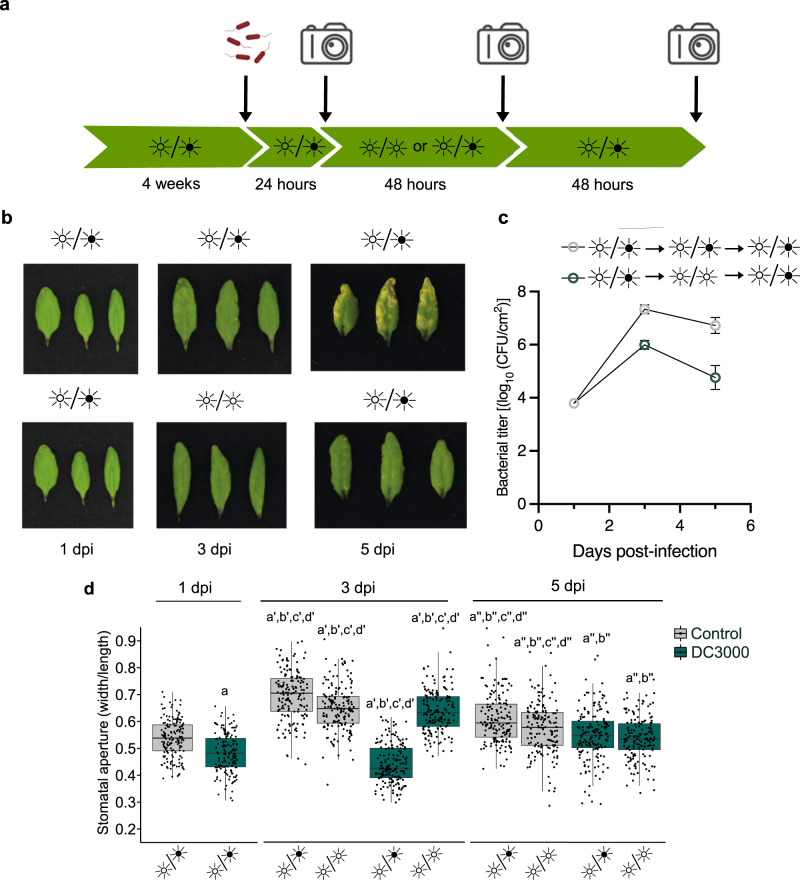
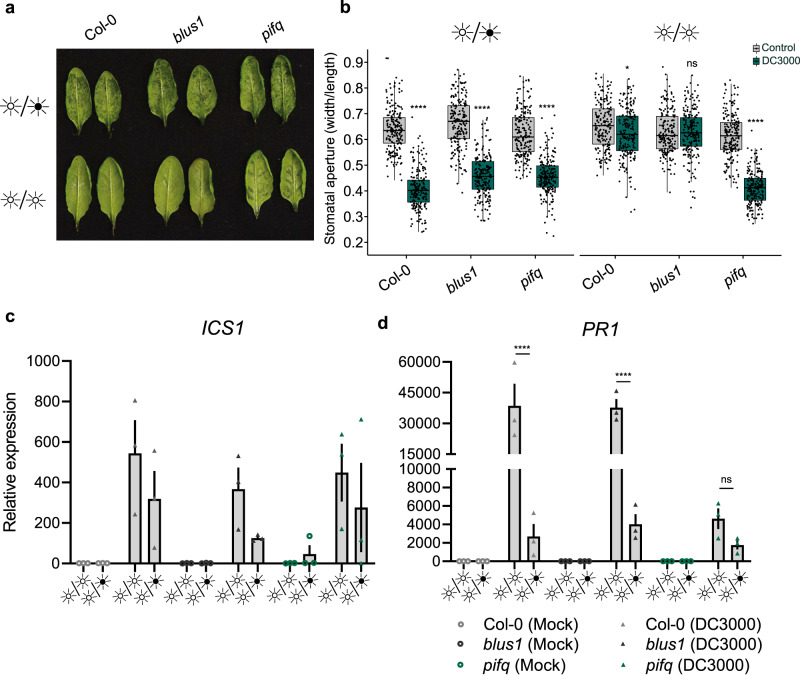
Many plant pathogens induce water-soaked lesions in infected tissues. In the case of Pseudomonas syringae (Pst), water-soaking effectors stimulate abscisic acid (ABA) production and signaling, resulting in stomatal closure. This reduces transpiration, increases water accumulation, and induces an apoplastic microenvironment favorable for bacterial growth. Stomata are sensitive to environmental conditions, including light. Here, we show that a period of darkness is required for water-soaking, and that a constant light regime abrogates stomatal closure by Pst. We find that constant light induces resistance to Pst, and that this effect requires salicylic acid (SA). Constant light did not alter effector-induced accumulation of ABA, but induced greater SA production, promoting stomatal opening despite the presence of ABA. Furthermore, application of a SA analog was sufficient to prevent pathogen-induced stomatal closure and water-soaking. Our results suggest potential approaches for interfering with a common virulence strategy, as well as providing a physiological mechanism by which SA functions in defense against pathogens.
许多植物病原体在感染的组织中诱导水渍病变。在丁香假单胞菌(Pst)的情况下,水渍效应物刺激脱落酸(ABA)的产生和信号转导,导致气孔关闭。这减少了蒸腾作用,增加了水的积累,并诱导有利于细菌生长的细胞外微环境。气孔对环境条件敏感,包括光照。在这里,我们表明,黑暗期是水渍所必需的,并且恒定的光照制度通过 Pst 破坏了气孔关闭。我们发现恒定的光照诱导对 Pst 的抗性,并且这种效应需要水杨酸(SA)。恒定的光照不会改变效应物诱导的 ABA 积累,但会诱导更多的 SA 产生,尽管存在 ABA,但仍能促进气孔张开。此外,施用 SA 类似物足以防止病原体诱导的气孔关闭和水渍。我们的研究结果表明,干扰常见毒力策略的潜在方法,以及提供水杨酸在防御病原体方面发挥作用的生理机制。