Northern Forensic Pathology Service, Palmerston North, New Zealand.
Canterbury Health Laboratories, Christchurch, New Zealand.
Forensic Sci Med Pathol. 2023 Jun;19(2):215-220. doi: 10.1007/s12024-023-00582-w. Epub 2023 Feb 10.
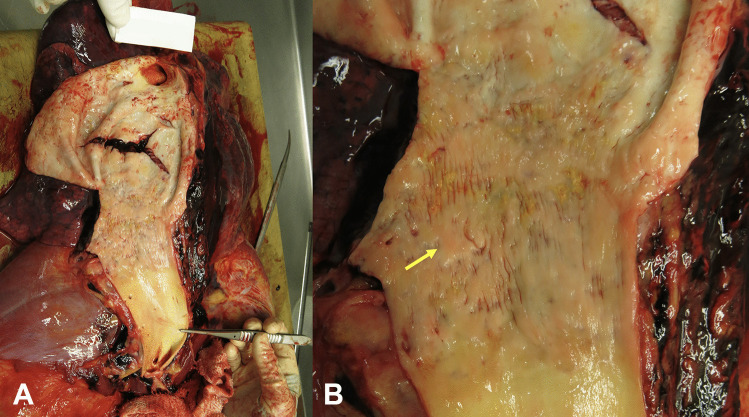
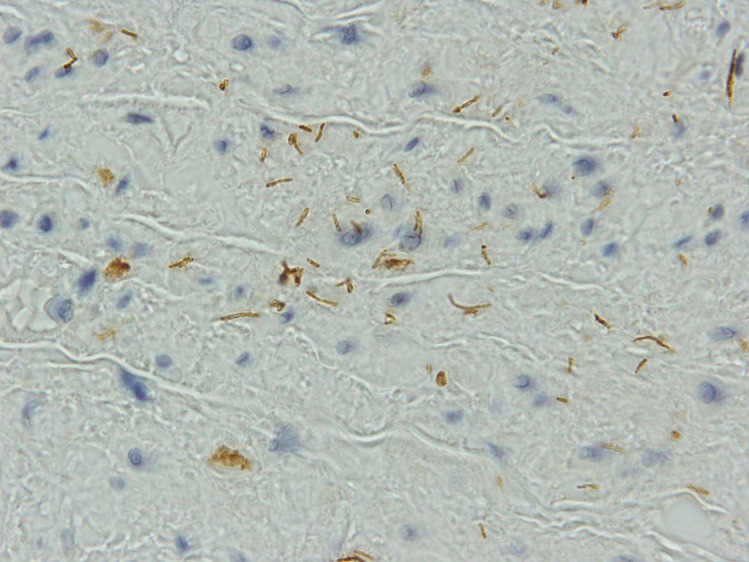
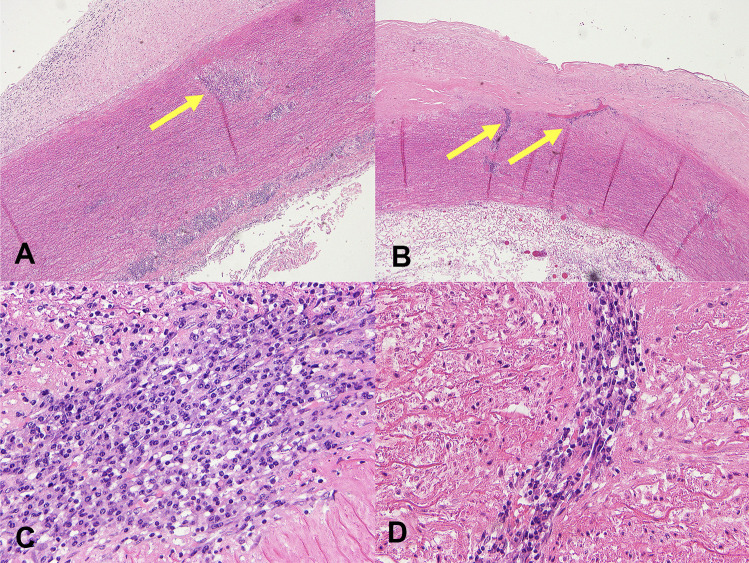
A 43-year-old woman died suddenly and was found at PM to have a ruptured thoracic aortic aneurysm. The endothelial surface of the aorta showed a 'tree-bark' appearance. Histology of the aneurysm wall showed a patchy, mainly perivascular, plasma cell infiltrate. Multiple spirochete-like organisms were identified on T. pallidum IHC. However, PM syphilis serology (screen including rapid plasma reagin (RPR) and T. pallidum particle agglutination (TPPA)) on femoral blood was negative. PCR testing on FFPE aortic wall tissue was negative. Further history revealed routine antenatal syphilis screening tests had been negative, no known history or risk of exposure to syphilis or other treponemes. This case raises the possibility of false negative syphilis testing. While acknowledged in RPR testing, with the modern testing regime using multiple methods, the rate of false negative results is now thought to be markedly reduced, and false positive results are a much greater problem in clinical medicine. The most common cause of false negative results is early in primary infection before an immune response has been mounted and in those patients that are immunocompromised. False negative results are also more often seen in tertiary syphilis, as in this case. Newer testing methods which include 16S rRNA sequencing have become available and early discussion with a microbiologist would be recommended. Strong macroscopic and microscopic suggestion of syphilis as the cause of the aneurysm makes it necessary to include the possibility of infection in the Post Mortem Report to Coroner as this will have implications for her sexual partners and children.
一位 43 岁的女性突然死亡,尸检时发现其胸主动脉瘤破裂。主动脉的内皮表面呈“树皮”状。动脉瘤壁的组织学检查显示出斑片状、主要为血管周围的浆细胞浸润。在苍白密螺旋体免疫组化(T. pallidum IHC)中鉴定出多种类似螺旋体的生物体。然而,股动脉的梅毒血清学检测(包括快速血浆反应素(RPR)和梅毒螺旋体颗粒凝集(TPPA)的筛查)呈阴性。FFPE 主动脉壁组织的 PCR 检测呈阴性。进一步的病史显示,常规产前梅毒筛查检测均为阴性,无已知的梅毒或其他密螺旋体暴露史或风险。这例病例提出了梅毒检测假阴性的可能性。虽然在 RPR 检测中得到了承认,但随着现代检测方法的应用,假阴性结果的发生率现在被认为显著降低,而假阳性结果在临床医学中是一个更大的问题。假阴性结果最常见于原发性感染早期,此时尚未产生免疫反应,以及免疫功能低下的患者。假阴性结果也更常见于三期梅毒,如本病例。新的检测方法,包括 16S rRNA 测序,已经可用,建议与微生物学家进行早期讨论。宏观和微观上强烈提示梅毒是动脉瘤的病因,因此有必要在尸检报告中向验尸官报告感染的可能性,因为这将对她的性伴侣和孩子产生影响。