Women's Global Health Imperative, RTI International, 2150 Shattuck Avenue, Suite 800, Berkeley, CA, 94704, USA.
Setshaba Research Centre, Soshanguve, South Africa.
BMC Womens Health. 2023 Feb 10;23(1):58. doi: 10.1186/s12905-023-02181-x.
Input from end-users during preclinical phases can support market fit for new HIV prevention technologies. With several long-acting pre-exposure prophylaxis (PrEP) implants in development, we aimed to understand young women's preferences for PrEP implants to inform optimal design.
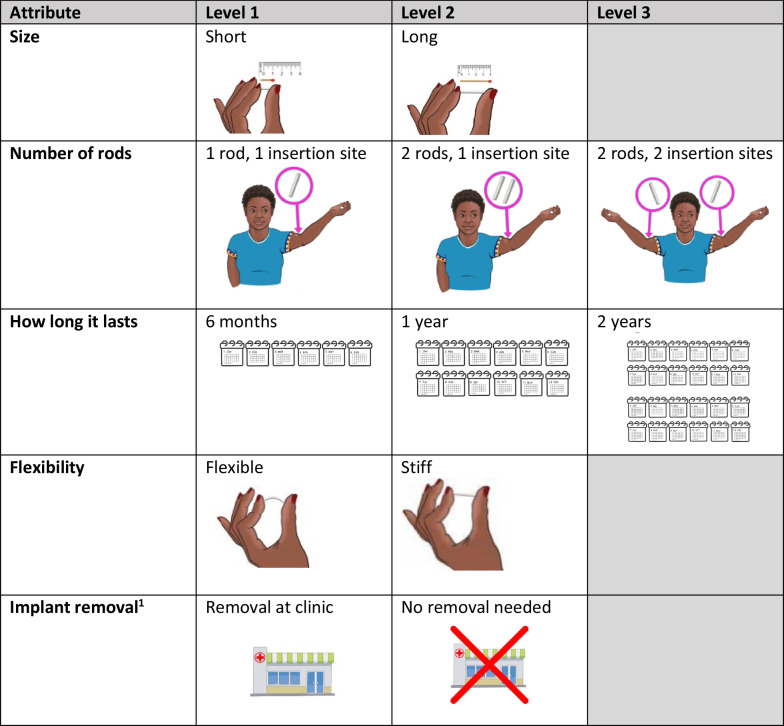
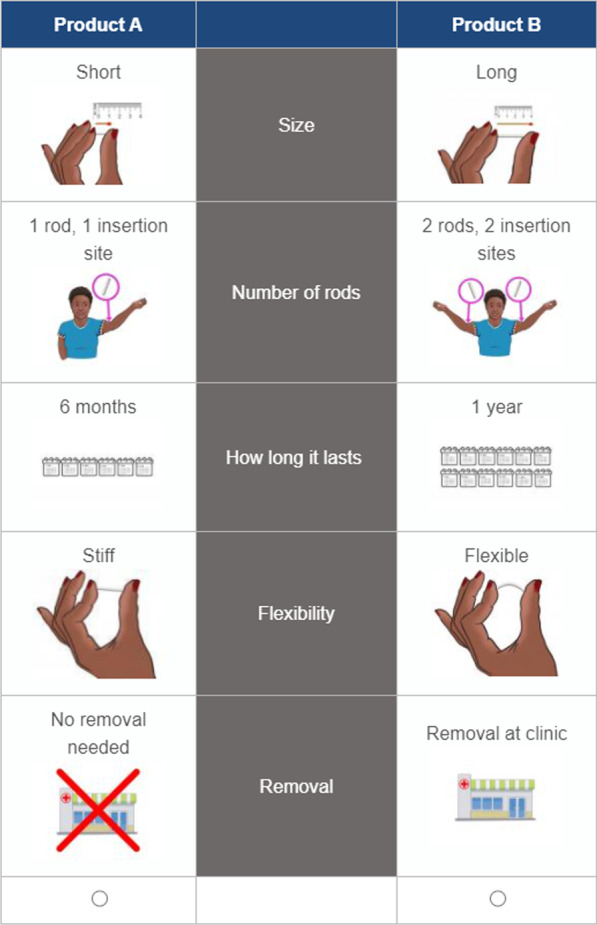
We developed a discrete choice experiment and surveyed 800 young women in Harare, Zimbabwe and Tshwane, South Africa between September-November 2020. Women aged 18-30 years who were nulliparous, postpartum, or exchanged sex for money, goods or shelter in prior year were eligible; quotas were set for each subgroup. The DCE asked participants to choose between two hypothetical implants for HIV prevention in a series of nine questions. Implants were described by: size, number of rods and insertion sites, duration (6-months, 1-year, 2-years), flexibility, and biodegradability. Random-parameters logit models estimated preference weights.
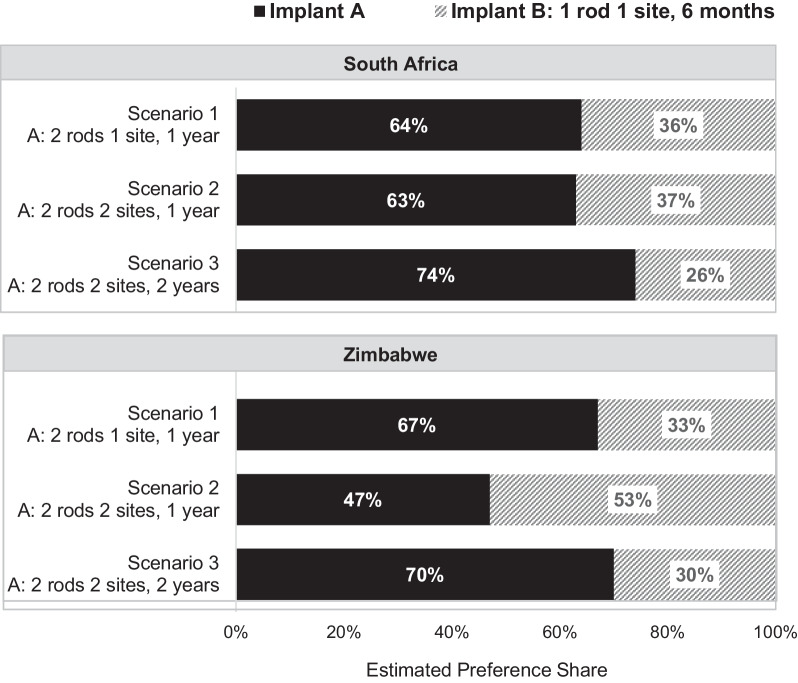
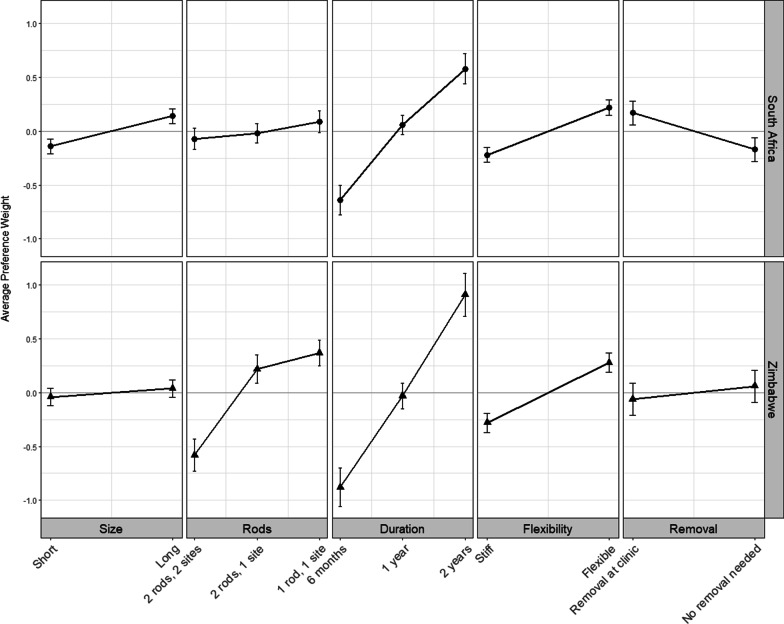
Median age was 24 years (interquartile range 21-27). By design, 36% had used contraceptive implants. Duration of protection was most important feature, with strong preference for a 2-year over 6-month implant. In Zimbabwe, the number of rods/insertion sites was second most important and half as important as duration. Nonetheless, to achieve an implant lasting 2-years, 74% were estimated to accept two rods, one in each arm. In South Africa, preference was for longer, flexible implants that required removal, although each of these attributes were one-third as important as duration. On average, biodegradability and size did not influence Zimbabwean women's choices. Contraceptive implant experience and parity did not influence relative importance of attributes.
While duration of protection was a prominent attribute shaping women's choices for PrEP implants, other characteristics related to discreetness were relevant. Optimizing for longest dosing while also ensuring minimal detection of implant placement seemed most attractive to potential users.
在临床前阶段,来自终端用户的投入可以支持新的艾滋病毒预防技术的市场适应性。随着几种长效暴露前预防 (PrEP) 植入物的开发,我们旨在了解年轻女性对 PrEP 植入物的偏好,以为最佳设计提供信息。
我们开发了一个离散选择实验,并于 2020 年 9 月至 11 月在津巴布韦哈拉雷和南非茨瓦内调查了 800 名年轻女性。符合条件的是年龄在 18-30 岁之间、未婚、产后或在过去一年中用性换取金钱、商品或住所的女性;每个亚组都设置了配额。DCE 在九个问题中要求参与者在两种用于艾滋病毒预防的假设植入物之间进行选择。植入物通过以下特征进行描述:大小、棒数和插入部位、持续时间(6 个月、1 年、2 年)、灵活性和生物降解性。随机参数对数模型估计了偏好权重。
中位年龄为 24 岁(四分位距 21-27)。按设计,36%的人使用过避孕植入物。保护持续时间是最重要的特征,强烈偏好 2 年而不是 6 个月的植入物。在津巴布韦,棒数/插入部位数是第二重要的,与持续时间一样重要。尽管如此,为了实现持续 2 年的植入物,估计有 74%的人愿意接受两根棒,每只手臂一根。在南非,人们更喜欢更长、灵活的需要取出的植入物,尽管这些属性的重要性均为持续时间的三分之一。平均而言,生物降解性和大小不会影响津巴布韦女性的选择。避孕植入物的使用经验和生育情况并不影响属性的相对重要性。
虽然保护持续时间是影响女性对 PrEP 植入物选择的突出属性,但与 discreetness 相关的其他特征也很重要。为最长的给药时间进行优化,同时确保最小化对植入物放置的检测,这似乎对潜在用户最具吸引力。