Department of Data Science and Big Data Analytics, Providence University, Taichung City 43301, Taiwan.
Department of Mathematics and Statistics, Texas Tech University, Lubbock, TX 79409, USA.
Cells. 2023 Feb 3;12(3):507. doi: 10.3390/cells12030507.
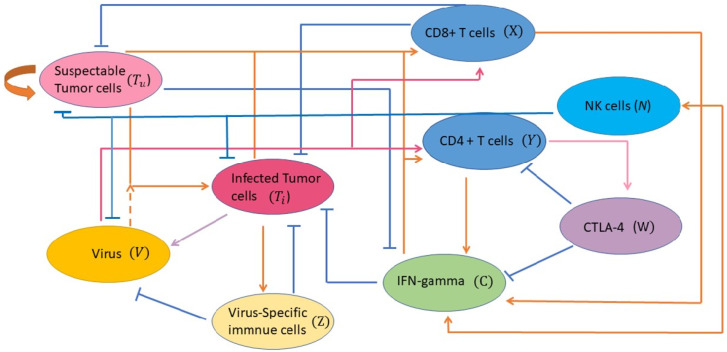
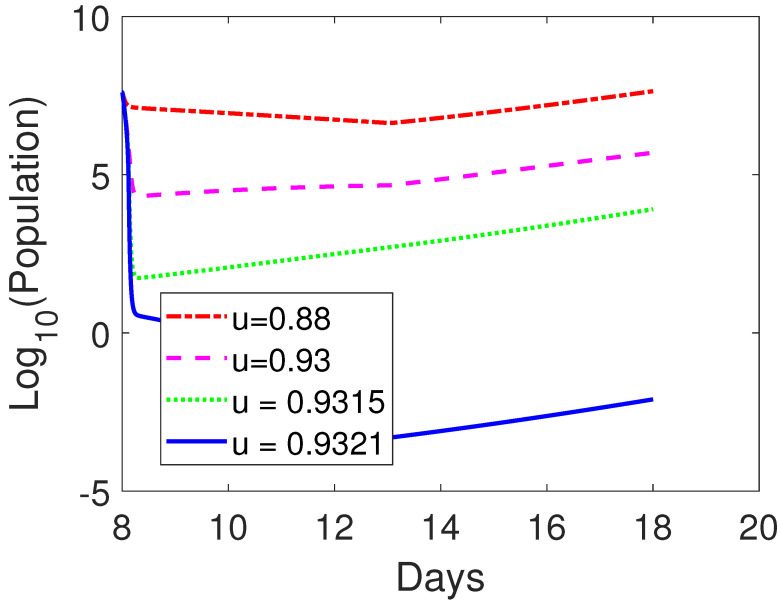
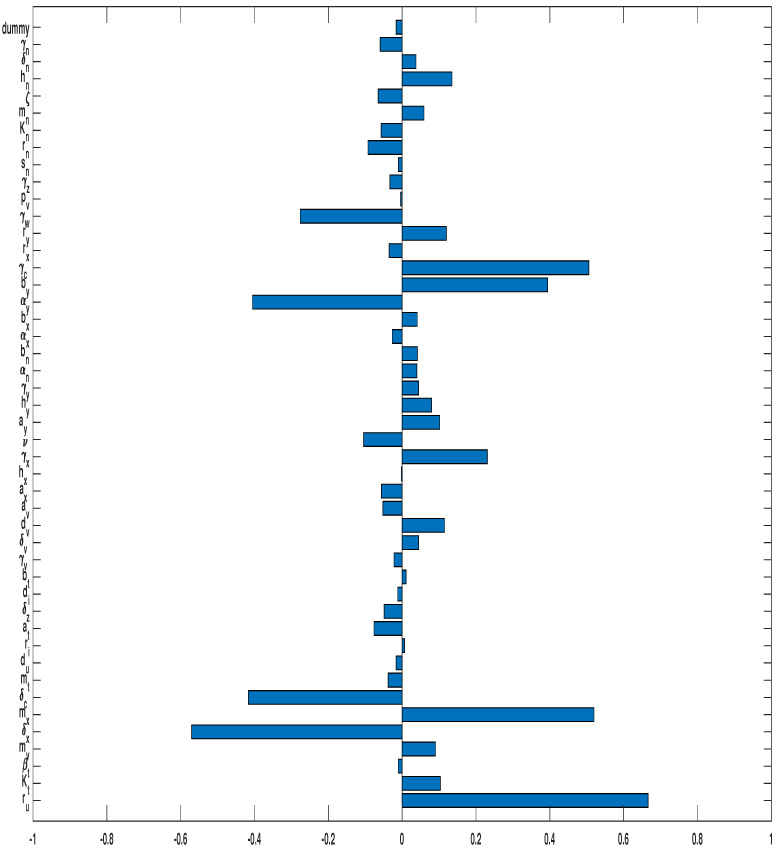
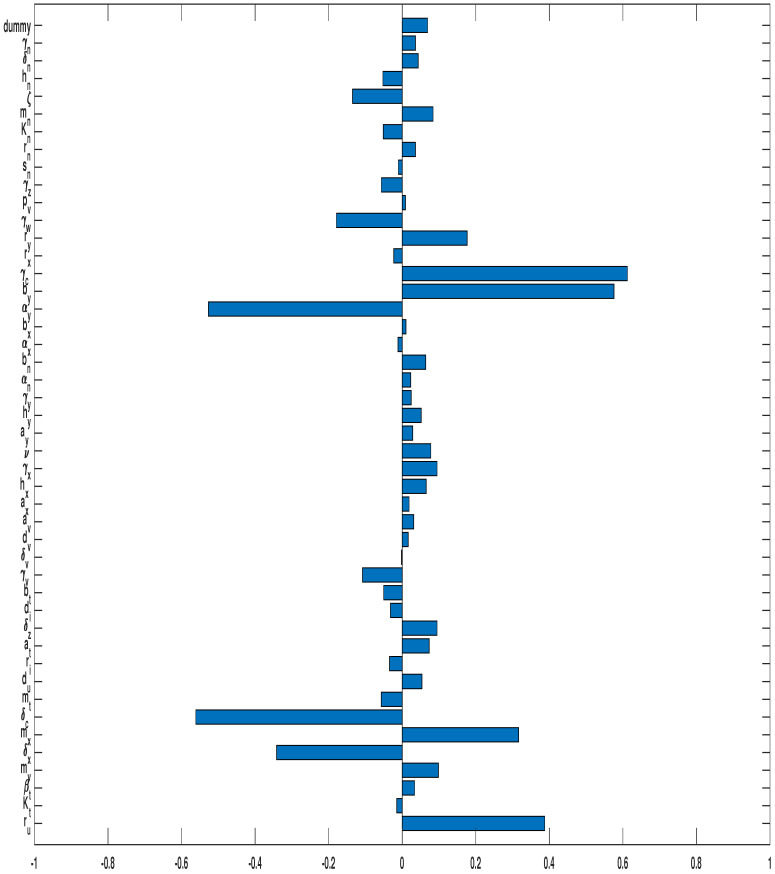
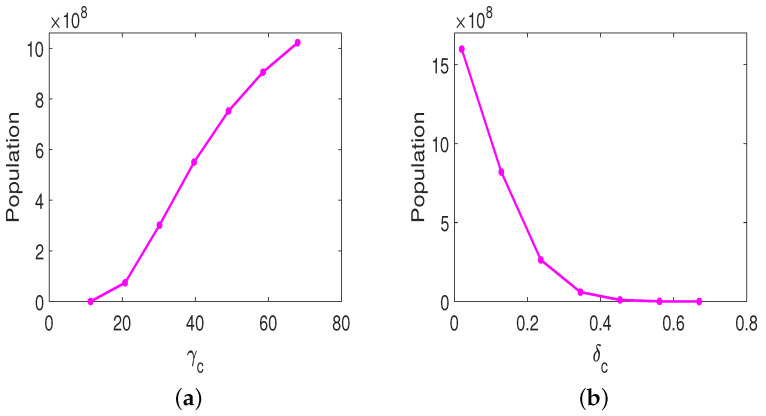
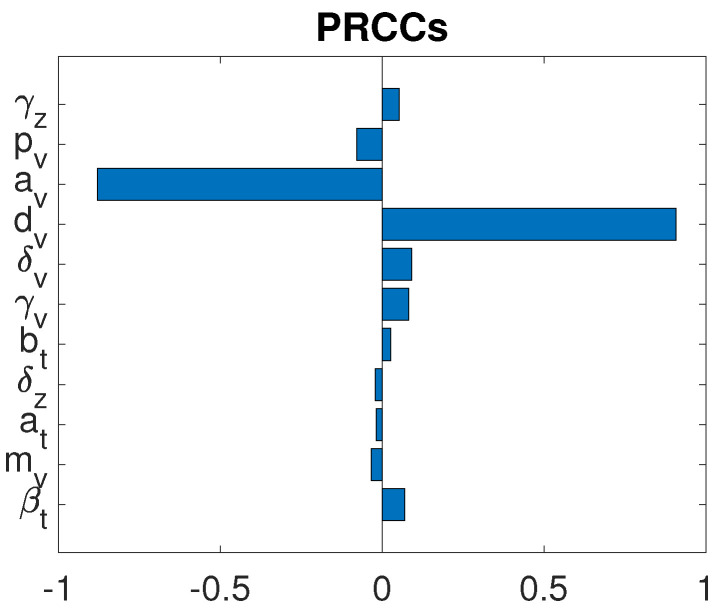
Oncolytic ability to direct target and lyse tumor cells makes oncolytic virus therapy (OVT) a promising approach to treating cancer. Despite its therapeutic potential to stimulate anti-tumor immune responses, it also has immunosuppressive effects. The efficacy of OVTs as monotherapies can be enhanced by appropriate adjuvant therapy such as anti-CTLA-4. In this paper, we propose a mathematical model to explore the interactions of combined therapy of oncolytic viruses and a checkpoint inhibitor, anti-CTLA-4. The model incorporates both the susceptible and infected tumor populations, natural killer cell population, virus population, tumor-specific immune populations, virus-specific immune populations, tumor suppressive cytokine IFN-g, and the effect of immune checkpoint inhibitor CTLA-4. In particular, we distinguish the tumor-specific immune abilities of CD8 T, NK cells, and CD4 T cells and describe the destructive ability of cytokine on tumor cells as well as the inhibitory capacity of CTLA-4 on various components. Our model is validated through the experimental results. We also investigate various dosing strategies to improve treatment outcomes. Our study reveals that tumor killing rate by cytokines, cytokine decay rate, and tumor growth rate play important roles on both the OVT monotherapy and the combination therapy. Moreover, parameters related to CD8 T cell killing have a large impact on treatment outcomes with OVT alone, whereas parameters associated with IFN-g strongly influence treatment responses for the combined therapy. We also found that virus killing by NK cells may halt the desired spread of OVs and enhance the probability of tumor escape during the treatment. Our study reveals that it is the activation of host anti-tumor immune system responses rather than its direct destruction of the tumor cells plays a major biological function of the combined therapy.
溶瘤能力可定向靶向并裂解肿瘤细胞,使溶瘤病毒治疗(OVT)成为治疗癌症的一种有前途的方法。尽管它具有刺激抗肿瘤免疫反应的治疗潜力,但它也具有免疫抑制作用。通过适当的辅助治疗(如抗 CTLA-4)可以增强 OVT 作为单一疗法的疗效。在本文中,我们提出了一个数学模型来探索溶瘤病毒和检查点抑制剂抗 CTLA-4 的联合治疗的相互作用。该模型包含易感和感染的肿瘤群体、自然杀伤细胞群体、病毒群体、肿瘤特异性免疫群体、病毒特异性免疫群体、肿瘤抑制细胞因子 IFN-g 以及免疫检查点抑制剂 CTLA-4 的作用。特别是,我们区分了 CD8 T、NK 细胞和 CD4 T 细胞的肿瘤特异性免疫能力,并描述了细胞因子对肿瘤细胞的破坏能力以及 CTLA-4 对各种成分的抑制能力。我们的模型通过实验结果得到了验证。我们还研究了各种给药策略以改善治疗效果。我们的研究表明,细胞因子的肿瘤杀伤率、细胞因子的衰减率和肿瘤的生长率在 OVT 单药治疗和联合治疗中都起着重要作用。此外,与 CD8 T 细胞杀伤相关的参数对 OVT 单独治疗的治疗效果有很大影响,而与 IFN-g 相关的参数则强烈影响联合治疗的治疗反应。我们还发现,NK 细胞对病毒的杀伤可能会阻止 OVs 的理想传播,并在治疗过程中增加肿瘤逃逸的可能性。我们的研究表明,是宿主抗肿瘤免疫反应的激活而不是其直接破坏肿瘤细胞,在联合治疗中发挥了主要的生物学功能。