School of Psychological Sciences, Macquarie University, Macquarie Park, NSW 2109, Australia.
Australian Institute of Health Innovation, Macquarie University, Macquarie Park, NSW 2109, Australia.
Int J Environ Res Public Health. 2023 Jan 20;20(3):1919. doi: 10.3390/ijerph20031919.
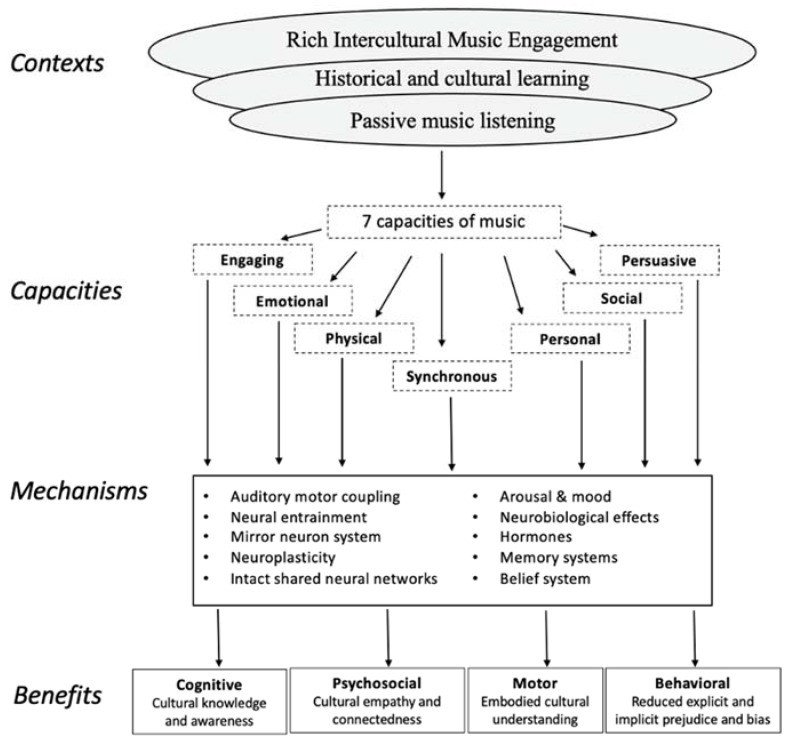
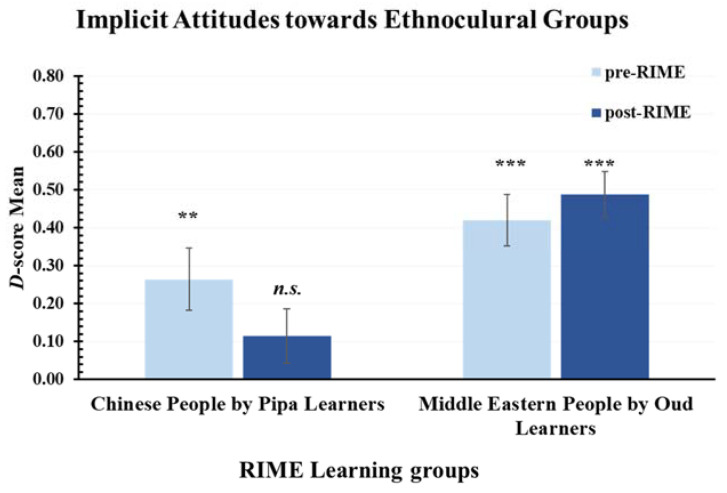
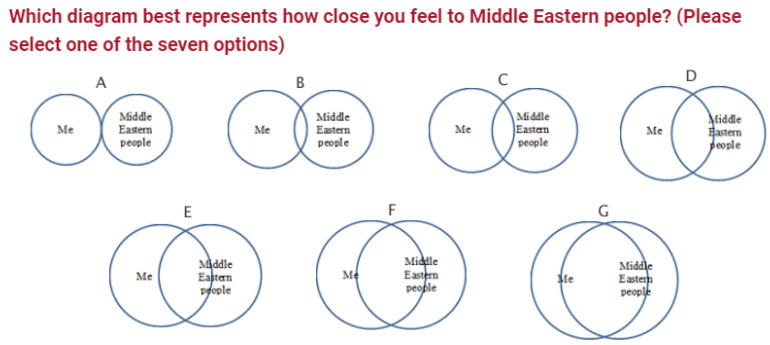
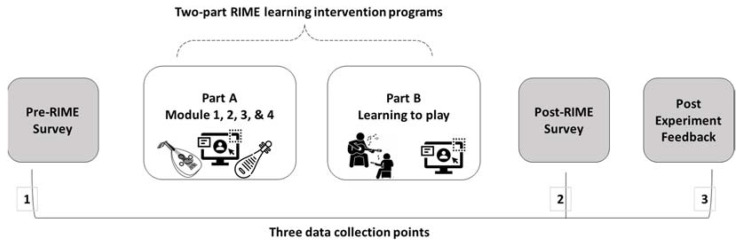
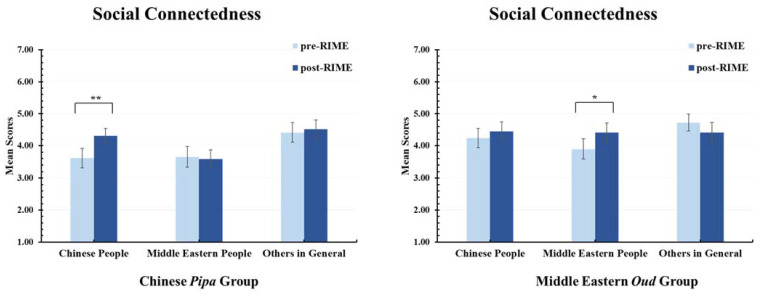
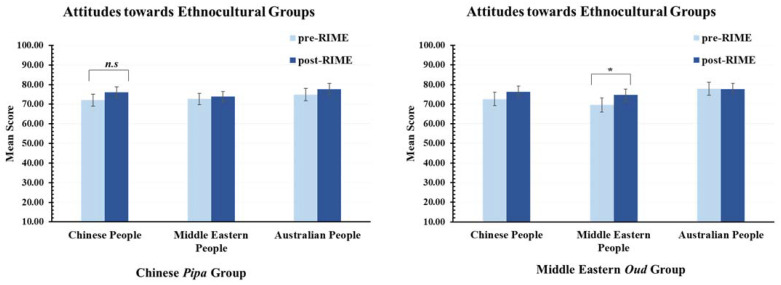
Rich intercultural music engagement (RIME) is an embodied form of engagement whereby individuals immerse themselves in foreign musical practice, for example, by learning a traditional instrument from that culture. The present investigation evaluated whether RIME with Chinese or Middle Eastern music can nurture intercultural understanding. White Australian participants were randomly assigned to one of two plucked-string groups: Chinese ( = 29) or Middle Eastern ( = 29). Before and after the RIME intervention, participants completed measures of ethnocultural empathy, tolerance, social connectedness, explicit and implicit attitudes towards ethnocultural groups, and open-ended questions about their experience. Following RIME, White Australian participants reported a significant increase in ethnocultural empathy, tolerance, feelings of social connection, and improved explicit and implicit attitudes towards Chinese and Middle Eastern people. However, these benefits differed between groups. Participants who learned Chinese reported reduced bias and increased social connectedness towards Chinese people, but not towards Middle Eastern people. Conversely, participants who learned Middle Eastern reported a significant increase in social connectedness towards Middle Eastern people, but not towards Chinese people. This is the first experimental evidence that participatory RIME is an effective tool for understanding a culture other than one's own, with the added potential to reduce cultural bias.
丰富的跨文化音乐参与(RIME)是一种参与形式,个体通过沉浸在外国音乐实践中,例如,学习来自该文化的传统乐器。本研究评估了参与中国或中东音乐是否可以培养跨文化理解。澳大利亚白人参与者被随机分配到两个弹拨弦乐器组之一:中国组(n=29)或中东组(n=29)。在 RIME 干预前后,参与者完成了民族文化同理心、宽容、社交联系、对民族文化群体的显性和隐性态度以及关于他们体验的开放性问题的测量。在 RIME 之后,澳大利亚白人参与者报告说,他们对中国和中东人的民族文化同理心、宽容、社交联系以及显性和隐性态度都有显著提高。然而,这些益处在不同组之间有所不同。学习中国音乐的参与者报告说,对中国人的偏见减少,对中国人的社交联系增加,但对中东人没有影响。相反,学习中东音乐的参与者报告说,他们对中东人的社交联系显著增加,但对中国人没有影响。这是第一个实验证据,证明参与式 RIME 是一种有效的理解自己以外文化的工具,并且有可能减少文化偏见。