Department of Psychology, College of Science and Health, DePaul University, Chicago, IL 60614, USA.
Int J Environ Res Public Health. 2023 Jan 23;20(3):2061. doi: 10.3390/ijerph20032061.
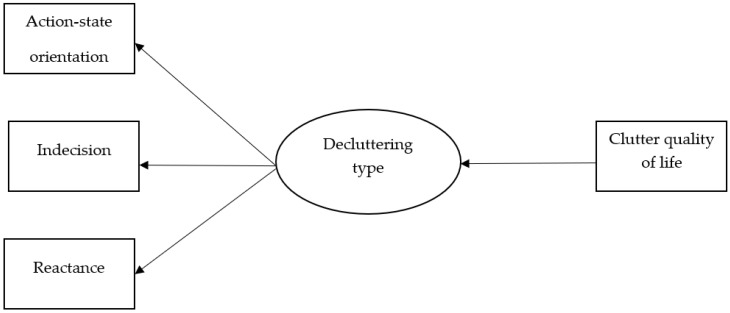
During the 2019-2020 global pandemic, mandated time at home suggested engagement in personal projects, such as home decluttering. Clutter (an overabundance of possessions) may impede one's quality of life by interfering with space livability and social connections and prompting negative affect and financial problems. The present study explored action-state orientation, psychological reactance, and decisional procrastination with 227 American adults ( age = 49.9 years old). A latent class analysis tested for differences in cognition across groups. Results supported that persons who struggle with clutter reflect clusters or "classes" given their self-reported cognitive processes, with hesitant and indecisive participants experiencing greater negative impacts of clutter than action-oriented and decisive participants. Our findings suggested improving the decision-making and goal-directed capacities of those struggling with clutter may be effective as preventive and/or interventive strategies. Future research might consider when hesitation to initiate challenging tasks and indecision emerge in the decluttering timeline and how those who are prone to these cognitions may be supported in managing their personal possessions.
在 2019-2020 年的全球大流行期间,强制居家时间建议人们从事个人项目,如家庭杂物清理。杂物(过多的物品)可能会通过干扰空间宜居性和社会联系,以及引发负面情绪和财务问题,从而影响生活质量。本研究调查了行动状态取向、心理抗拒和决策拖延在 227 名美国成年人(年龄=49.9 岁)中的作用。潜在类别分析测试了不同认知群体的差异。结果表明,那些与杂物作斗争的人反映了他们自我报告的认知过程的聚类或“类别”,犹豫和优柔寡断的参与者比行动导向和果断的参与者经历了更大的杂物负面影响。我们的发现表明,改善与杂物作斗争的人的决策和目标导向能力可能是有效的预防和/或干预策略。未来的研究可能会考虑在清理时间表中何时出现犹豫开始挑战性任务和犹豫不决的情况,以及如何支持那些容易出现这些认知的人来管理他们的个人财产。