Department of Conservative and Prosthetic Dentistry, Faculty of Odontology, Complutense University of Madrid, 28040 Madrid, Spain.
Facultad de Odontología y Ciencias de la Rehabilitación, Universidad San Sebastián, Lientur 1457, Concepción 4080871, Chile.
Int J Environ Res Public Health. 2023 Jan 30;20(3):2452. doi: 10.3390/ijerph20032452.
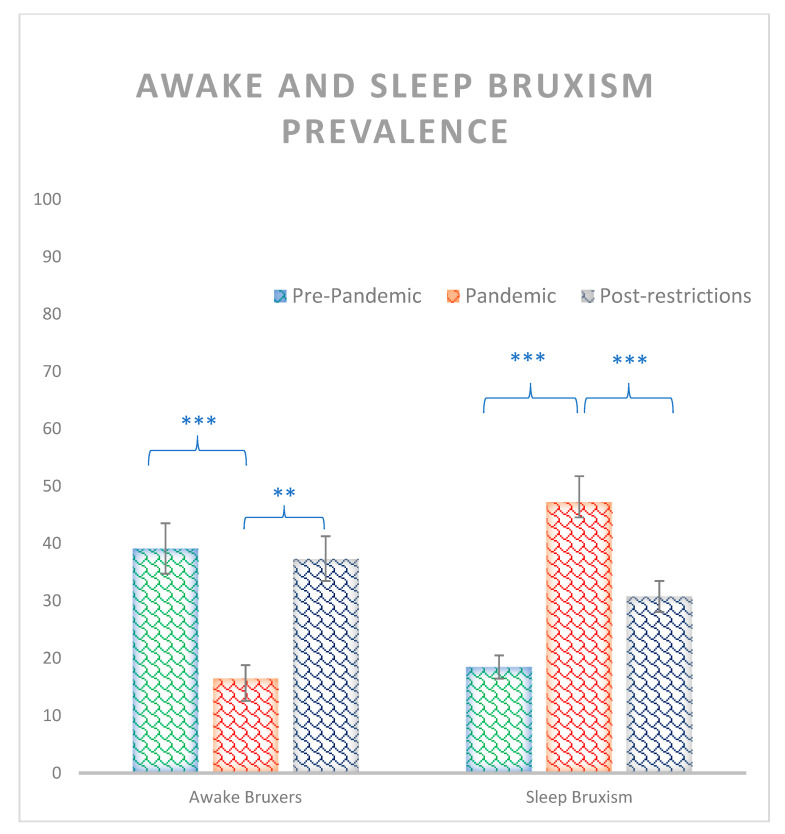
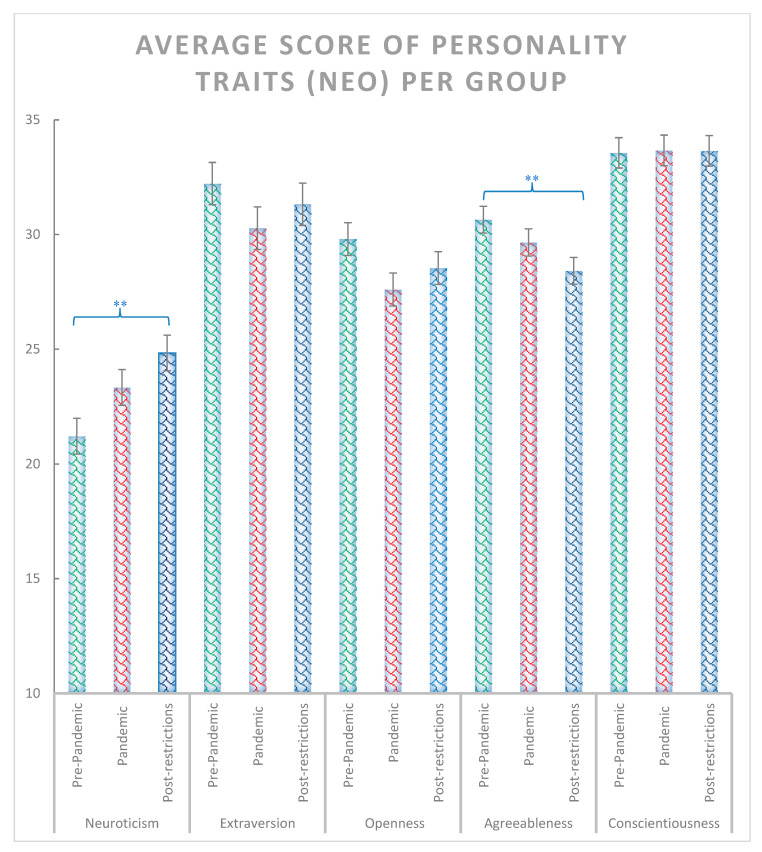
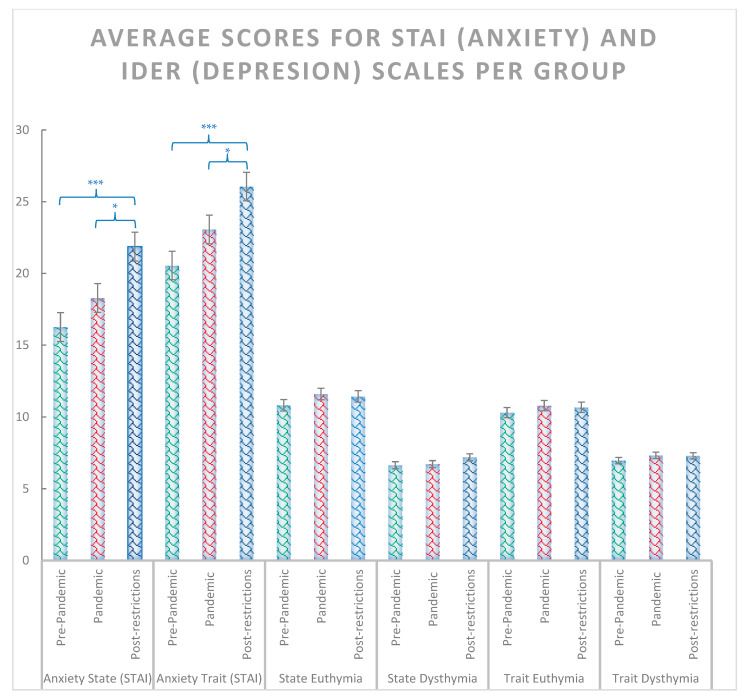
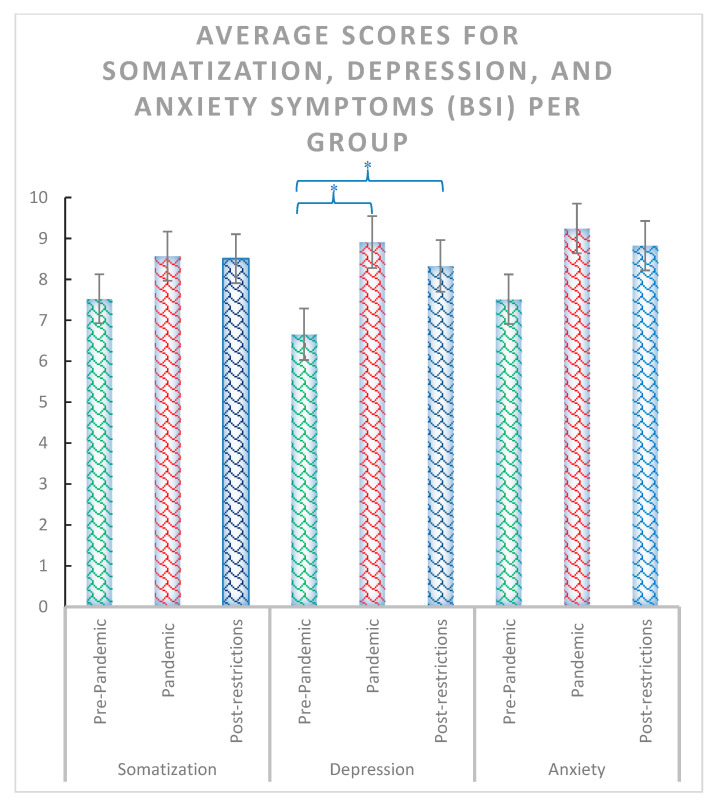
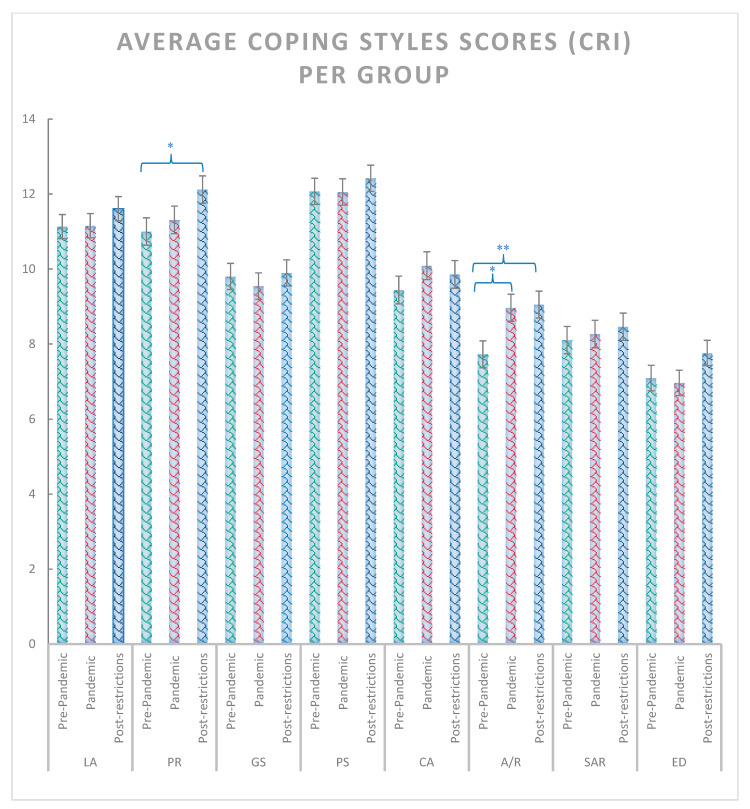
There is a broad consensus accepting that psychological variables such as stress, anxiety, or depression play an important role in bruxism. The COVID-19 pandemic has led to an increase in stress, anxiety, and depression levels. The purpose of this study was to evaluate the impact of the COVID-19 pandemic on possible awake and sleep bruxism prevalence and on the psychological factors associated with bruxism, comparing pre-pandemic, pandemic/lockdown, and post-pandemic samples of first-year students. A total of 274 dentistry students from the Complutense University of Madrid participated in the study: 92 from 2018/2019 (pre-pandemic), 90 from 2020/2021 (pandemic), and 92 students from 2021/2022 (post-pandemic) academic years. The participants filled out a thorough battery of validated questionnaires evaluating bruxism and different psychological characteristics, such as anxiety, depression, somatization, personality, and stress coping styles. While sleep bruxism prevalence was significantly higher for the pandemic group, awake bruxism was smaller in comparison to pre-pandemic and post-pandemic groups. The post-pandemic group also presented higher levels of neuroticism and agreeableness personality traits, and positive reappraisal than the pre-pandemic group, with the pandemic group somewhere in between. Additionally, both the pandemic and post-pandemic group showed higher levels of depression and acceptance/resignation coping styles than the pre-pandemic group. Thus, among the three groups of students, the post-pandemic group was the one that showed a larger effect of the pandemic situation in their psychological variables, presenting higher levels of anxiety (state and trait), depression, acceptation/resignation coping style, higher neuroticism (emotional instability trait), and lower agreeableness trait. Nonetheless, the increase of positive reappraisal in the post-pandemic group (an adaptive coping stress style) might be also a sign of recovery. The higher sleep bruxism for the pandemic group might be related to the pandemic situation and lockdown, passively suffered, possibly promoting feelings of impotency, increased levels of depression and acceptance/resignation (normally considered a passive/maladaptive coping style), while acute stressful situations derived from daily personal social interactions might have increased anxiety levels and induced higher levels of awake bruxism observed in both the pre-pandemic and post-pandemic groups. However, further research, including larger and more representative samples, is needed to confirm this possible relationship.
人们普遍认为,心理变量如压力、焦虑或抑郁在磨牙症中起着重要作用。COVID-19 大流行导致压力、焦虑和抑郁水平升高。本研究的目的是评估 COVID-19 大流行对可能的清醒和睡眠磨牙症患病率以及与磨牙症相关的心理因素的影响,比较大流行前、大流行/封锁和大流行后一年级学生的样本。共有 274 名马德里康普顿斯大学的牙医学生参加了这项研究:92 名来自 2018/2019 学年(大流行前),90 名来自 2020/2021 学年(大流行期间),92 名来自 2021/2022 学年(大流行后)。参与者填写了一份全面的、经过验证的问卷,评估磨牙症和不同的心理特征,如焦虑、抑郁、躯体化、人格和压力应对方式。虽然大流行组的睡眠磨牙症患病率显著更高,但与大流行前和大流行后组相比,清醒磨牙症更小。与大流行前组相比,大流行后组的神经质和宜人性人格特征以及积极的重新评估更高,而大流行组则处于两者之间。此外,大流行组和大流行后组的抑郁和接受/放弃应对方式水平均高于大流行前组。因此,在这三组学生中,大流行后组在其心理变量中表现出更大的大流行情况影响,表现出更高水平的焦虑(状态和特质)、抑郁、接受/放弃应对方式、更高的神经质(情绪不稳定特质)和较低的宜人性特质。尽管如此,大流行后组积极的重新评估(一种适应性的压力应对方式)的增加也可能是恢复的迹象。大流行组更高的睡眠磨牙症可能与大流行情况和封锁有关,是被动承受的,可能会增加无力感,抑郁和接受/放弃的水平升高(通常被认为是一种被动/适应不良的应对方式),而日常个人社交互动所带来的急性应激情况可能会增加焦虑水平,并导致大流行前和大流行后组更高的清醒磨牙症水平。然而,需要进一步的研究,包括更大和更具代表性的样本,以确认这种可能的关系。