Department of Health Science, University of Florence, Morgagni Blvd 48, 50134 Florence, Italy.
Health Literacy Laboratory, Department of Health Science, University of Florence, Morgagni Blvd 48, 50134 Florence, Italy.
Int J Environ Res Public Health. 2023 Jan 31;20(3):2611. doi: 10.3390/ijerph20032611.
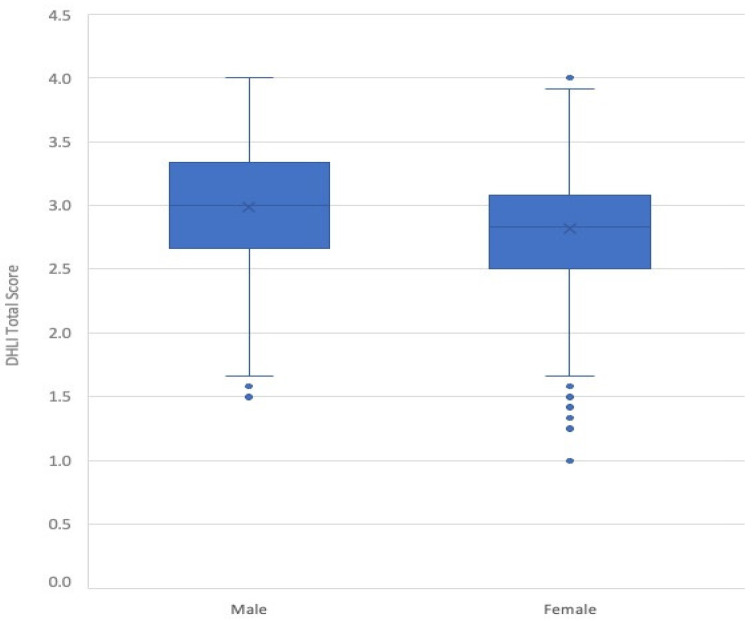
Gender appears to be a strong predictor of online health information-seeking behaviour (OHISB), which is related to Digital Health Literacy (DHL). Gender differences in OHISB have been studied in different countries with different results, but no studies have investigated gender-specific OHISB among University students during the COVID-19 pandemic. We sought to investigate any gender differences in OHISB in the period between the first and second waves of the pandemic in Italian university students. A questionnaire developed by the global COVID-HL network, including existing and adapted validated scales and self-developed scales, was administered to 2996 University students in Florence. Gender differences were tested using the χ test or the Mann-Whitney U test. Male students reported a higher score in DHL than females ( < 0.001). However, female students seek COVID-19 information more often on different sources (for themselves and other people), on various topics, consider various aspects of information quality to be "very important'' ( < 0.05) and are more likely to be "often dissatisfied'' or "partly satisfied'' with information ( < 0.001). Our study confirmed gender as an important dimension to explain students' OHISB differences, which could help institutions promote gender-specific education programmes and provide gender-oriented health information.
性别似乎是在线健康信息搜索行为(OHISB)的一个强有力的预测因素,而 OHISB 与数字健康素养(DHL)有关。不同国家对 OHISB 中的性别差异进行了研究,结果不尽相同,但没有研究调查过 COVID-19 大流行期间大学生的特定性别 OHISB。我们试图研究意大利大学生在大流行的第一波和第二波之间的 OHISB 中是否存在任何性别差异。我们向佛罗伦萨的 2996 名大学生发放了由全球 COVID-HL 网络开发的问卷,其中包括现有的和经过改编的经过验证的量表以及自行开发的量表。使用 χ 检验或曼-惠特尼 U 检验测试性别差异。与女性相比,男性学生在 DHL 方面的得分更高(<0.001)。然而,女性学生更频繁地从不同来源(为自己和他人)搜索 COVID-19 信息,涉及更多主题,认为信息质量的各个方面都“非常重要”(<0.05),并且更有可能对信息感到“经常不满意”或“部分满意”(<0.001)。我们的研究证实了性别是解释学生 OHISB 差异的一个重要维度,这有助于机构开展针对特定性别的教育计划,并提供面向性别的健康信息。