Department of Agricultural, Forestry and Food Sciences (DISAFA), University of Turin, Largo Paolo Braccini 2, 10095 Grugliasco, Italy.
Centre of Competence for the Innovation in the Agro-Environmental Sector-AGROINNOVA, University of Turin, Largo Paolo Braccini 2, 10095 Grugliasco, Italy.
Int J Mol Sci. 2023 Feb 2;24(3):2900. doi: 10.3390/ijms24032900.
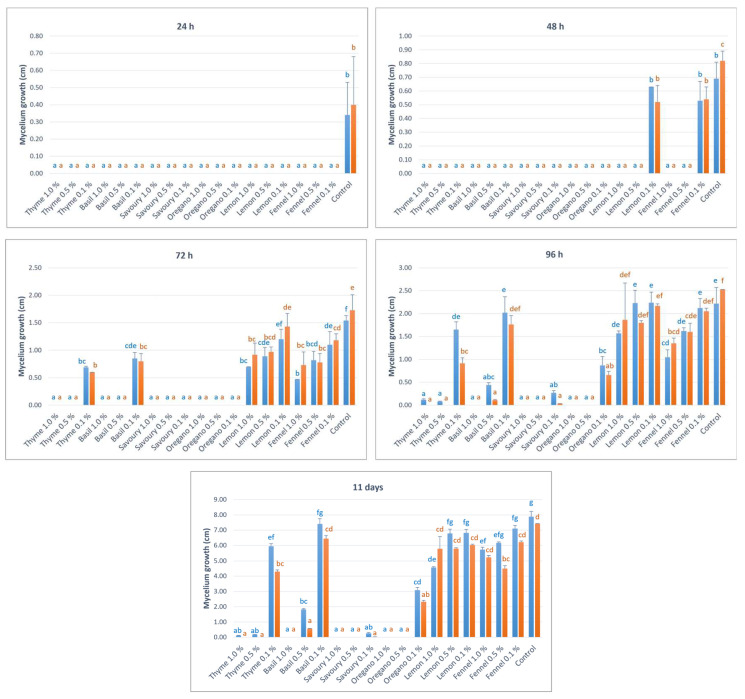
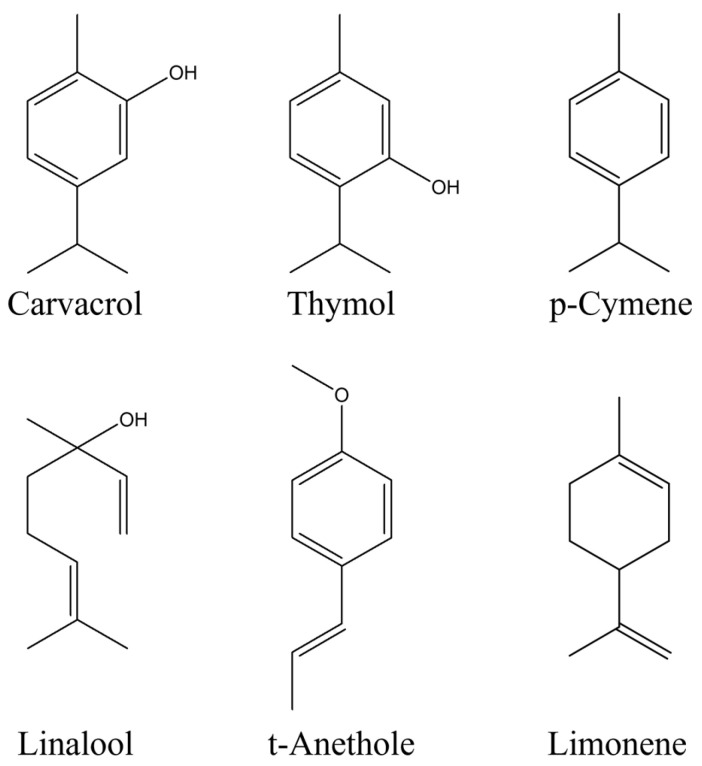
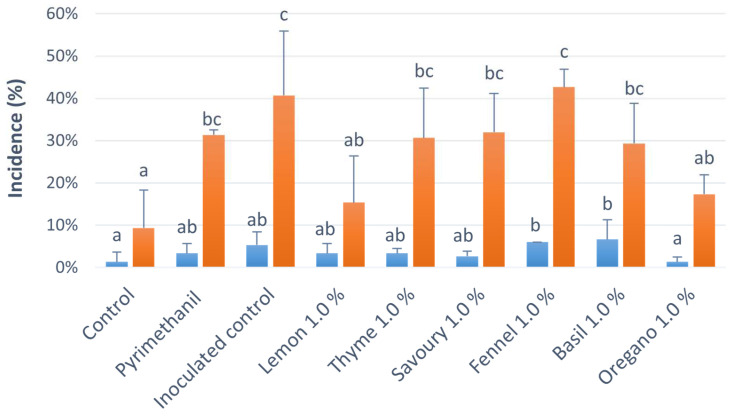
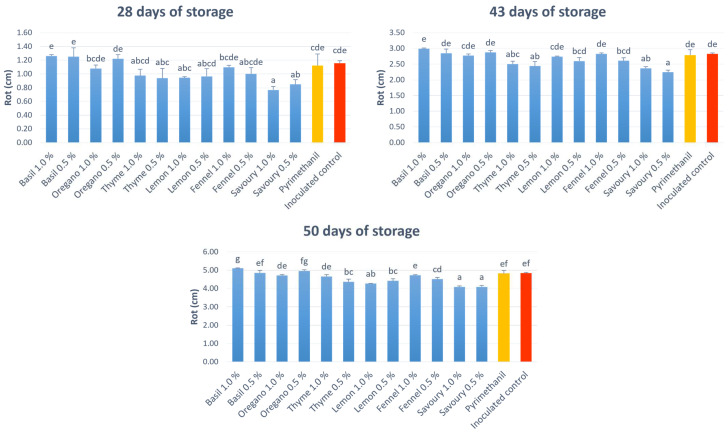
Biofumigation with slow-release diffusers of essential oils (EOs) of basil, oregano, savoury, thyme, lemon, and fennel was assessed for the control of blue mould of apples, caused by . In vitro, the ability of the six EOs to inhibit the mycelial growth was evaluated at concentrations of 1.0, 0.5, and 0.1%. EOs of thyme, savoury, and oregano, at all three concentrations, and basil, at 1.0 and 0.5%, were effective in inhibiting the mycelial growth of . In vivo, disease incidence and severity were evaluated on 'Opal' apples artificially inoculated with the pathogen and treated at concentrations of 1.0% and 0.5% of EOs. The highest efficacy in reducing blue mould was observed with EOs of lemon and oregano at 1.0% after 60 days of storage at 1 ± 1 °C (incidence of rot, 3 and 1%, respectively) and after a further 14 days of shelf-life at 15 ± 1 °C (15 and 17%). Firmness, titratable acidity, and total soluble solids were evaluated at harvest, after cold storage, and after shelf-life. Throughout the storage period, no evident phytotoxic effects were observed. The EOs used were characterised through GC-MS to analyse their compositions. Moreover, the volatile organic compounds (VOCs) present in the cabinets were characterised during storage using the SPME-GC-MS technique. The antifungal effects of EOs were confirmed both in vitro and in vivo and the possible mechanisms of action were hypothesised. High concentrations of antimicrobial and antioxidant compounds in the EOs explain the efficacy of biofumigation in postharvest disease control. These findings provide new insights for the development of sustainable strategies for the management of postharvest diseases and the reduction of fruit losses during storage.
采用罗勒、牛至、马郁兰、百里香、柠檬和茴香精油的缓释扩散器进行生物熏蒸,以防治苹果青霉病。在体外,评估了 6 种精油在 1.0、0.5 和 0.1%浓度下抑制菌丝生长的能力。在所有三个浓度下,百里香、马郁兰和牛至精油,以及 1.0 和 0.5%浓度的罗勒精油,均能有效抑制 的菌丝生长。在体内,用病原菌人工接种的“蛋白石”苹果评估了发病率和严重程度,并在 1.0%和 0.5%的精油浓度下进行了处理。在 1±1°C 下贮藏 60 天后,用 1.0%的柠檬和牛至精油处理,青霉病的防治效果最高(腐烂率分别为 3%和 1%),然后在 15±1°C 的货架期再贮藏 14 天(分别为 15%和 17%)。在收获、冷藏后和货架期后评估了果实的硬度、可滴定酸度和总可溶性固体。在整个贮藏期内,未观察到明显的植物毒性作用。通过 GC-MS 对精油进行了特征分析,以分析其成分。此外,还使用 SPME-GC-MS 技术在贮藏过程中对柜内的挥发性有机化合物(VOC)进行了特征分析。精油在体外和体内的抗真菌作用得到了证实,并提出了可能的作用机制。精油中高浓度的抗菌和抗氧化化合物解释了生物熏蒸在采后病害防治中的有效性。这些发现为开发可持续的采后病害管理策略以及减少贮藏期果实损失提供了新的见解。