Liu Yake, Liu Shaohua, Song Zhe, Chen Daoyun, Album Zoe, Green Samuel, Deng Xianghua, Rodeo Scott A
Laboratory for Joint Tissue Repair and Regeneration, Orthopaedic Soft Tissue Research Program, Hospital for Special Surgery, New York, NY 10021, USA.
Department of Orthopedic, Affiliated Hospital of Nantong University, Nantong 226001, China.
J Clin Med. 2023 Jan 28;12(3):999. doi: 10.3390/jcm12030999.
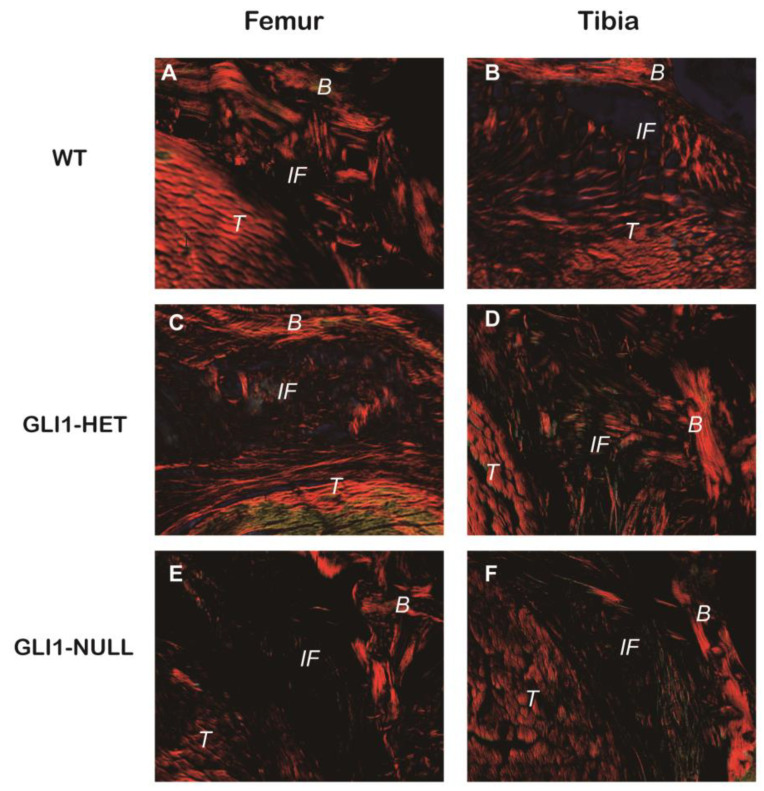
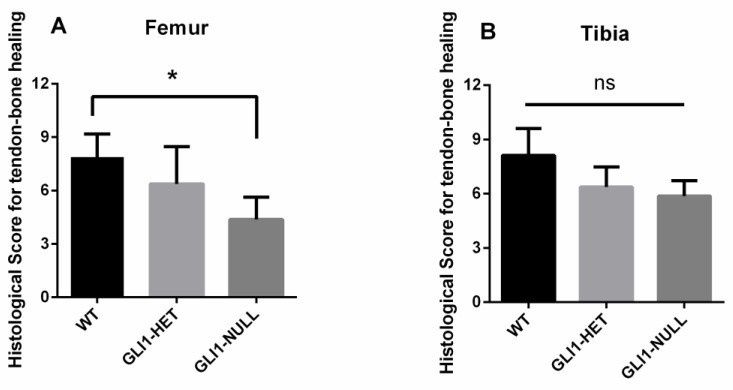
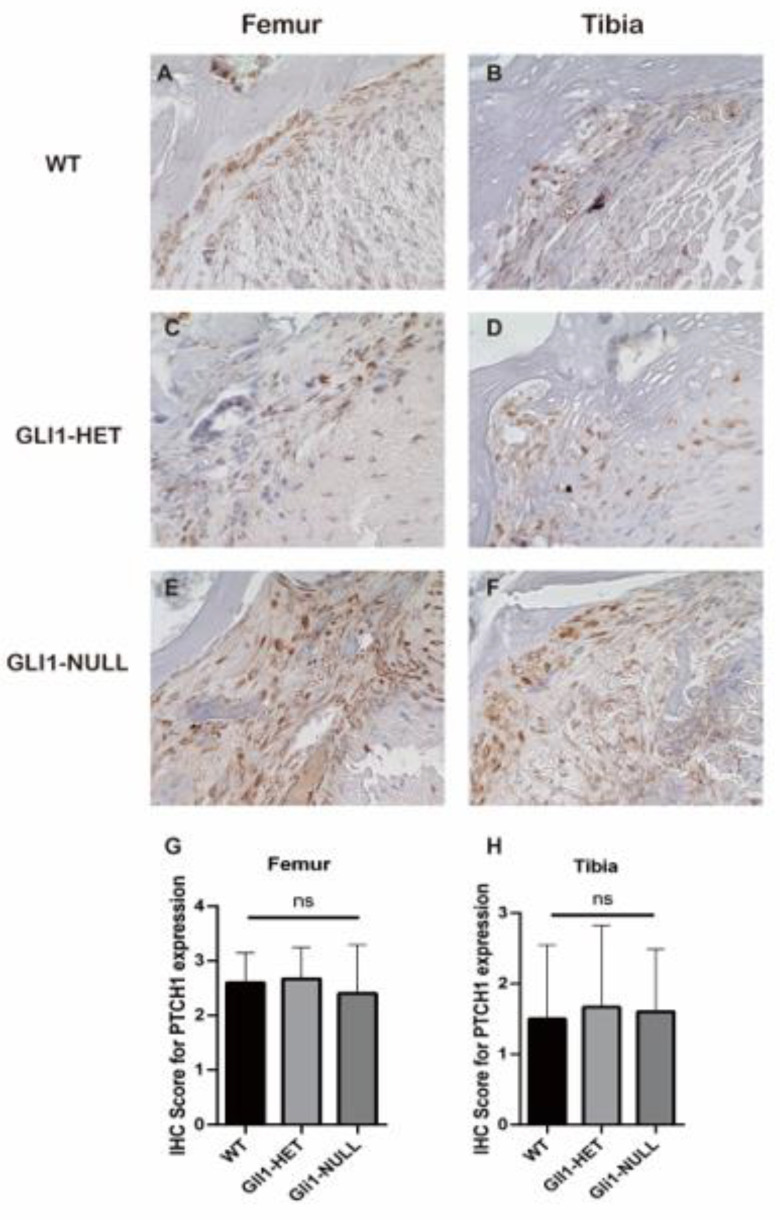
Hedgehog (Hh) signaling plays a fundamental role in the enthesis formation process and GLI-Kruppel family member GLI1 () is a key downstream mediator. However, the role of in tendon-bone healing after anterior cruciate ligament reconstruction (ACLR) is unknown. To evaluate the tendon-bone healing after ACLR in (GLI1-NULL) mice, and compare (GLI1-HET) and wild type (WT) mice, a total of 45 mice, 15 mice each of GLI1-NULL, GLI1-HET and WT were used in this study. All mice underwent microsurgical ACLR at 12 weeks of age. Mice were euthanized at 4 weeks after surgery and were used for biomechanical testing, histological evaluation, and micro-CT analysis. The GLI1-NULL group had significantly lower biomechanical failure force, poorer histological healing, and lower BV/TV when compared with the WT and GLI1-HET groups. These significant differences were only observed at the femoral tunnel. Immunohistology staining showed positive expression of Indian hedgehog (IHH) and Patched 1(PTCH1) in all three groups, which indicated the activation of the Hh signal pathway. The GLI1 was negative in the GLI1-NULL group, validating the absence of GLI1 protein in these mice. These results proved that activation of the Hh signaling pathway occurs during ACL graft healing, and the function of was necessary for tendon-bone healing. Healing in the femoral tunnel is more obviously impaired by deficiency. Our findings provide further insight into the molecular mechanism of tendon-bone healing and suggest that might represent a novel therapeutic target to improve tendon-bone healing after ACLR.
刺猬信号通路(Hh)在肌腱附着点形成过程中发挥着重要作用,而GLI-Kruppel家族成员GLI1是关键的下游介质。然而,其在急性前交叉韧带重建(ACLR)后肌腱-骨愈合中的作用尚不清楚。为了评估GLI1基因敲除(GLI1-NULL)小鼠ACLR后的肌腱-骨愈合情况,并与GLI1杂合子(GLI1-HET)和野生型(WT)小鼠进行比较,本研究共使用了45只小鼠,其中GLI1-NULL、GLI1-HET和WT小鼠各15只。所有小鼠在12周龄时接受显微外科ACLR手术。术后4周对小鼠实施安乐死,并用于生物力学测试、组织学评估和显微CT分析。与WT组和GLI1-HET组相比,GLI1-NULL组的生物力学破坏力显著降低,组织学愈合较差,骨体积分数(BV/TV)也较低。这些显著差异仅在股骨隧道处观察到。免疫组织化学染色显示,三组中印度刺猬信号蛋白(IHH)和patched 1(PTCH1)均呈阳性表达,这表明Hh信号通路被激活。GLI1-NULL组中GLI1呈阴性,证实这些小鼠中不存在GLI1蛋白。这些结果证明,Hh信号通路在ACL移植物愈合过程中被激活,GLI1的功能对肌腱-骨愈合是必需的。GLI1缺乏对股骨隧道愈合的损害更为明显。我们的研究结果为肌腱-骨愈合的分子机制提供了进一步的见解,并表明GLI1可能是改善ACLR后肌腱-骨愈合的一个新的治疗靶点。