Kokkali Stefania, Kyriazoglou Anastasios, Mangou Elpida, Economopoulou Panagiota, Panousieris Michail, Psyrri Amanda, Ardavanis Alexandros, Vassos Nikolaos, Boukovinas Ioannis
Department of Medical Oncology, Saint-Savvas Anticancer Hospital, 11522 Athens, Greece.
Medical Oncology Unit, Department of Internal Medicine, Hippocratio General Hospital, National and Kapodistrian University of Athens, 11527 Athens, Greece.
J Clin Med. 2023 Jan 31;12(3):1119. doi: 10.3390/jcm12031119.
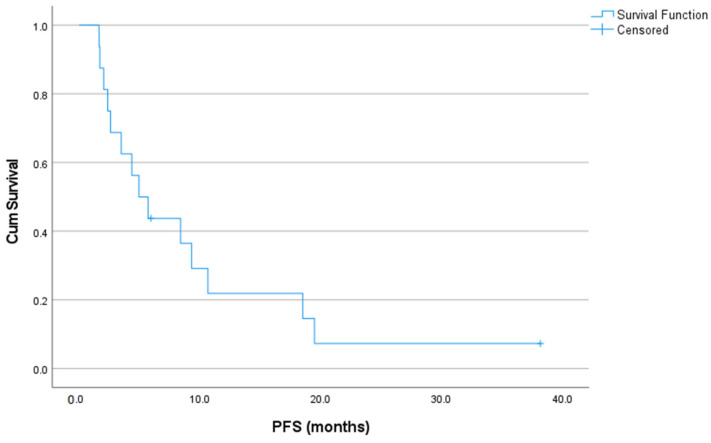
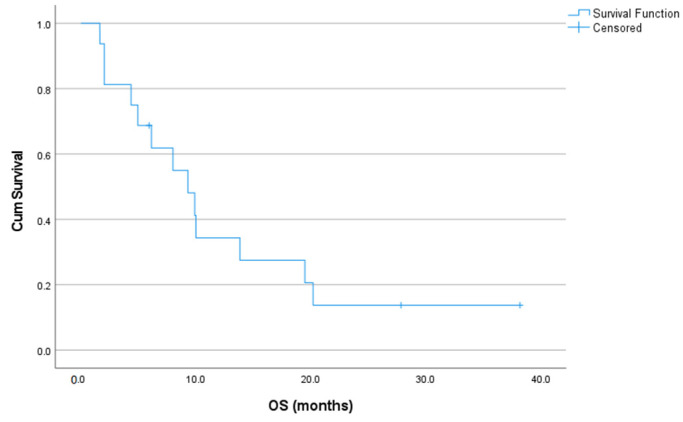
Advanced osteosarcomas (OSs) and Ewing sarcomas (ESs) tend to have poor prognosis with limited therapeutic options beyond first-line therapy. Aberrant angiogenesis and MET signaling play an important role in preclinical models. The anti-angiogenic drug cabozantinib was tested in a phase 2 trial of advanced OS and ES and was associated with clinical benefits. We retrospectively analyzed the off-label use of cabozantinib in adult patients with advanced OS and ES/primitive neuroectodermal tumors (PNETs) in three centers of the Hellenic Group of Sarcoma and Rare Cancers (HGSRC). Between April 2019 and January 2022, 16 patients started taking 60 mg of cabozantinib for advanced bone sarcoma or PNET. Median age at cabozantinib initiation was 31 years (17-83). All patients had received peri-operative chemotherapy for primary sarcoma and between 0 and 4 lines of treatment (median; 2.5) for advanced disease. The most common adverse effects included fatigue, anorexia, hypertransaminasemia, weight loss, and diarrhea. One toxic death was noted (cerebral hemorrhage). Dose reduction to 40 mg was required in 31.3% of the patients. No objective response was noted, and 9/16 patients exhibited stable disease outcomes. Progression-free survival varied from 1 to 8 (median; 5) months. Our study demonstrates that cabozantinib has antitumor activity in this population. In the real-life setting, we observed similar adverse events as in the CABONE study and in other neoplasms.
晚期骨肉瘤(OS)和尤因肉瘤(ES)的预后往往较差,一线治疗之外的治疗选择有限。异常血管生成和MET信号传导在临床前模型中起重要作用。抗血管生成药物卡博替尼在晚期OS和ES的2期试验中进行了测试,并显示出临床获益。我们回顾性分析了希腊肉瘤和罕见癌症组(HGSRC)三个中心成年晚期OS和ES/原始神经外胚层肿瘤(PNET)患者卡博替尼的非标签使用情况。2019年4月至2022年1月期间,16例患者开始服用60mg卡博替尼用于晚期骨肉瘤或PNET。开始服用卡博替尼时的中位年龄为31岁(17 - 83岁)。所有患者均接受了原发性肉瘤的围手术期化疗,晚期疾病接受了0至4线治疗(中位;2.5线)。最常见的不良反应包括疲劳、厌食、高转氨酶血症、体重减轻和腹泻。记录到1例毒性死亡(脑出血)。31.3%的患者需要将剂量减至40mg。未观察到客观缓解,16例患者中有9例表现为疾病稳定。无进展生存期为1至8个月(中位;5个月)。我们的研究表明卡博替尼在该人群中具有抗肿瘤活性。在实际应用中,我们观察到与CABONE研究及其他肿瘤中相似的不良事件。