Membrane Transport Discovery Lab, Department of Nephrology and Hypertension, and Department for BioMedical Research, Inselspital, University of Bern, Freiburgstrasse 15, CH-3010 Bern, Switzerland.
Molecules. 2023 Jan 24;28(3):1151. doi: 10.3390/molecules28031151.
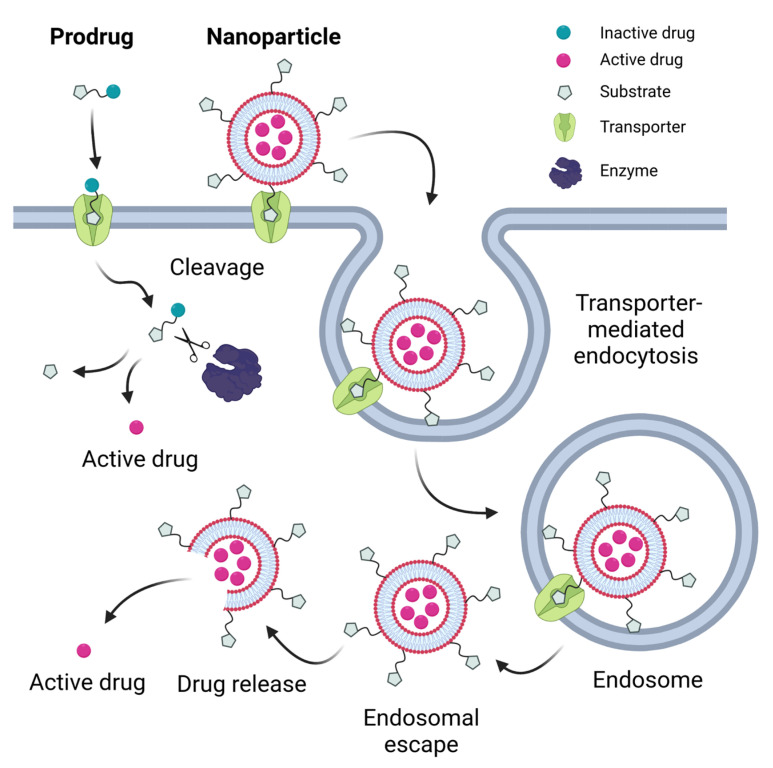
Transmembrane transport of small organic and inorganic molecules is one of the cornerstones of cellular metabolism. Among transmembrane transporters, solute carrier (SLC) proteins form the largest, albeit very diverse, superfamily with over 400 members. It was recognized early on that xenobiotics can directly interact with SLCs and that this interaction can fundamentally determine their efficacy, including bioavailability and intertissue distribution. Apart from the well-established prodrug strategy, the chemical ligation of transporter substrates to nanoparticles of various chemical compositions has recently been used as a means to enhance their targeting and absorption. In this review, we summarize efforts in drug design exploiting interactions with specific SLC transporters to optimize their therapeutic effects. Furthermore, we describe current and future challenges as well as new directions for the advanced development of therapeutics that target SLC transporters.
小分子有机和无机分子的跨膜转运是细胞代谢的基石之一。在跨膜转运体中,溶质载体(SLC)蛋白形成最大的、尽管非常多样化的超家族,拥有超过 400 个成员。早期就已经认识到,外源性物质可以直接与 SLC 相互作用,这种相互作用可以从根本上决定它们的功效,包括生物利用度和组织间分布。除了成熟的前药策略外,最近还将转运体底物与各种化学成分的纳米颗粒化学连接起来,用作增强其靶向性和吸收性的手段。在这篇综述中,我们总结了利用与特定 SLC 转运体相互作用来优化其治疗效果的药物设计工作。此外,我们还描述了当前和未来的挑战以及针对 SLC 转运体的治疗方法的新方向。